NVIDIA N1X Surface Laptop Ultra Prototype Shows Big Potential, But Early Drivers Hold It Back
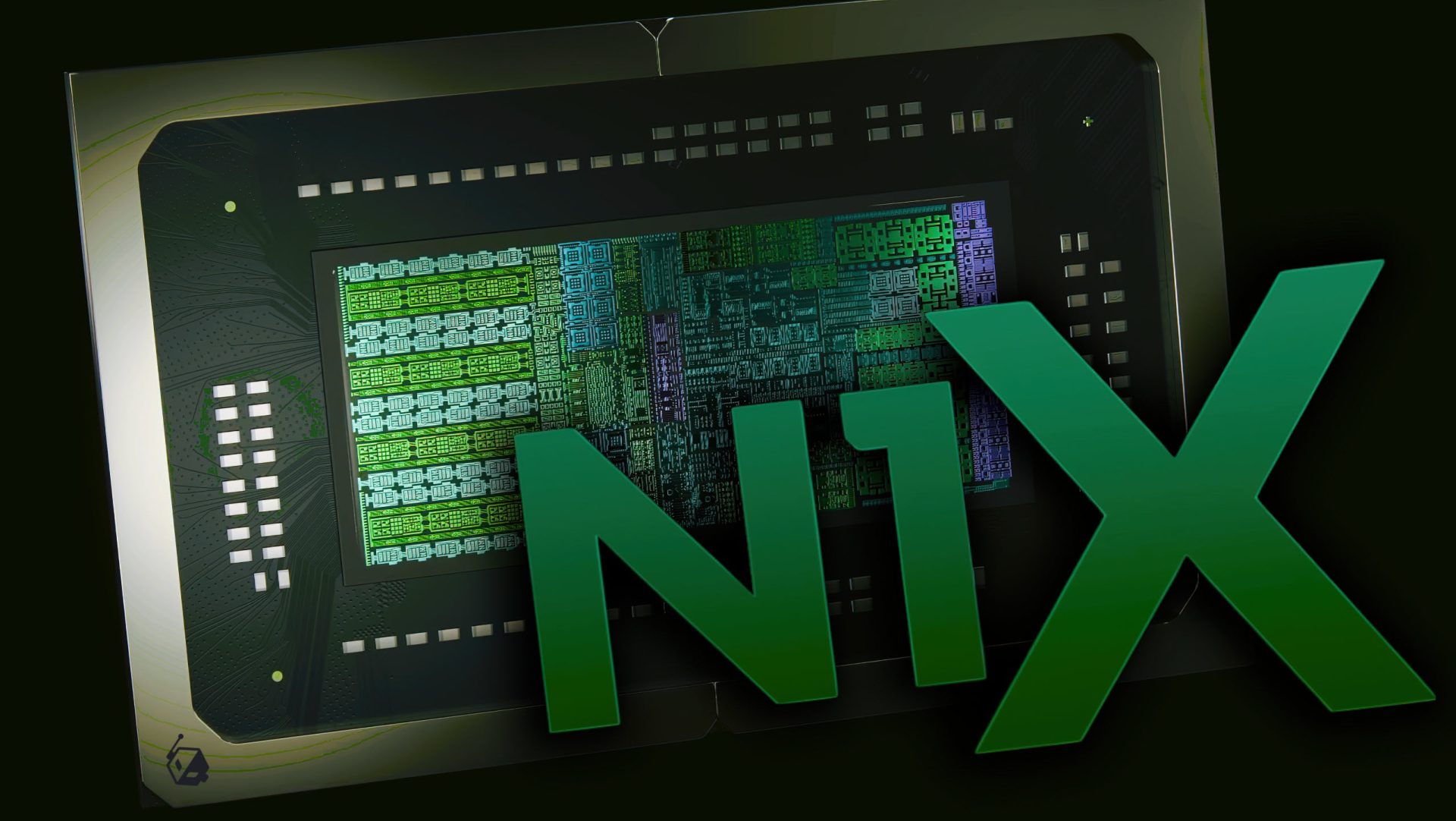
The NVIDIA N1X is shaping up to be one of the most interesting chips headed for the Windows-on-Arm laptop market. Early testing of an unreleased Microsoft Surface Laptop Ultra prototype suggests that the hardware has serious potential, but the current software stack is not yet ready to let it shine.
An early unit reportedly equipped with NVIDIA’s RTX Spark N1X chip was recently tested by a user who claimed to have obtained a prototype Microsoft laptop ahead of launch. While the device appears to offer premium build quality and promising specifications, the hands-on results show that unfinished drivers, immature firmware, and power management issues are currently limiting real-world performance.
The prototype Surface Laptop Ultra was said to feature a 20-core Arm-based processor paired with a Blackwell-generation GPU. The GPU reportedly includes 6,144 CUDA cores, making it a very capable graphics solution on paper. The system was also configured with 24 GB of unified memory and a 512 GB SSD, placing it in the premium laptop category and positioning it as a potentially strong competitor in the growing Windows-on-Arm space.
The tester experimented with multiple driver versions, including an older Game Ready 591.33 driver and a newer 616.00 preview driver. The preview driver brought CUDA 13.4 support along with updated OpenGL and Vulkan capabilities. However, despite those improvements on paper, the actual experience remained inconsistent.
Gaming performance appeared to be one of the biggest weak points in the current prototype. During testing, the GPU clock reportedly fluctuated heavily between 1.5 GHz and 2.3 GHz. These sudden shifts caused noticeable frame stutters every few seconds, making gameplay feel uneven even when raw performance seemed capable of more.
The issue did not appear to be solved by changing power settings. Whether the laptop was running on battery, limited to 64W, or pushed to a 105W power profile, gaming performance remained largely unchanged. That suggests the prototype may be restricted by deeper firmware or driver-level limitations rather than a simple power limit setting.
Some demanding workloads also ran into stability problems. Games such as Helldivers 2 and certain GPGPU integer tests reportedly crashed during testing. This points to a platform that is still under active development and not yet polished enough for retail release.
The newer 616.00 preview driver did not bring the breakthrough some might have expected. While it included more modern compute and graphics API support, it failed to noticeably improve gaming stability or performance. In fact, idle power consumption reportedly increased with the newer driver, while GPU stuttering remained unresolved.
Synthetic benchmark results offered a clearer picture of where the NVIDIA N1X currently stands. In Cinebench 2024, the prototype scored 123 points in single-core performance and 1,386 points in multi-core performance. In Cinebench 2026, it delivered 540 points in single-core and 5,771 points in multi-core testing.
Those numbers show that the chip has credible CPU performance, especially for an Arm-based Windows laptop, but they may not represent the final performance level of retail hardware. Since this was an unreleased prototype running unfinished software, final devices could perform differently once drivers and firmware are properly optimized.
AI and compute testing also revealed mixed results. Although the system reportedly included CUDA 13.4 support, CUDA acceleration failed in the Phoronix AI benchmark suite. The workloads timed out and eventually fell back to Vulkan Compute. Vulkan-based tests did complete, but the scores were described as modest rather than impressive.
This is important because NVIDIA’s strength in AI acceleration and GPU compute is one of the main reasons the N1X is attracting attention. If CUDA support becomes stable and fully optimized by launch, the chip could become a compelling option for creators, developers, and users who want strong AI performance in a portable Windows-on-Arm machine.
Despite the performance issues, the prototype laptop itself reportedly made a good impression. The tester praised the build quality, keyboard, and cooling design. That suggests Microsoft’s hardware may already be in good shape, while the main obstacles are currently tied to software readiness.
The early hands-on results should not be viewed as a final judgment on the NVIDIA N1X. Instead, they highlight the challenges of bringing a new Arm-based Windows platform to market, especially one that combines a high-core-count CPU, powerful Blackwell graphics, CUDA support, and unified memory.
If NVIDIA and Microsoft can resolve the driver problems, stabilize gaming performance, reduce idle power draw, and improve CUDA reliability, the N1X could become a major player in premium Windows-on-Arm laptops. The hardware appears capable, but the current prototype experience shows that software optimization will be the deciding factor.
For now, the NVIDIA N1X-equipped Surface Laptop Ultra looks like a powerful machine waiting for its software to catch up. The chip has the ingredients to make a strong impact, but early testing suggests its full potential is still locked behind unfinished drivers and firmware.


