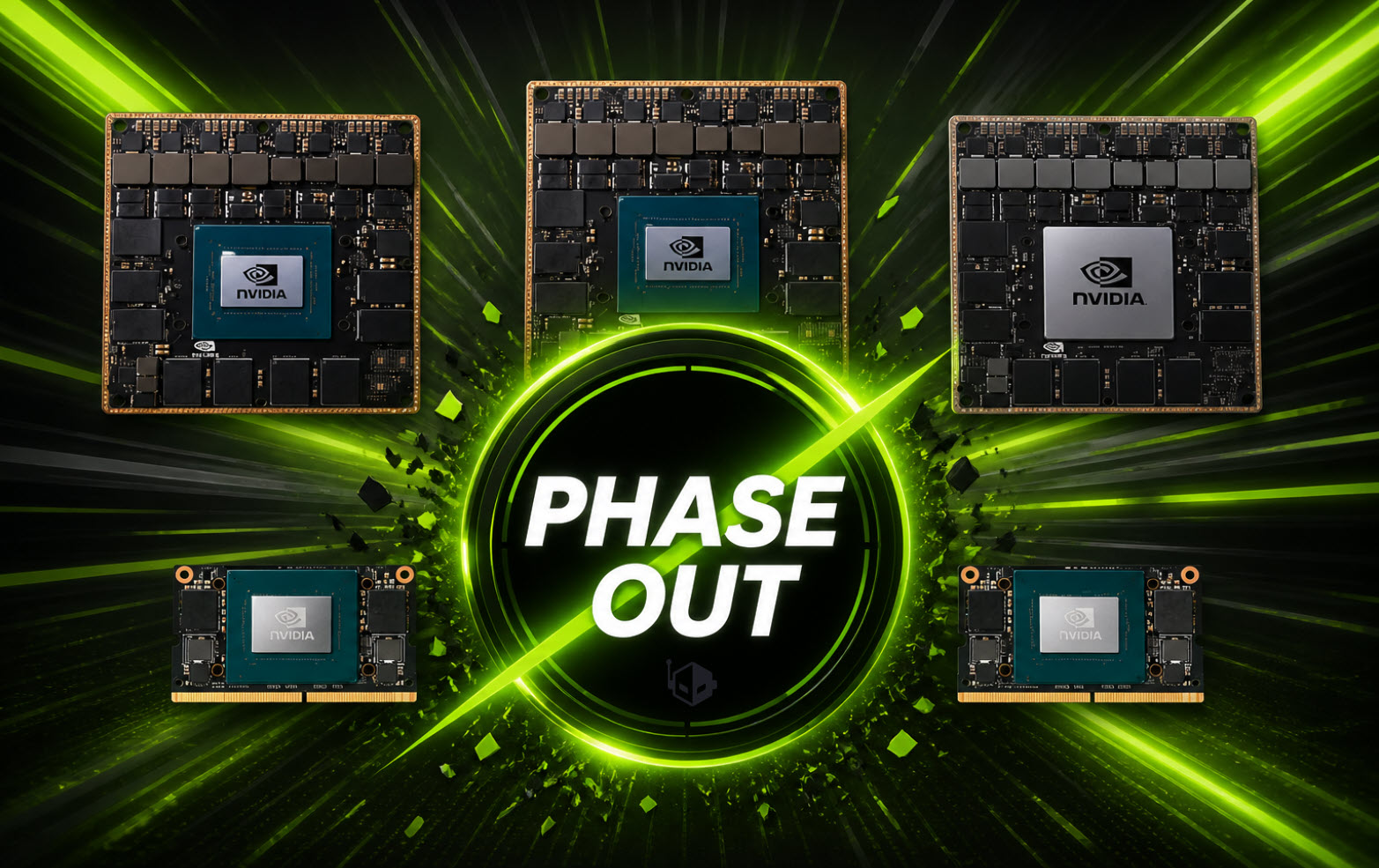
NVIDIA is winding down several older Jetson developer modules as LPDDR4 memory becomes harder to source and more expensive to buy. The move highlights how today’s memory supply constraints are affecting not only PCs and servers, but also single-board computers and embedded AI platforms used in robotics, automation, and edge computing.
Jetson modules are compact embedded computing platforms built for tasks like Edge AI inference, computer vision, and robotics control. They’re often compared to “Raspberry Pi-style” solutions for developers and product makers, but with NVIDIA GPUs and an ecosystem designed for accelerated AI workloads. Over the last few years, NVIDIA has offered Jetson modules in multiple generations and configurations, letting companies build everything from smart cameras to industrial inspection systems.
Now, partners are beginning to phase out older Jetson hardware from the 2017–2020 era, specifically the TX2 and Xavier families. The key issue is memory: these modules rely on LPDDR4, and LPDDR4 supply has tightened while pricing has climbed. As a result, NVIDIA is discontinuing production of these older Jetson modules and encouraging customers to plan migrations to newer Jetson platforms like the Orin series and upcoming architectures such as Thor.
This isn’t happening in isolation. Memory price increases have been hitting many low-cost and embedded markets, and the situation has been worsened by major manufacturers stepping away from LPDDR4/LPDDR4X production. Even with other suppliers continuing LPDDR4/LPDDR4X output, demand remains high, leaving older embedded platforms particularly exposed to shortages and cost spikes.
The Jetson models impacted by the LPDDR4 constraints include:
– NVIDIA Jetson TX2 NX (4GB and 8GB)
– NVIDIA Jetson TX2i (all SKUs)
– NVIDIA Jetson AGX Xavier (32GB and Industrial)
– NVIDIA Jetson Xavier NX
The end-of-life timeline being communicated to customers includes several important dates that product teams should factor into procurement and long-term support planning:
– Now: All new purchase orders for products integrating TX2 NX, TX2i, AGX Xavier, and Xavier NX modules are Non-Cancelable, Non-Returnable (NCNR)
– July 1, 2026: Last time buy for TX2 NX, TX2i, AGX Xavier, and Xavier NX modules (final purchase orders accepted)
– July 15, 2026: All existing purchase orders for products integrating these modules convert to NCNR
– July 15, 2027: Last time ship for orders with products integrating these modules
For developers and manufacturers, the practical takeaway is clear: if your product roadmap still depends on TX2 or Xavier-based Jetson modules, it’s time to lock in supply plans and start mapping a transition. NVIDIA and its ecosystem are steering customers toward next-generation Jetson platforms, particularly Orin, and positioning newer architectures to better align with future availability and lifecycle requirements.
However, upgrading isn’t a perfect escape from memory market pressure. Newer Jetson platforms typically use LPDDR5, and LPDDR5 is also experiencing constraints due to soaring demand from AI data centers. That means newer modules may be available, but often at noticeably higher prices. With industry signals pointing toward continued volatility in the DRAM market through 2026 and potentially worsening conditions in 2027, embedded computing buyers should expect ongoing pricing pressure and limited availability across many channels.
For teams building edge AI devices, robots, or industrial systems, the smartest approach is proactive: review BOM exposure to LPDDR4-based modules, confirm end-of-life timelines with suppliers, and begin validating next-generation Jetson hardware early to avoid last-minute redesigns, certification delays, or production slowdowns.