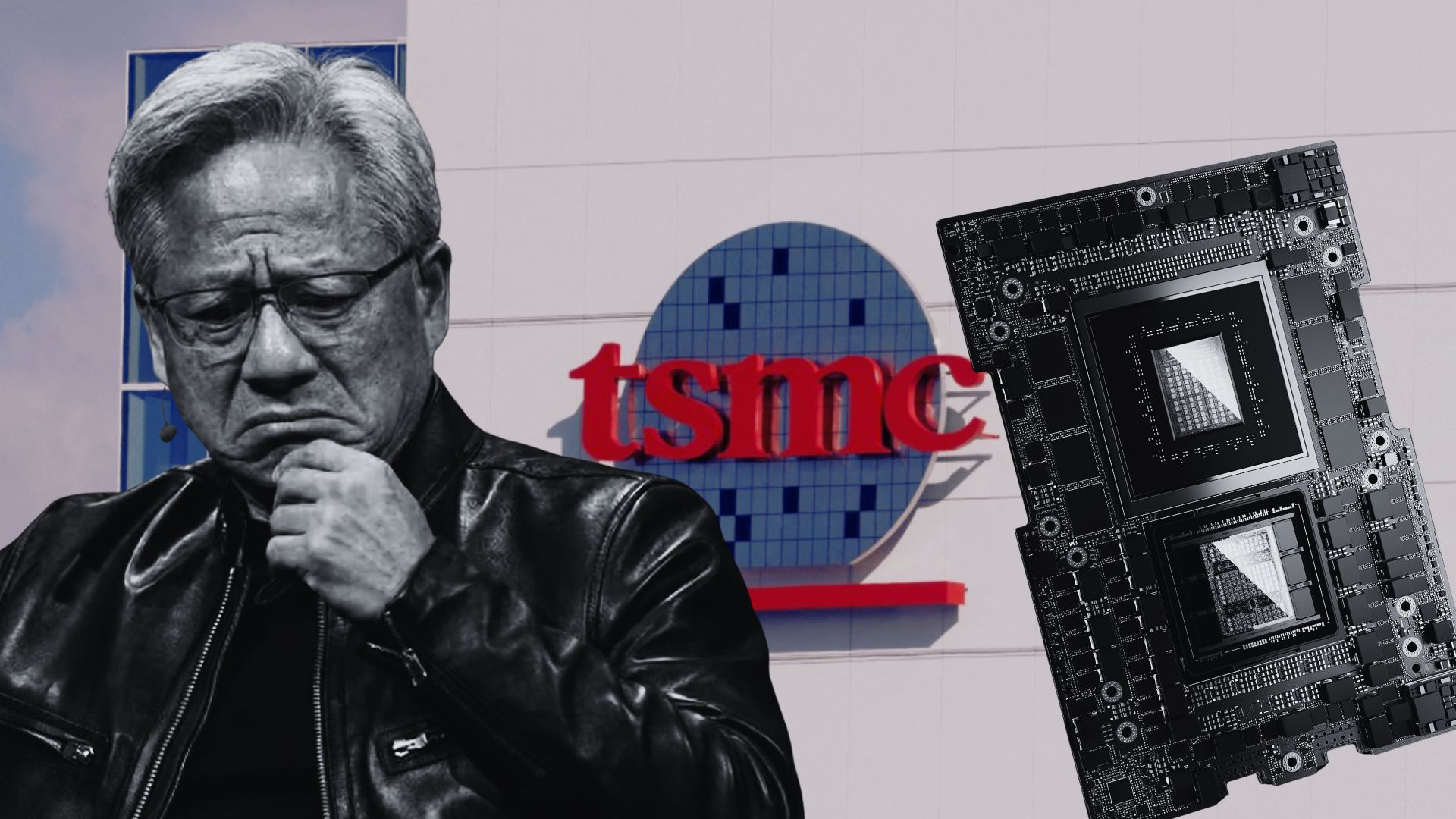
NVIDIA is reportedly running into an unexpected “too much demand, not enough supply” moment with its Hopper H200 AI chips, driven largely by a surge of interest from Chinese customers. New estimates suggest demand is so strong that NVIDIA may have to push its manufacturing partners to take unusually aggressive steps to increase output—raising fresh questions about whether global AI chip supply could tighten even further in the months ahead.
The numbers being discussed are eye-catching. Reports indicate NVIDIA has received orders that could reach as many as 2 million H200 chips for next year. By comparison, NVIDIA’s current inventory is said to be around 700,000 units. That gap highlights just how quickly demand for high-end AI accelerators is outpacing available supply, especially as hyperscalers and major data center operators race to expand compute capacity for training next-generation AI models.
A major reason this becomes a supply chain issue is NVIDIA’s heavy dependence on TSMC for manufacturing. TSMC is already under pressure as it tries to fulfill demand tied to NVIDIA’s newer AI product lines, alongside broader global semiconductor needs. While chip fabrication itself may not be the biggest limiting factor—since the H200 is built on TSMC’s 4nm process, which is being produced in Taiwan and also in the United States—the more painful bottleneck is advanced packaging capacity.
The key constraint is CoWoS (Chip-on-Wafer-on-Substrate) packaging, a specialized technology widely used across NVIDIA’s data center AI products, including Hopper and newer generations. CoWoS capacity has become one of the most important “choke points” for shipping AI GPUs at scale. Even if wafers are available, limited packaging throughput can slow final deliveries, keeping overall supply tight.
Pricing also shows why this matters. The average selling price for an H200 AI chip in China is estimated at about $27,000. If shipments were to reach 2 million units, that implies potential revenue of roughly $54 billion from China alone—an enormous figure, especially considering that earlier export restrictions had led to expectations of reduced opportunity in the region. That helps explain why the demand is difficult for NVIDIA to ignore, even as it tries to balance supply across global markets.
Performance is another driver behind the rush. The H200 is said to be around six times more powerful than the H20 in training workloads, making it far more attractive for organizations focused on building and training frontier AI models. For major AI developers and cloud-scale buyers, training performance can be the deciding factor, and that advantage appears to be fueling an aggressive wave of purchasing interest.
Now the bigger question is whether the AI hardware supply chain can realistically scale fast enough to meet demand in China while still supporting customers worldwide. With advanced packaging capacity stretched and manufacturing partners facing rising capital expenditures and labor constraints, any sudden surge in orders can ripple through the entire market—potentially impacting availability, pricing, and lead times for AI chips globally.
As demand for H200 accelerates and supply remains constrained, the next phase of NVIDIA’s AI chip story may be defined less by product announcements and more by production capacity—especially the ability of the packaging ecosystem to keep up with the world’s appetite for AI compute.