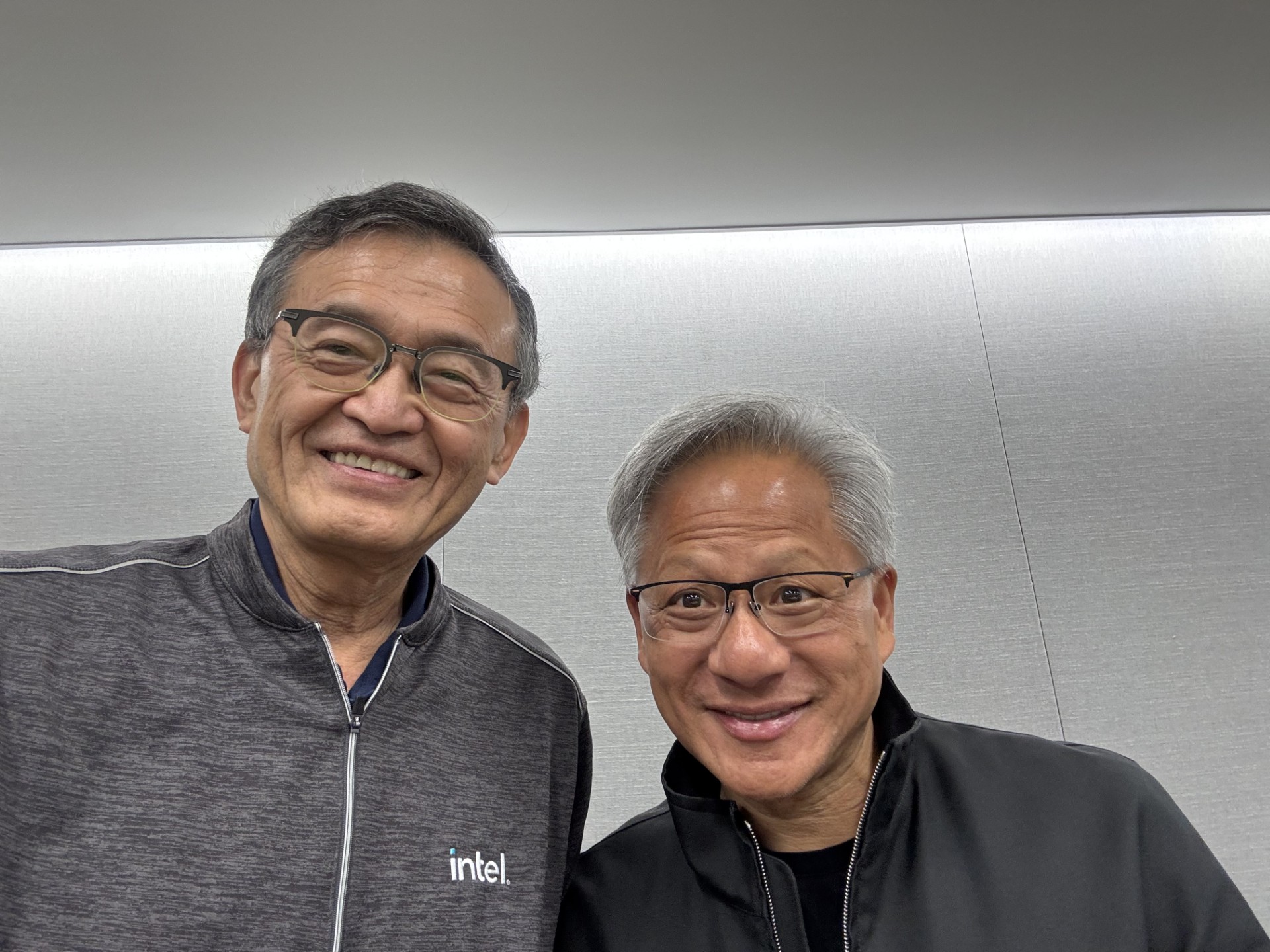
NVIDIA is reportedly taking a serious look at expanding where it gets key chips made, and Intel Foundry is emerging as a promising option for parts of NVIDIA’s next-generation AI hardware.
Right now, the global AI boom has turned advanced chip manufacturing into a capacity crunch, and TSMC has become one of the biggest pressure points in the entire supply chain. As demand surges from chip designers and major cloud players racing to secure production slots, relying too heavily on a single manufacturer can slow product rollouts and increase business risk. That’s why many fabless chip companies are actively exploring a dual-foundry strategy to avoid getting stuck in a bottleneck.
According to a new report, NVIDIA is evaluating Intel’s latest manufacturing technologies—specifically Intel 18A and potentially 14A—for the I/O die used in its upcoming AI platform known as Feynman. The I/O die is a critical piece of the overall package, handling high-speed connectivity and data movement, but it’s typically considered less “core” than the main compute die. That makes it a practical starting point for NVIDIA to test a new manufacturing partner without putting the entire product on the line.
The same report suggests NVIDIA is not planning to shift all Feynman production to Intel. Instead, it may split manufacturing between Intel and TSMC, with Intel reportedly handling around a quarter of total Feynman production while TSMC continues to produce the remainder. Intel is also expected to be involved on the packaging side by providing EMIB (an advanced packaging technology designed to connect dies efficiently within a single package). In other words, this wouldn’t just be a manufacturing test—it could also be an opportunity for Intel to showcase its advanced packaging capabilities in a high-profile AI deployment.
This kind of move reflects trends across the U.S. chip industry. Multiple major designers have been looking for ways to reduce overdependence on a single region and a single manufacturing partner. There are two major forces behind this. First is the geopolitical risk tied to concentrating so much of the world’s cutting-edge chip production in one place. Second is a simple reality of supply and demand: the AI infrastructure buildout is so large that not everyone can get the capacity they want, when they want it.
For NVIDIA, keeping Intel’s role limited to an I/O die is described as a “low risk” approach. If Intel’s yields or ramp-up don’t meet expectations, the most critical parts of the product roadmap can still remain anchored with TSMC, reducing the chance of delays. At the same time, if Intel executes well, NVIDIA gains a valuable second source for future designs and more flexibility when competition for leading-edge wafer capacity gets even tighter.
Interestingly, the report also hints that NVIDIA may look beyond AI components and potentially move additional “non-core” products to Intel Foundry over time. That could open the door to more outsourcing opportunities down the road—possibly even including future gaming GPU-related work, depending on how the partnership develops.
The bigger picture is clear: as TSMC demand continues to outpace supply, more of its customers are being pushed to diversify. With only a handful of companies capable of building chips at truly advanced nodes, Intel and Samsung increasingly look like the main alternatives for companies seeking a second manufacturing path. How well Intel Foundry delivers on its newest process technologies and packaging solutions will likely determine how quickly more high-volume customers follow NVIDIA’s lead.