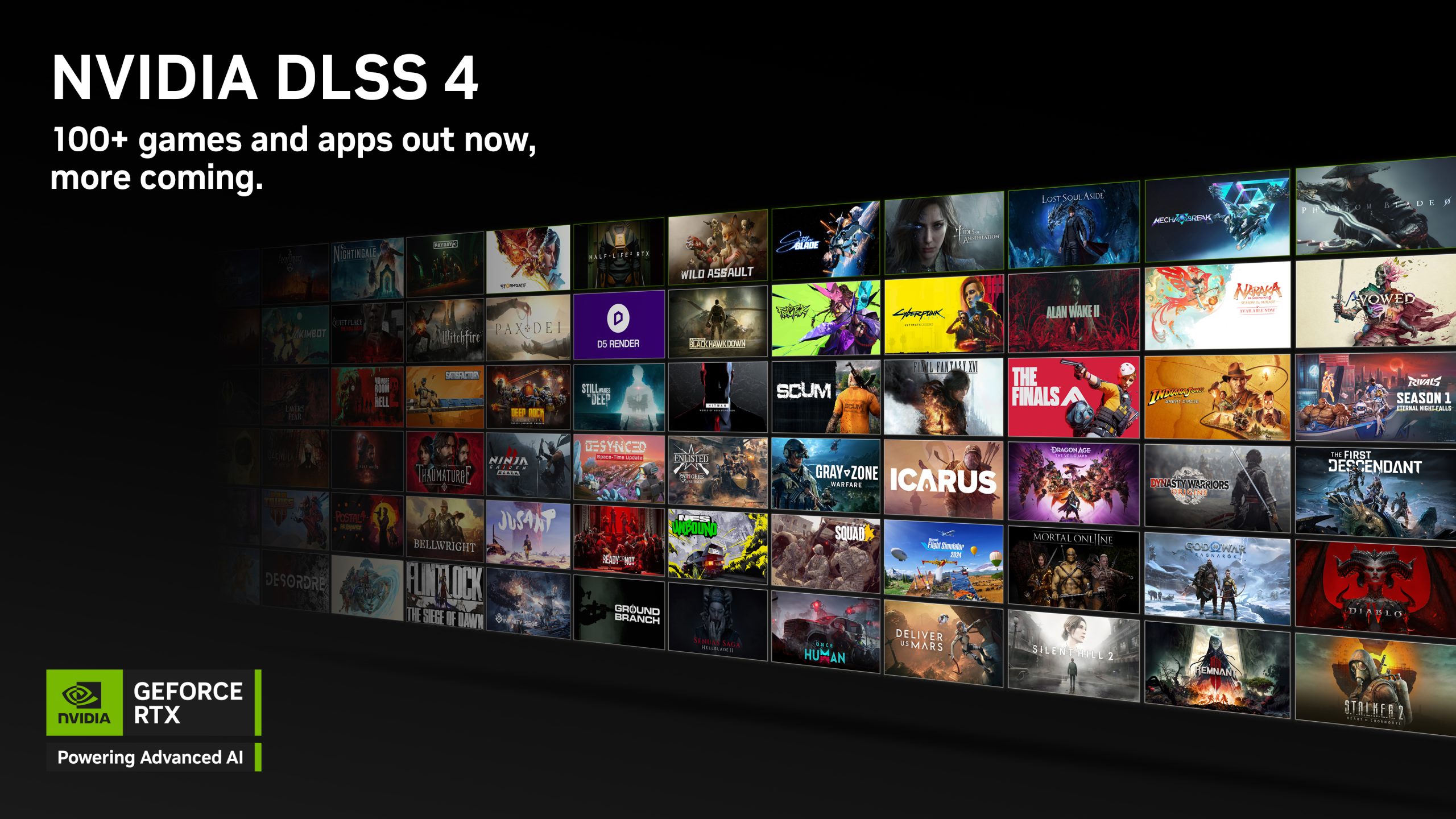
NVIDIA has set the gaming world abuzz with the expansion of its DLSS 4 technology, which is now supported in over 100 games and applications just in the first few months of 2025. This remarkable growth reflects DLSS 4’s debut alongside the RTX 50 series graphics cards earlier this year. The company has been working diligently to ensure that this cutting-edge technology delivers superior image quality and performance enhancements that gamers around the globe will appreciate.
DLSS 4 distinguishes itself from its predecessor by offering enhanced upscaling techniques and Multi-Frame Generation (MFG) support, achieving 4x frame generation capability. It maintains not just visual fidelity but also enhances the overall gaming experience. Transitioning from DLSS 3 to DLSS 4 is reported to be seamless, allowing game developers to effortlessly integrate the new technology if their software is rooted in previous DLSS APIs.
NVIDIA isn’t just stopping at these 100+ titles. More games are set to join the list, including high-profile names such as “God of War Ragnarök,” “Cyberpunk 2077,” and “Hogwarts Legacy.” The gaming giant also emphasized that the superior “Transformer” model of DLSS 4, although slightly more demanding on performance than the CNN model, offers far superior image quality.
When asked about future plans to extend support beyond the RTX 50 series or enhance MFG capabilities further, NVIDIA clarified that their current focus remains on expanding game compatibility within the 3x/4x modes. This conservative approach ensures that the quality and performance of DLSS 4 remain consistent across supported platforms.
Addressing some technical hiccups with the RTX 50 series, NVIDIA assured users that they are committed to improving user experience and have been actively working on driver updates to resolve reported issues.
In addition to DLSS improvements, NVIDIA is also pushing forward with its Neural Shading technologies. These innovations will soon be integrated into the DirectX API, set to roll out next month. By leveraging neural networks in programmable shaders, NVIDIA aims to bring enhancements such as performance boosts and reduced system resource consumption, paving the way for truly immersive gaming experiences with the RTX 50 series.
As NVIDIA continues its journey of innovation, gamers can look forward to a host of thrilling experiences enabled by these technological advancements. From smoother animations to stunning visuals, the future of gaming is here, and it’s powered by NVIDIA’s relentless pursuit of excellence.