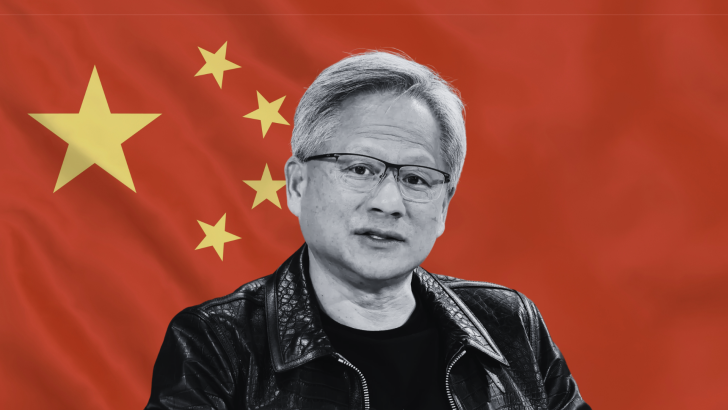
NVIDIA’s CEO Jensen Huang has expressed strong opinions on the current US AI policies, particularly regarding their approach towards China. He sees the “diffusion” rule as ineffective, arguing that it inadvertently hampers America’s technological edge.
Jensen points out that NVIDIA has long been integral to China’s tech advancements, boasting a relationship spanning three decades. From the onset, he opposed US export controls, and now, during a Stratechery interview at Computex, he voices concerns about the AI diffusion rule. He believes it restricts American technology, rendering it irrelevant in key regions if not swiftly adopted. The aim should be to accelerate, not limit, the spread of American tech worldwide.
He noted that over half of AI researchers hail from China, working in top-tier companies like Anthropic and OpenAI. Despite stringent US regulations, China’s homegrown achievements, such as the DeepSeek and Ascend AI chips, highlight their competitive standing alongside the US. Huang emphasizes that welcoming American technology into China could foster economic growth, create jobs, and reduce the trade deficit.
If China is allowed to build its own AI ecosystem, the US risks losing its leadership position, and NVIDIA could become a secondary choice for Chinese customers. According to Huang, the AI Diffusion rule may actually propel China’s AI progress, as their advances could easily spread globally. He believes that US restrictions will ultimately be counterproductive.
Discussing the impact of the H20 AI GPU ban, Huang warned of losing up to $15 billion in sales, with the US missing out on $3 billion in taxes. He compared China’s AI sector to Boeing’s significance, citing the importance of not just the product, but the entire ecosystem. In response to the H20 ban, he remarked that anyone believing it would hinder China’s AI capabilities is misguided.
The US stance on Chinese AI, which took shape during the Biden administration, persists today. However, China shows no signs of slowing down its AI development. In fact, their progress continues at an unabated pace, suggesting that these regulations may be inadvertently fueling China’s advancements rather than curbing them.


