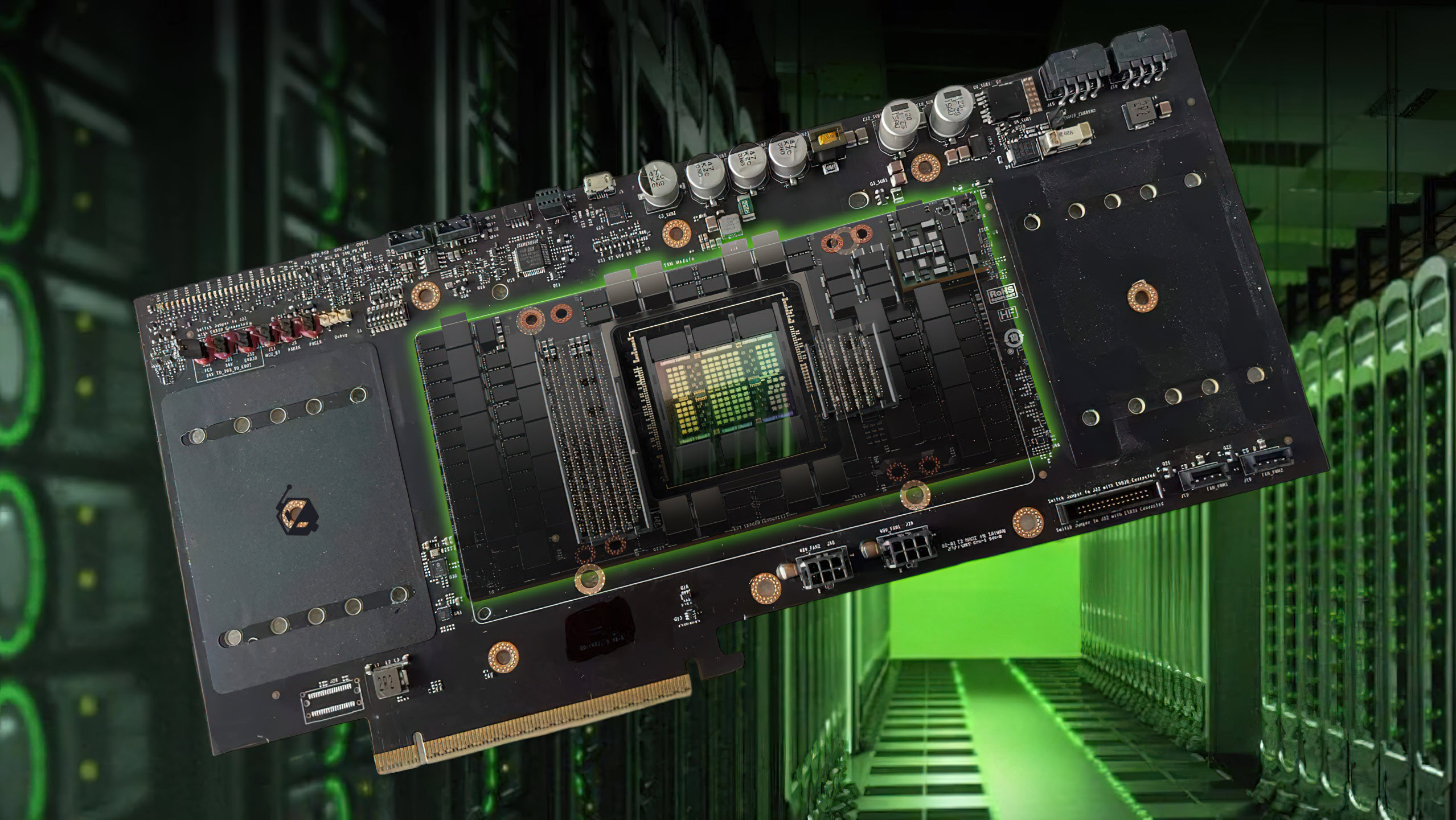
In a surprising twist, Russia seems to have bypassed US sanctions and acquired NVIDIA’s top-tier AI chips through a rather ingenious workaround, reportedly involving an Indian pharmaceutical company. The global race to accumulate AI computing power is in full swing, with nations like Russia and China finding “unavoidable” paths around trade barriers.
The strategy of the US government to curtail the influence of American technology on global markets appears to be faltering as sanctioned countries discover alternative methods to access premium AI hardware. Through avenues such as GPU rental services and black markets, NVIDIA’s advanced AI chips are reportedly reaching markets that were intended to be off-limits. According to a recent Bloomberg report, Russia has supposedly gained access to NVIDIA’s H100 AI chips, surprisingly, via an Indian channel, with shipments valued at an astounding $300 million.
Allegedly, an Indian company named Shreya Life Sciences has shipped over a thousand units of Dell’s premier AI clusters, the PowerEdge XE9680, to Russia. These clusters are packed with state-of-the-art AI accelerators from tech giants like NVIDIA and AMD. This implies that despite a ban on Team Green’s AI chips in Russia, they are still acquiring them, a clear breach of US and EU export regulations.
Reports suggest that Russia is utilizing this AI computing arsenal not only for military enhancements and warfare advancements but also to bolster their own in-country AI capabilities. This revelation is troubling US authorities, particularly in light of the ongoing conflict in Ukraine. Remarkably, India isn’t acting alone in this supply chain. The Dell PowerEdge servers are being imported from Malaysia before being dispatched from India to Russia, presenting a complex global network involved in this operation.
India’s close ties with Russia mean that this trade doesn’t necessarily contravene domestic laws, but for international powers, this could be seen as alarming. As an emerging player in AI technology, and following NVIDIA CEO Jensen Huang’s recent visit to explore integrating new processors into India’s AI clusters, this situation places India in a delicate position. The potential involvement of India in channeling advanced technology to nations like Russia may prompt the US to reconsider how to enforce technology export controls more effectively.
This scenario highlights a crucial point: banning the export of specific products is insufficient when motivated entities are set on finding loopholes. Given their vast market, cutting off supplies entirely isn’t feasible for companies like NVIDIA, making robust supply chain regulation essential for the US and allied nations to prevent the unauthorized spread of sensitive technologies.