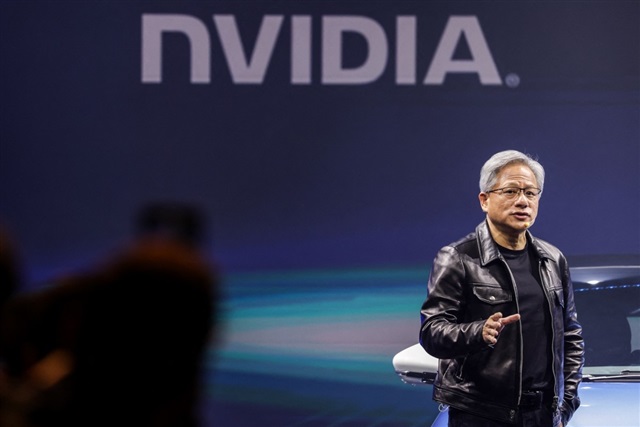
Nvidia’s 2035 Outlook: Why Jensen Huang’s Exit Matters Beyond the CEO Search
Jensen Huang’s resignation, which took effect on November 12, immediately shifted attention toward one obvious question: who will lead Nvidia next? For investors, customers, and the wider technology industry, the search for Nvidia’s next CEO is important. But it may not be the most important way to understand the company’s future.
A better question is this: if Huang had stayed in charge, what kind of company would Nvidia have become by 2035?
That question matters because Huang was not just another chief executive. He was the architect of Nvidia’s identity, the person most associated with turning the company from a graphics chip maker into one of the central forces behind artificial intelligence, accelerated computing, data centers, gaming, autonomous systems, and high-performance computing. Under his leadership, Nvidia did not simply follow market trends. It often helped define them.
That is why his departure represents more than a leadership change. It creates a gap between Nvidia’s original long-term path and the company’s new reality.
For years, Nvidia’s strategy carried a clear signature: take a technology that looks specialized, invest early, build a complete ecosystem around it, and wait for the market to catch up. That approach worked with GPUs, then with AI computing, and later with large-scale data center platforms. Huang’s Nvidia was not built around short-term product cycles alone. It was built around the belief that computing itself was changing, and that Nvidia could become the platform company behind that transformation.
By 2035, a Huang-led Nvidia may have looked very different from the company people knew in the early 2020s. It likely would have pushed even further beyond chips, becoming a deeper infrastructure layer for artificial intelligence, robotics, simulation, enterprise computing, cloud platforms, and potentially national-scale AI systems. In that version of the future, Nvidia would not merely sell processors. It would provide the hardware, software, networking, tools, and platforms that power the next generation of digital industry.
That was the bigger vision: Nvidia as a foundation for the AI economy.
Now, the company’s challenge is to prove that this vision can survive without its defining leader at the center.
The next CEO will inherit one of the strongest positions in modern technology. Nvidia remains deeply embedded in AI development, data center expansion, gaming, professional visualization, and advanced computing. Demand for AI infrastructure continues to reshape enterprise spending, and Nvidia’s products remain closely tied to that boom. The company has scale, talent, brand power, developer loyalty, and a massive ecosystem.
But leadership transitions at companies this influential are never just about operational continuity. They are about strategic courage.
Huang’s greatest strength was not only recognizing where technology was going. It was his willingness to commit before the outcome was obvious. That kind of leadership is difficult to replace because it depends on conviction, timing, and a tolerance for risk. A new CEO may be highly capable, but the question is whether Nvidia will continue making bold, decade-long bets or gradually become more cautious as it protects its dominant position.
That distinction could define Nvidia’s 2035 outlook.
If the company remains aggressive, it could continue expanding from AI chips into full-stack computing platforms, robotics systems, AI factories, digital twins, autonomous machines, and enterprise AI services. Nvidia could become even more important to global technology infrastructure, supporting everything from scientific research to manufacturing, healthcare, transportation, and cloud-based intelligence.
If the company becomes more conservative, it may still remain powerful, but in a different way. It could become a more traditional technology giant: profitable, influential, and efficient, but less likely to reshape entire markets. In that scenario, Nvidia would still participate in the future of AI, but it may no longer define it as forcefully as it did under Huang.
That is the real cost of the resignation. It is not just uncertainty over who takes the top job. It is uncertainty over whether Nvidia’s unique culture of long-range ambition can remain intact.
Investors will watch revenue, margins, supply chains, and product roadmaps. Customers will watch execution. Developers will watch platform support. Competitors will watch for hesitation. But the deeper issue is whether Nvidia can preserve the mindset that made it exceptional: the ability to see the next computing era early and build for it before the rest of the industry fully understands its importance.
By 2035, Nvidia may still be one of the most important companies in the world. Huang’s departure does not erase its advantages, its technology, or its ecosystem. But it does change the story. The company now has to prove that its future was never dependent on one person, even if that person was central to creating it.
The next decade will reveal whether Nvidia can move from being the company built by Jensen Huang into a company that can continue his vision without him. That transition, more than the identity of the next CEO alone, will determine what Nvidia becomes by 2035.


