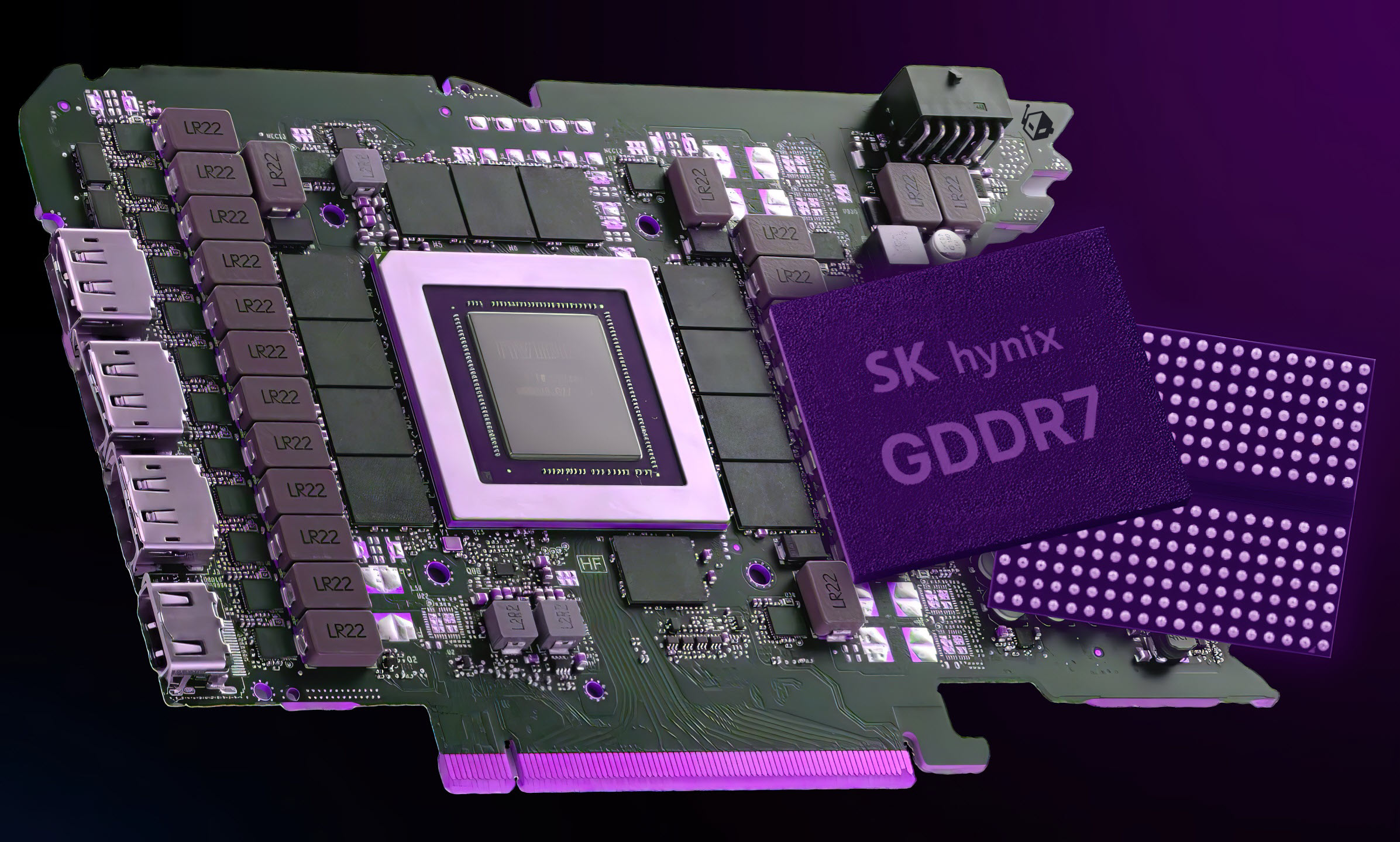
Excitement is brewing in the world of graphics cards as NVIDIA’s anticipated RTX 50 series makes a notable shift in its memory supplier. After initially equipping the latest RTX 50 series gaming GPUs with GDDR7 modules from Samsung, NVIDIA has recently embraced SK Hynix as an additional partner for their memory chips. This change has already made waves with the RTX 5070, which is now outfitted with SK Hynix GDDR7 memory.
This development signals a potential shift across the entire lineup, with the RTX 5090, RTX 5080, and RTX 5070 Ti likely to follow suit. However, gamers and tech enthusiasts need not worry about potential differences in performance. The memory from SK Hynix should ensure the same 28 Gbps speeds as their Samsung counterparts. While slight variances might exist in overclocking capabilities, these would typically only be noticeable to dedicated techno-enthusiasts who enjoy fine-tuning their setups.
NVIDIA’s decision to diversify their sourcing coincides with SK Hynix’s recent entry into the mass production of GDDR7 memory, trailing behind industry giants Samsung and Micron, who began the transition in late 2024. This strategic pivot could alleviate previous supply constraints, thus improving the availability of the RTX 50 series GPUs, which have been hindered by memory shortages.
The move to work with multiple memory suppliers could significantly stabilize the distribution of these powerful GPUs, ensuring better market presence and availability. As NVIDIA continues to expand its RTX 50 series, enthusiasts eagerly await the release of the RTX 5060 Ti and RTX 5060. While the RTX 5060 Ti is scheduled to hit the market on April 15th, there might be a slight delay for the RTX 5060, adding a bit of suspense to this already intriguing rollout.
This collaboration between NVIDIA and SK Hynix is a win-win situation, promising to deliver cutting-edge gaming experiences to a wider audience while enhancing supply chain resilience. As the release dates approach, the anticipation builds, inviting gamers to see firsthand how these partnerships shape the future of graphics processing.


