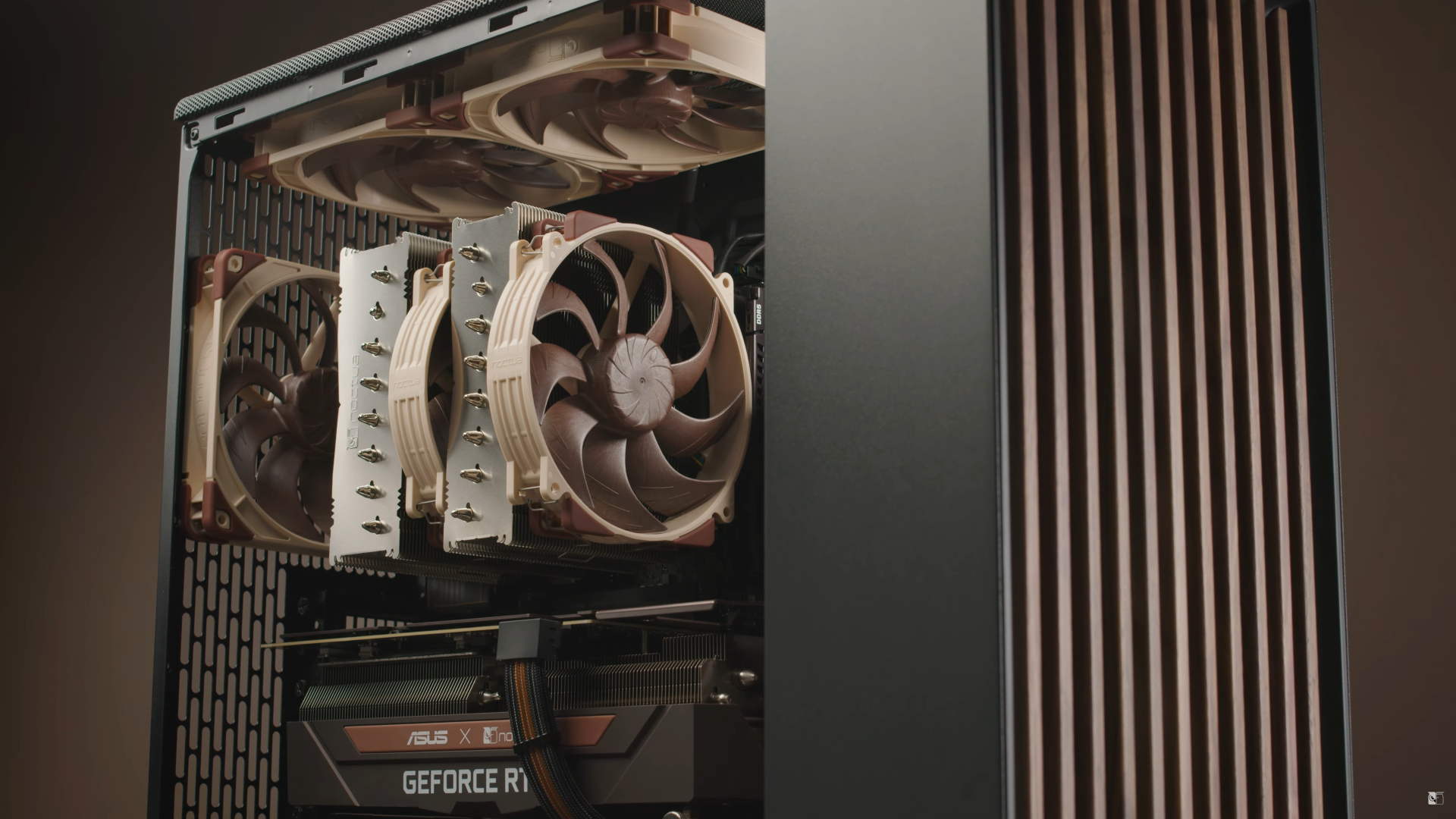
Noctua’s New PC Case Clearance Database Helps Builders Choose the Right CPU Cooler
Choosing the right CPU cooler for a PC build is not always as simple as checking the spec sheet. While most case manufacturers list CPU cooler clearance on their product pages, real-world fitment can sometimes be different. A cooler that appears compatible on paper may sit too close to the side panel, while another case may quietly offer more space than advertised.
To make this process easier for PC builders, Noctua has created a practical CPU cooler clearance database covering more than 100 PC cases from different manufacturers. Instead of relying only on official case specifications, Noctua manually measured the available cooler height inside each case and compiled the results into case-by-case compatibility tables.
This is especially useful for anyone planning to install a large air cooler. High-performance tower coolers can be tall, and even a few millimeters can decide whether the side panel closes properly or presses against the cooler. For builders who want maximum cooling performance without moving to liquid cooling, accurate clearance data is a major advantage.
Noctua’s findings show that official case specifications do not always tell the full story. Some cases actually provide more room than listed by the manufacturer. For example, popular models such as the Corsair 4000D and 5000D series reportedly offer close to 10 mm of extra clearance in real-world measurements. That additional space can make it possible to install larger coolers, including tall models like the Noctua NH-D15 G2, which stands at 168 mm.
However, the database also highlights the opposite issue. Some PC cases offer slightly less clearance than advertised. One example is the ASUS Prime AP201, where Noctua found the real-world clearance to be around 2 mm lower than the official figure. That may not sound like much, but in compact builds or with oversized coolers, it can make a noticeable difference.
Although the database is focused on Noctua’s own CPU coolers, the information can still help users evaluate coolers from other brands. Since cooler height is a common specification across air coolers, builders can compare the measured case clearance with the height of any cooler they are considering.
For PC enthusiasts, first-time builders, and anyone upgrading their processor cooling, this database removes much of the guesswork. It can help avoid frustrating installation problems, reduce the risk of buying a cooler that does not fit, and even reveal when a case can handle a larger cooler than expected.
Noctua says it plans to keep expanding the database as more PC cases are measured manually. As the list grows, it could become a valuable reference for anyone planning a clean, quiet, and high-performance air-cooled PC build.