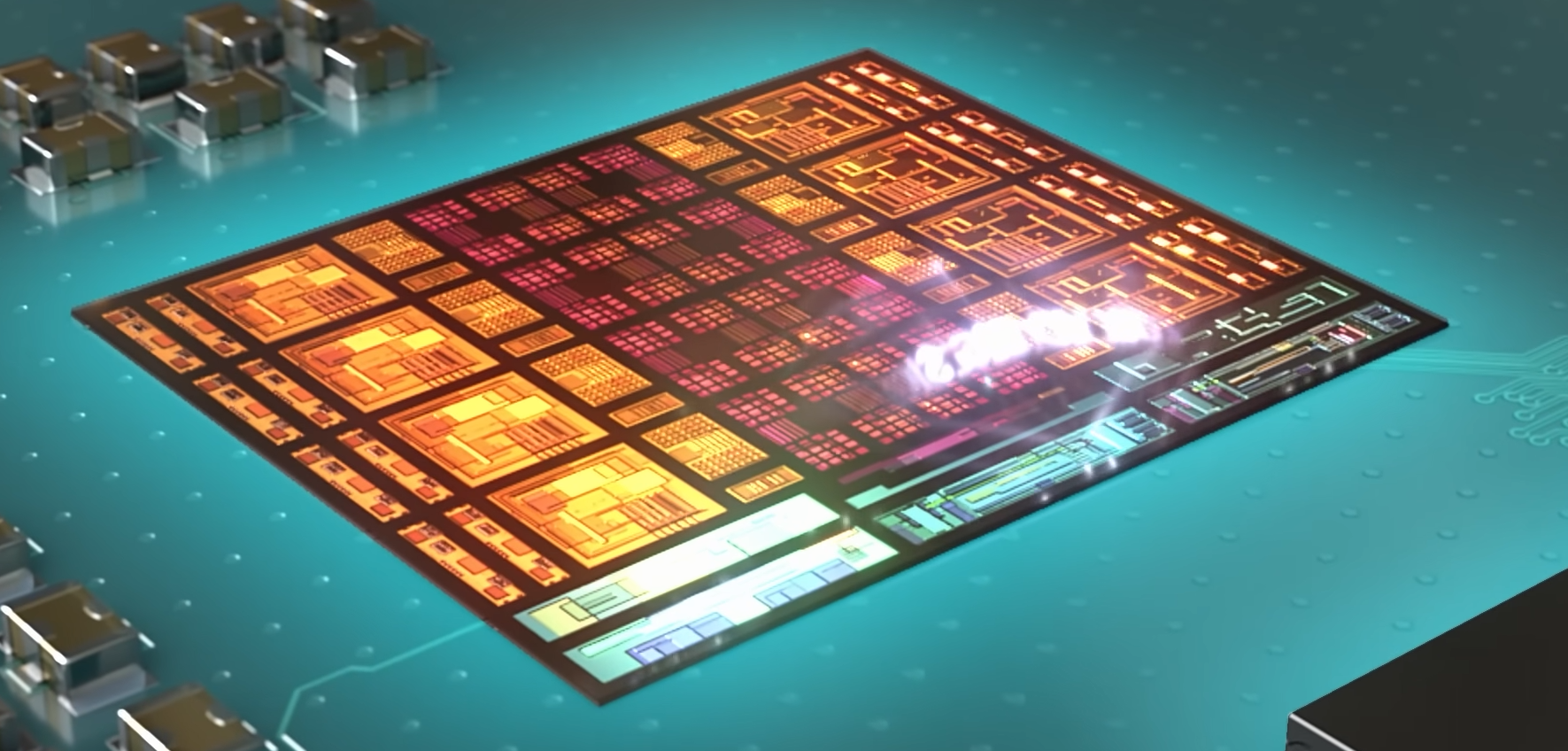
AMD is poised to unleash a wave of innovation with its next-generation Ryzen APUs and Threadripper CPUs, taking full advantage of their groundbreaking 3D V-Cache technology. This advanced memory stacking technique, which revolutionized gaming and productivity performance, is rumored to be expanding beyond traditional desktop CPUs. Speculation suggests that these enhancements will soon benefit workstations and mobile platforms as well.
Industry whispers, first surfacing from the Chiphell Forums, indicate that AMD is gearing up to introduce 3D V-Cache technology in its upcoming Threadripper processors. Further confirmation from supply chain insiders suggests that this cutting-edge feature will not only grace the new Threadripper CPUs but also set its sights on AMD’s Ryzen APUs.
One intriguing aspect of this development is the potential for AMD to extend the X3D series into the mobile market. While details are still emerging, what’s certain is that AMD’s ability to integrate a 3D V-Cache effectively enhances both CPU and GPU performance, tapping into greater processing power without escalating costs excessively—a techno-financial balance perfect for lifting the performance barrier on notebooks.
While the current buzz points to the inclusion of this tech in next-gen Threadripper CPUs—referred to as the 9000WX/X series—it’s worth noting that these processors will feature an impressive increase in L3 cache. Thanks to advanced 3D V-Cache stacking across all available CPU Complex Dies (CCDs), rather than just a single one, these CPUs promise to bring significant advancements in computational prowess.
AMD’s approach of integrating this feature across multiple CCDs, already seen in their EPYC CPUs, indicates a keen eye on maximizing efficiency and performance. The high-end chips boasting this architecture are anticipated to command top-tier prices, reflecting their expected performance capabilities.
The tech world is eagerly watching how these enhancements will translate to real-world performance, especially on mobile devices. By positioning the cache underneath the CPU chip die, AMD promises better thermal contact with the Integrated Heat Spreader (IHS), potentially allowing for higher clock speeds and cooler operation.
As AMD continues to push the envelope in processor technology, fans and tech enthusiasts wait with bated breath to see just how these innovations will reshape the performance landscape.