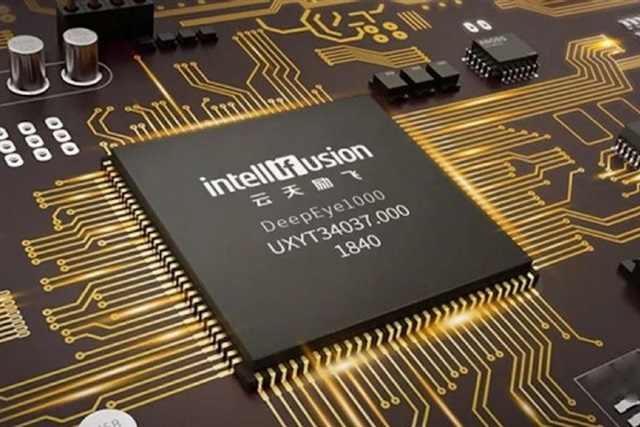
The Dutch government’s decision to impose a one-year freeze on the assets of Nexperia, the Netherlands-based chipmaker owned by China’s Wingtech, has thrust the semiconductor supply chain back into the spotlight. Citing national security concerns, the move underscores just how exposed global electronics, automotive, and AI industries remain to geopolitical shocks. It is also likely to push China’s chip ecosystem to move even faster on self-reliance across design, manufacturing, and packaging.
Why this matters now
– Supply chain fragility: Nexperia is a high-volume supplier of essential components used in everything from smartphones and EVs to industrial equipment and servers. Even a temporary freeze raises the risk of procurement bottlenecks, longer lead times, and price volatility.
– Europe’s tougher stance: The action signals a more assertive European approach to screening foreign-owned tech assets, echoing broader national security reviews and export controls seen in other regions.
– AI knock-on effects: The surging buildout of AI data centers has already stretched supplies of power management components, discrete semiconductors, and other mature-node chips. Any constraint on a major supplier can ripple through AI hardware roadmaps, prompting buyers to reshuffle orders and qualify alternates.
What buyers and manufacturers should expect
– Short-term turbulence: Procurement teams may face spot shortages or need to pay premiums to secure compatible parts. Expect reallocation of supply, expedited qualification of second sources, and tighter allocation from distributors.
– Design pivots: Engineering teams could revisit bills of materials to reduce single-supplier dependencies. That might include redesigns to accommodate pin-to-pin alternates or broaden approved vendor lists.
– Inventory strategies: Companies may temporarily increase buffer stocks for high-runner parts to bridge uncertainty while regulators and stakeholders work toward clarity.
How China’s chip industry may respond
– Faster capacity build-out: Mature-node fabrication, power semiconductors, and packaging/assembly are likely to see accelerated investment to close near-term gaps and reduce reliance on foreign screening risk.
– Ecosystem deepening: Beyond fabs, expect intensified efforts in EDA tools, equipment localization, and materials to strengthen end-to-end resilience.
– Global customer outreach: Chinese suppliers may court international customers seeking stable alternatives, especially for high-volume, cost-sensitive components used in AI servers, EVs, and industrial automation.
Potential implications for AI and automotive
– AI infrastructure: Power discretes, voltage regulators, and timing/logic components are small line items in AI servers but are mission-critical. Tightness here can delay rack deployments, complicate thermal/power budgets, and push integrators to rethink sourcing.
– Electric vehicles: EV platforms depend heavily on power MOSFETs, diodes, and gate drivers. Any hiccup in these categories can slow production schedules and force automakers to adjust trim mixes or regional allocations.
– Industrial and consumer electronics: Expect selective lead-time extensions and occasional substitutions, particularly in products with stringent certification requirements where qualifying new parts takes longer.
Risk mitigation playbook for procurement teams
– Map dependencies at the part-number level and flag sole-sourced components.
– Qualify functionally equivalent alternates where feasible and pre-negotiate allocations.
– Strengthen relationships with authorized distributors to improve visibility on lead times and allocation policies.
– Build scenario plans for price swings and delivery delays; align with finance on buffer inventory thresholds.
– Coordinate with engineering to implement drop-in replacements and modular designs that tolerate part substitutions.
What to watch over the next 3–12 months
– Regulatory clarity: Further guidance from Dutch and EU authorities on the scope and duration of restrictions, and whether exemptions or phased adjustments emerge.
– Supply rebalancing: How quickly alternative suppliers absorb demand, and whether pricing stabilizes as second sources ramp.
– Investment signals: Announcements of new capacity, packaging lines, or strategic partnerships aimed at de-risking mature-node components.
– Lead-time trends: Any sustained extension for high-volume discretes and power management ICs would indicate broader, longer-lasting impact.
Bottom line
The asset freeze serves as a fresh reminder that national security policies and semiconductor supply chains are now inseparable. Organizations that diversify sources, qualify alternates early, and maintain flexible designs will be best positioned to weather disruptions. For the broader market, the episode could trigger a new wave of orders and re-sourcing across AI, automotive, and industrial electronics—accelerating the ongoing realignment of global chip supply.