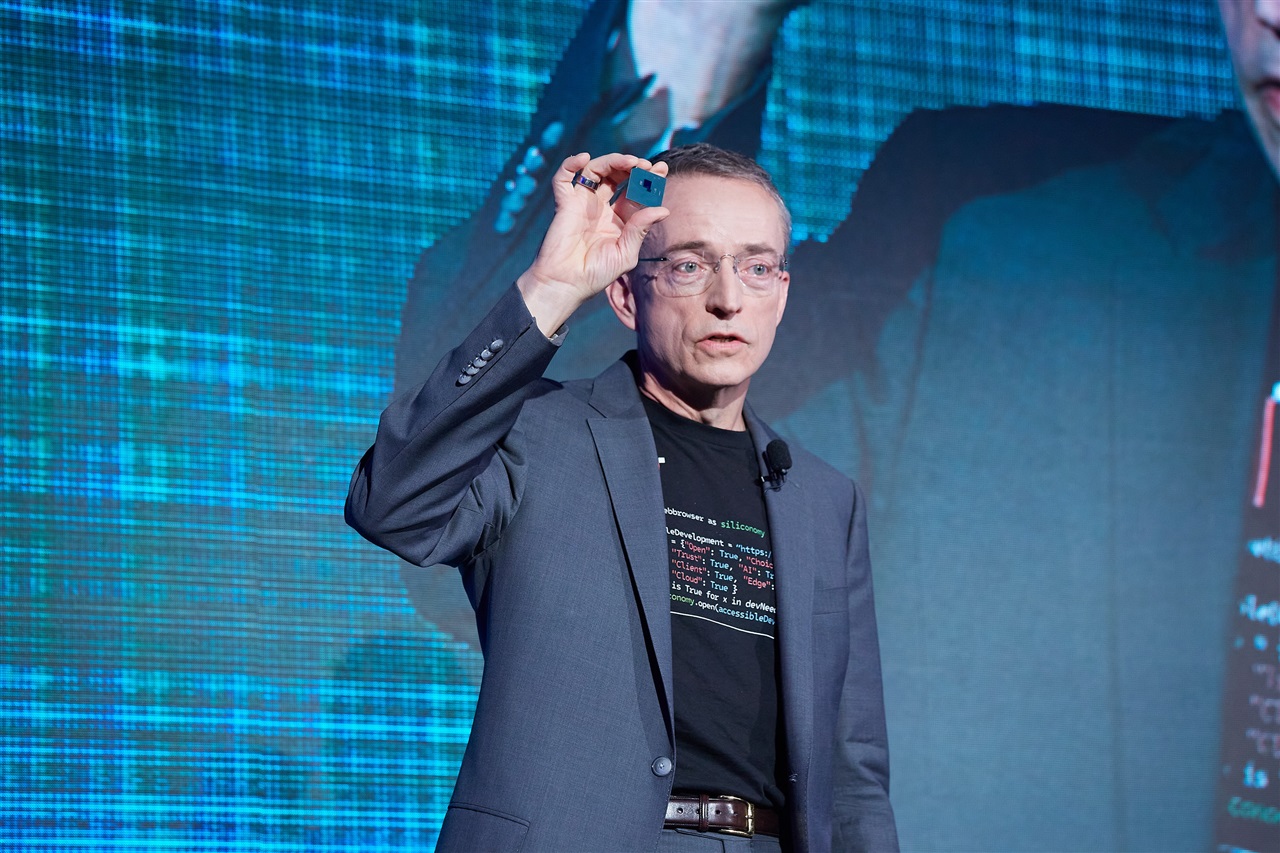
Intel has long been revered as a titan of American enterprise, yet recent hurdles have some whispering a less flattering moniker: “too big to fail.” Now, with ambitious cost-cutting measures and fresh orders coming in, there’s a flicker of hope that this tech giant could stage a remarkable rebound. The company has announced a plan to slash costs by a whopping $10 billion, which unfortunately includes the difficult decision to lay off 15,000 employees and exit certain real estate holdings.
In a significant boost, Intel recently forged a strategic alliance with Amazon Web Services (AWS) and secured $3 billion in funding from the CHIPS and Science Act for its Secure Enclave program. “The Board and I agreed that we have a lot of work ahead to drive greater efficiency, improve our profitability, and enhance our market competitiveness,” Intel CEO Pat Gelsinger shared with employees, underscoring a commitment to transformative action.
Despite holding a dominant 76% share of the global CPU market as of the first quarter of 2024, Intel has been grappling with financial headwinds and stagnating sales. According to a 10-Q report filed in August, Intel’s Client Computing Group boasted a 19% revenue spike in the first half of 2024, but other divisions like Data Center, AI, Network, and Edge sectors saw little to no growth. While there was a slight uptick in Intel Foundry’s sales during the second quarter, the overall sales for the first half of the year dipped by 3%. Particularly troubling is the decline in external customer interest in Intel Foundry Services (IFS), with sales contributions plummeting by over 30% in the second quarter compared to the same period last year.
To add to Intel’s woes, figures highlighted a significant loss in the IFS division, overshadowing profits from other business areas:
– 2Q24 IFS Total: 4320 (Total), 771 (External), (2830) (Losses)
– 1H24 IFS Total: 8689 (Total), 1042 (External), (5304) (Losses)
– 2Q23 IFS Total: 4172 (Total), 313 (External), (1869) (Losses)
– 1H23 IFS Total: 9003 (Total), 1349 (External), (4229) (Losses)
Intel is also facing fierce competition, with Qualcomm making waves in the AI PC market, intensifying the pressure within the X86 architecture sphere. Yet, the challenges within IFS seem to be the most pressing.
To bolster employee morale, Gelsinger has been vocal about the importance of maintaining momentum as Intel gears up to launch Intel 18A. He has emphasized the need for capital efficiency and a more competitive cost structure to hit that $10 billion savings target. Additionally, he has highlighted the need to leverage Intel’s strong X86 franchise to drive its AI strategy, though the lasting impact of these words remains to be seen.
As Intel Foundry transitions to a subsidiary, there are promises of increased independence, but some analysts remain skeptical. “The CEO does not look like intending to spin off or sell the foundry business in the short term,” noted Andrew Lu, a senior semiconductor industry analyst in Taiwan. He hinted that reducing Intel’s entanglement with fabrication could be favorable, and any signs of the company considering an IPO or spin-off could signal a positive shift.
Navigating these complex challenges will demand agility, innovation, and robust strategic partnerships. If Intel can harness these strengths, it has a fighting chance to reassert its dominance in the semiconductor industry.