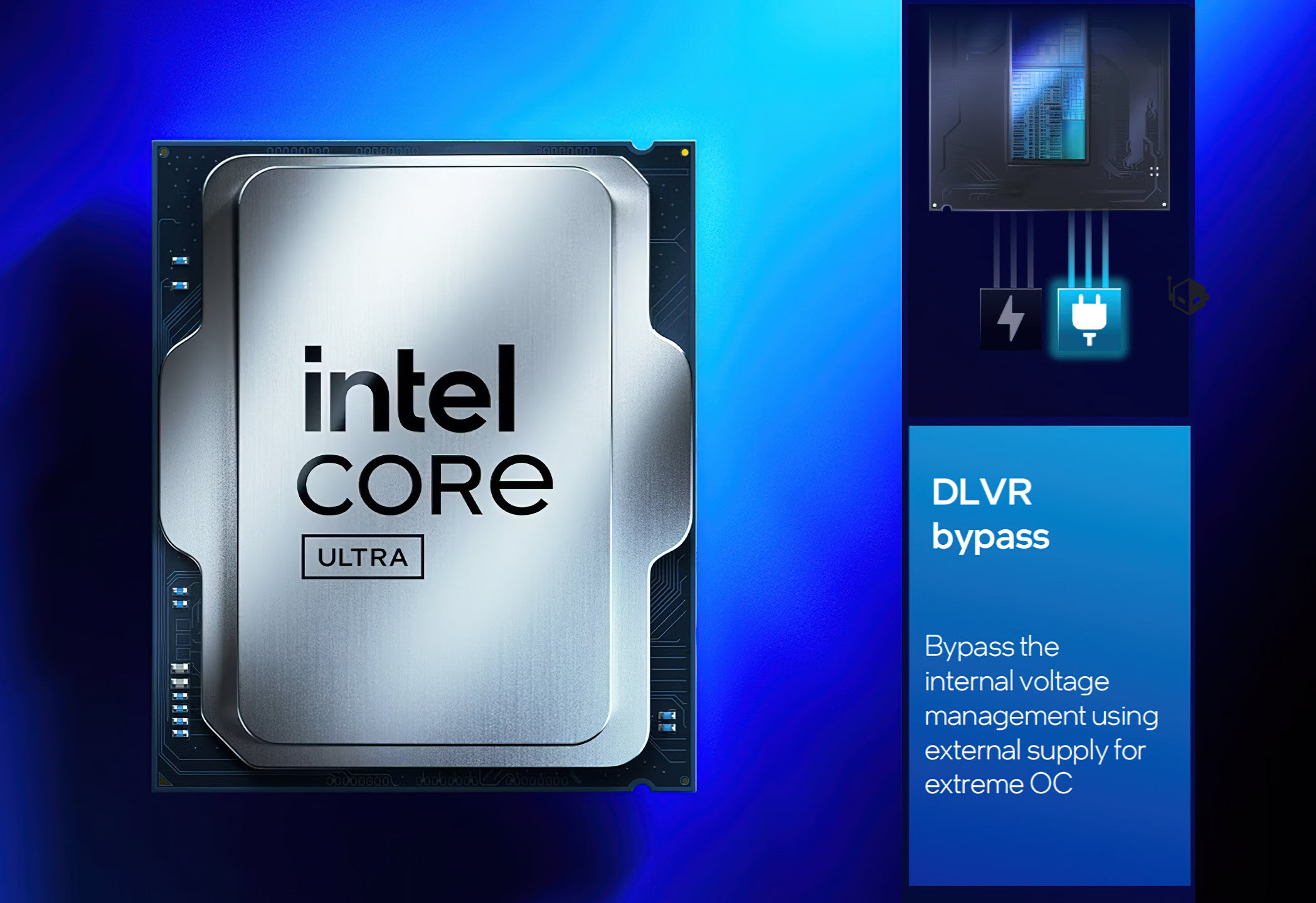
Intel’s latest decision to disable the DLVR Bypass on its Core Ultra 200S processors is making waves in the tech world, particularly among enthusiasts who like to tinker with their systems. This change means that the increased power dissipation under high loads cannot be circumvented, something that was previously manageable with older BIOS versions.
Introduced in 2021 and integrated into Intel’s Raptor Lake processors in 2022, the Digital Linear Voltage Regulator (DLVR) is now a default feature in the Arrow Lake Core Ultra 200S series, aimed at boosting power efficiency. Despite its benefits, DLVR also comes with certain restrictions. Until now, users had the option to disable or bypass this feature on Z890 motherboards via the BIOS. This flexibility is no longer available with the latest BIOS update, which introduces microcode 0x112.
One tech enthusiast, “Trill,” discovered through testing that his ASRock Z890 Pro RS motherboard lacked the option to disable DLVR mode—a feature typically labeled as “Power Gate Mode” in the BIOS. This feature has been crucial for minimizing power dissipation, which is particularly impactful under heavy CPU loads.
The main issue with DLVR at high loads is its dynamic adjustment mechanism, which optimizes voltage supply to match processing demands. While this ensures that the CPU receives adequate power, it can lead to power dissipation as high as 90W when converting high input voltages down to the suitable levels required by the CPU cores.
Intel has explained that disabling DLVR Bypass—known as Power Gate Mode—is intended to prevent any unintended misuse, reserving this capability for extreme overclocking with sub-ambient cooling solutions like liquid nitrogen. This means that only those pursuing serious overclocking will have access via specific cooling methods.
Currently, only ASRock and MSI motherboards have rolled out the updates containing this microcode. Gigabyte and ASUS users remain in waiting for their versions. The change underscores Intel’s commitment to providing enhancements that prioritize both performance and safety but remains a topic of much discussion among the tech community, given that practical implementation of such extreme cooling is rare among typical users.