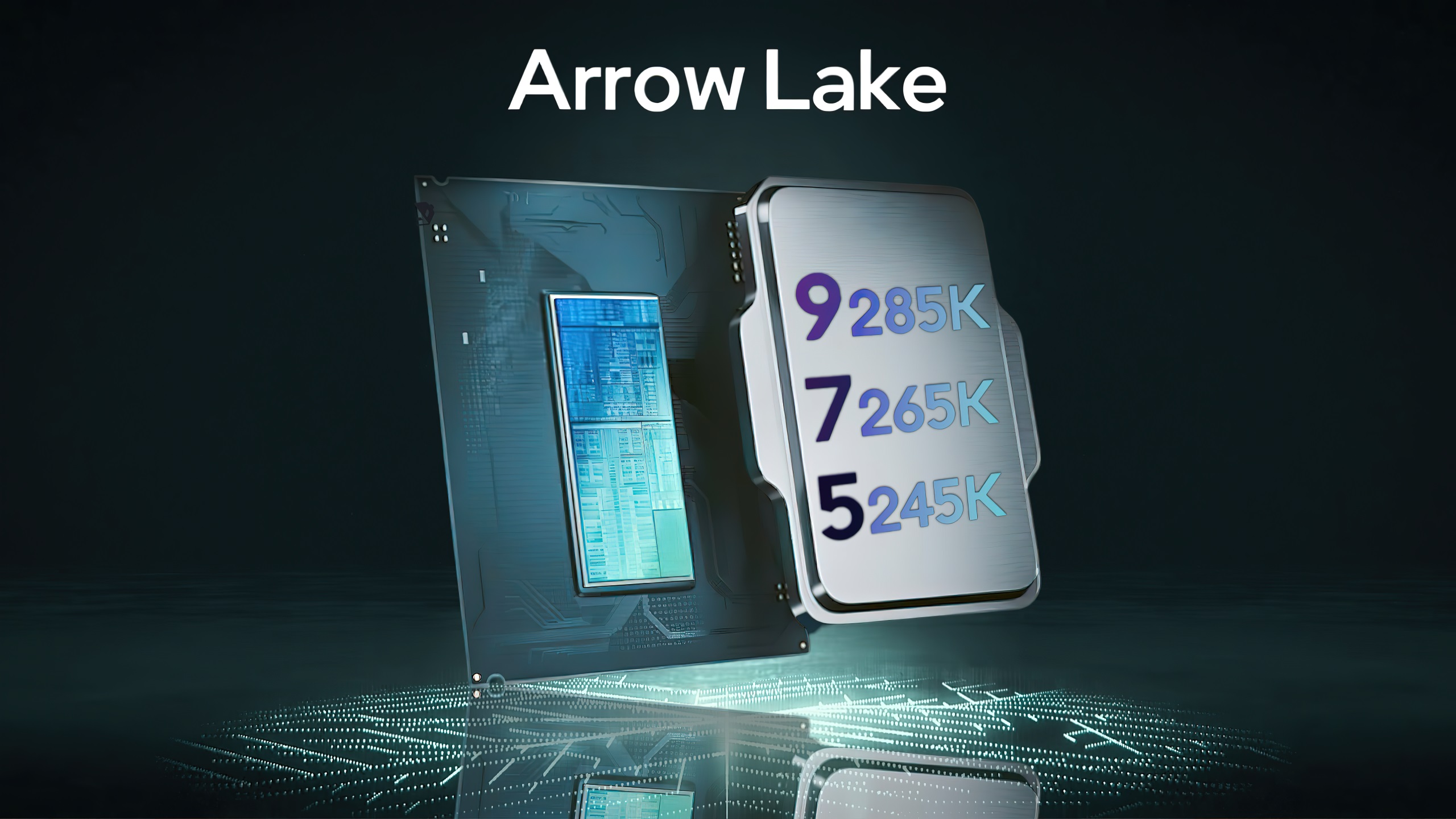
Intel is promising substantial improvements with its next-generation Arrow Lake CPUs, which are expected to offer a significant performance boost while consuming considerably less power compared to the current Raptor Lake series. Additionally, Intel has addressed concerns regarding instability in its 13th and 14th Gen processors by implementing a microcode BIOS update.
Intel Arrow Lake CPUs to Deliver Efficiency and Power
Intel’s forthcoming Arrow Lake “Core Ultra 200” Desktop CPUs are poised to deliver high performance while reducing power consumption by at least 100 watts. This is a welcome change as Raptor Lake CPUs are known to be among the most power-intensive consumer CPUs available, with power requirements around 300W.
Raptor Lake Microcode BIOS Update
Intel has stated that the recently announced microcode BIOS update for 13th and 14th Gen Raptor Lake CPUs, which is designed to rectify elevated voltage issues, will not have any negative effects on turbo frequency operations. Overclocking capabilities are expected to remain unaffected, and overall performance should align with Intel’s initial benchmarks, despite slight variations that may occur in different applications.
Extended Warranty for Affected Processors
Intel is offering an added level of assurance for users with an Intel-backed two-year extended warranty. This applies to 13th and 14th generation i5K/KF and above processors. Intel recommends users update to the latest BIOS version to ensure stability. They have provided instructions for those who experience ongoing issues, outlining the process for customers with boxed (BOX) processors, bulk (Tray) processors, and those with brand-name complete machines.
Arrow Lake’s Promises of Stability and Performance
Arrow Lake aims to eliminate the voltage issues seen in previous generations and maintain high operating frequencies. While specific performance metrics were not disclosed, there are rumblings about flagship models reaching up to 5.7 GHz. Intel has conveyed a commitment to ensuring that Arrow Lake chips will offer stability without the vulnerabilities seen in some 13th and 14th Gen CPUs.
Intel demonstrated confidence that the updated process used in Arrow Lake CPUs will rid of the overvoltage concerns, securing consistent performance and stability. They hinted at the robustness of upcoming CPUs but stayed tight-lipped about the actual figures, only alluding to powerful performance.
Intel’s Journey Towards Redemption
Intel’s mention of a significant power reduction and stability improvements has set expectations high for the Arrow Lake processors, which are anticipated to launch around October 2024. With the tech community still buzzing about these CPUs being less power-hungry, Intel recognizes the necessity to fulfill its pledges to regain consumer trust after the recent instability concerns.
Upcoming Intel Arrow Lake-S Desktop CPU Lineup Overview
The Intel Arrow Lake-S Desktop CPU lineup showcases a range of processors with varying core counts and frequencies, all sporting a TDP (PL1) of 125W, with some CPUs potentially having a 65W option. The projected top-tier Core Ultra 9 285K is suggested to have 24 cores with a boost of 5.7 GHz, whereas other models, such as the Core Ultra 7 265K and Core Ultra 5 245K, will offer respective adaptations of core/thread counts and frequencies.
As the PC hardware community eyes future developments, enthusiasts are keen to see if Intel’s commitments translate into the refined CPUs expected from a market leader.