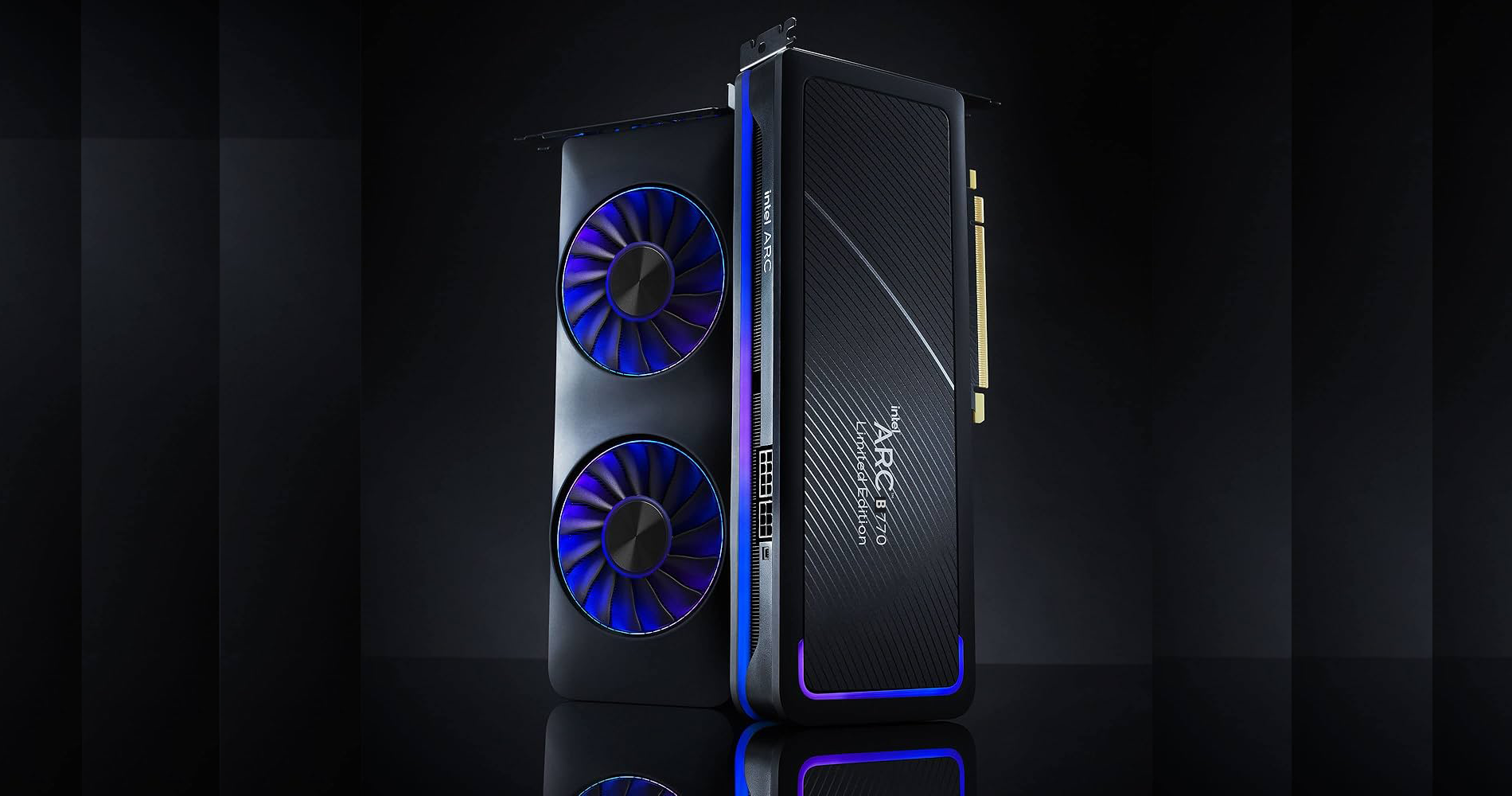
Intel’s next-gen Battlemage graphics may be closer to laptops than anyone expected. A GPU based on the BMG-G31 die, widely believed to be the Arc B770, has appeared in shipping manifests and software code references, hinting that it’s already being tested in notebooks. What makes the rumor even juicier is the claim that this chip is being evaluated inside a Microsoft Surface Laptop 7—an ultra-thin machine that typically doesn’t use discrete graphics at all.
The BMG-G31 has shown up multiple times in backend documentation and compute runtime listings, suggesting the silicon is real even if the branding isn’t official yet. If Intel follows its previous naming logic, this part could slot in as the Arc B770, essentially the successor to the Arc A770 and a step above current Xe2-based Arc B580 and B570 models built on the smaller BMG-G21 die.
What’s unusual here is the platform. The latest Surface Laptop 7 configurations lean on Snapdragon X Plus or X Elite chips, and there are versions powered by Intel Lunar Lake—both solutions that typically rely on integrated graphics. A discrete Battlemage GPU inside such a slim chassis would be a major shift in strategy, potentially making this the first and fastest Battlemage dGPU spotted in a laptop. That said, this setup could be a test configuration that never reaches retail, so treat the leak with healthy skepticism.
If the rumored specs hold, the Arc B770 could be a compelling mid-high tier mobile GPU:
– 32 Xe2 cores
– 16 GB of GDDR6 memory
– 256-bit memory bus
On paper, that would put it well above the Arc B580 and potentially in the same performance conversation as future midrange parts like an RTX 5060 Ti or RX 9060 XT, depending on clocks, drivers, and power limits. The real challenge is market timing and positioning. NVIDIA’s 60- and 70-class laptop GPUs dominate gaming notebooks, and AMD has its own efficient contenders. For Intel to win mindshare, it will need strong performance-per-watt, competitive ray tracing, stable drivers at launch, and attractive OEM designs.
Thermals and battery life are the big questions for any discrete GPU in a thin-and-light like the Surface Laptop 7. If Intel and OEMs can dial in the total graphics power for a quiet, cool experience without sacrificing battery longevity, Battlemage could finally give Windows ultrabooks a credible dedicated graphics option for creators and gamers who don’t want a bulky machine.
None of this is official yet, including the Arc B770 name. But with the BMG-G31 die surfacing in multiple places and whispers of laptop integration gaining momentum, Intel’s Battlemage looks poised to make its mobile debut sooner rather than later. Keep an eye out for confirmation and real-world benchmarks to see where it lands against NVIDIA and AMD in the next wave of gaming and creator laptops.


