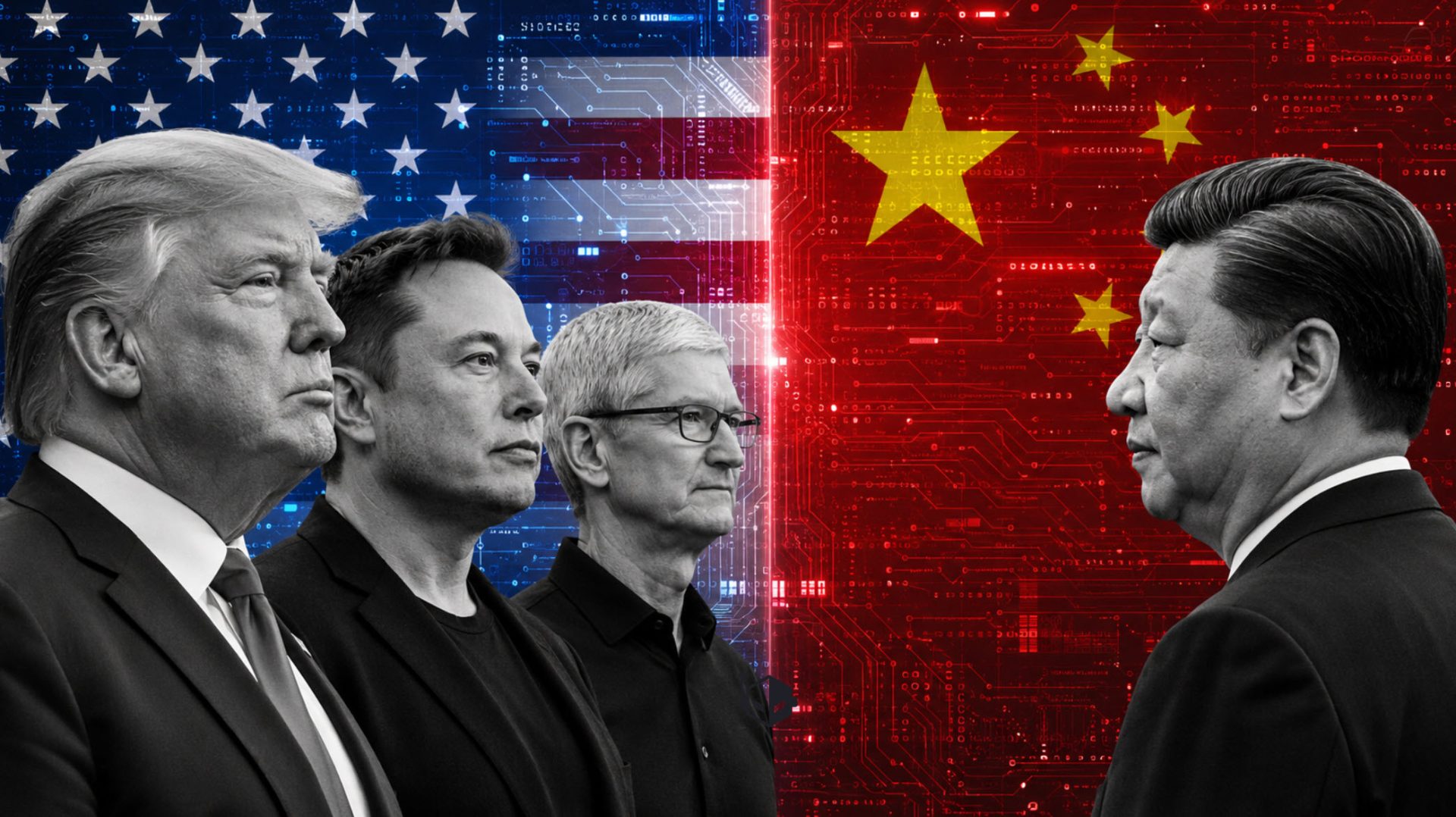
President Donald Trump is set to travel to China this week, visiting from May 13 to May 15 for talks with Chinese President Xi Jinping. The trip is drawing intense attention because it’s poised to be the first time in nearly a decade that a sitting U.S. president lands in China to meet directly with their counterpart—an event that could shape the tone of U.S.-China relations across trade, technology, and global business for months to come.
What’s adding even more intrigue is the high-profile business delegation expected to join Trump. Several major technology and finance leaders are reportedly on the roster, including Elon Musk (X, xAI, SpaceX, Tesla) and Apple CEO Tim Cook, alongside executives tied to Qualcomm, Citigroup, Boeing, Goldman Sachs, Blackstone, BlackRock, and Meta. While official meeting agendas have not been publicly detailed, the guest list strongly signals that technology-focused trade discussions—especially around AI, supply chains, and tariffs—will be central to the conversations.
With so many heavyweight executives involved, the trip is widely expected to include business announcements and commercial agreements. In similar visits, it’s common for companies to use the presence of heads of state as momentum for signing deals or outlining cooperation frameworks with major domestic partners. Given the current climate, any agreements would likely be carefully structured and politically cautious, but still meaningful—particularly for industries navigating cross-border rules, export limits, and shifting tariff policies.
One notable absence stands out: NVIDIA CEO Jensen Huang is reportedly not traveling to China with Trump. According to reporting that cites a person familiar with the matter, Huang was not invited, and the White House is said to be emphasizing other priorities for this visit, including agriculture and commercial aviation—such as Boeing aircraft orders. The White House did not immediately comment on the report.
Huang’s absence is drawing attention because NVIDIA sits at the center of the global AI boom, and any U.S.-China discussions about advanced technology inevitably raise questions about semiconductors, AI accelerators, and the rules governing who can sell what to whom. At the same time, NVIDIA’s current positioning makes the situation more complex than it may appear at first glance.
NVIDIA has increasingly leaned into a U.S.-first approach, with its AI hardware strategy closely aligned with domestic demand and U.S.-based data center expansion. The company is also associated with broader “made in the USA” momentum across the semiconductor sector and is prioritizing its newest GPU platforms—such as Blackwell and Rubin—for customers building large-scale AI infrastructure. In practical terms, NVIDIA’s growth is being propelled by massive global demand for AI compute, and that demand remains extremely strong regardless of whether new openings emerge in China during this specific diplomatic trip.
More broadly, the political backdrop is shifting. After a period of aggressive tariffs and global trade pressure, the U.S. government has recently shown signs of easing its approach. That doesn’t mean a sudden reset between Washington and Beijing is imminent—both sides still have major reservations—but it does suggest the possibility of resumed, incremental talks on technology and commerce. Instead of sweeping announcements, observers increasingly expect a step-by-step approach: narrow agreements, limited cooperation, and cautious changes rather than headline-grabbing breakthroughs.
For NVIDIA, the bottom line may be straightforward: even without a seat on this trip, the company’s AI chip demand is already surging amid the ongoing AI “supercycle.” Whether the visit produces major tech-related deals or not, NVIDIA’s momentum is being driven by a market that continues to expand at a rapid pace—especially among enterprises and data centers racing to scale AI capabilities.