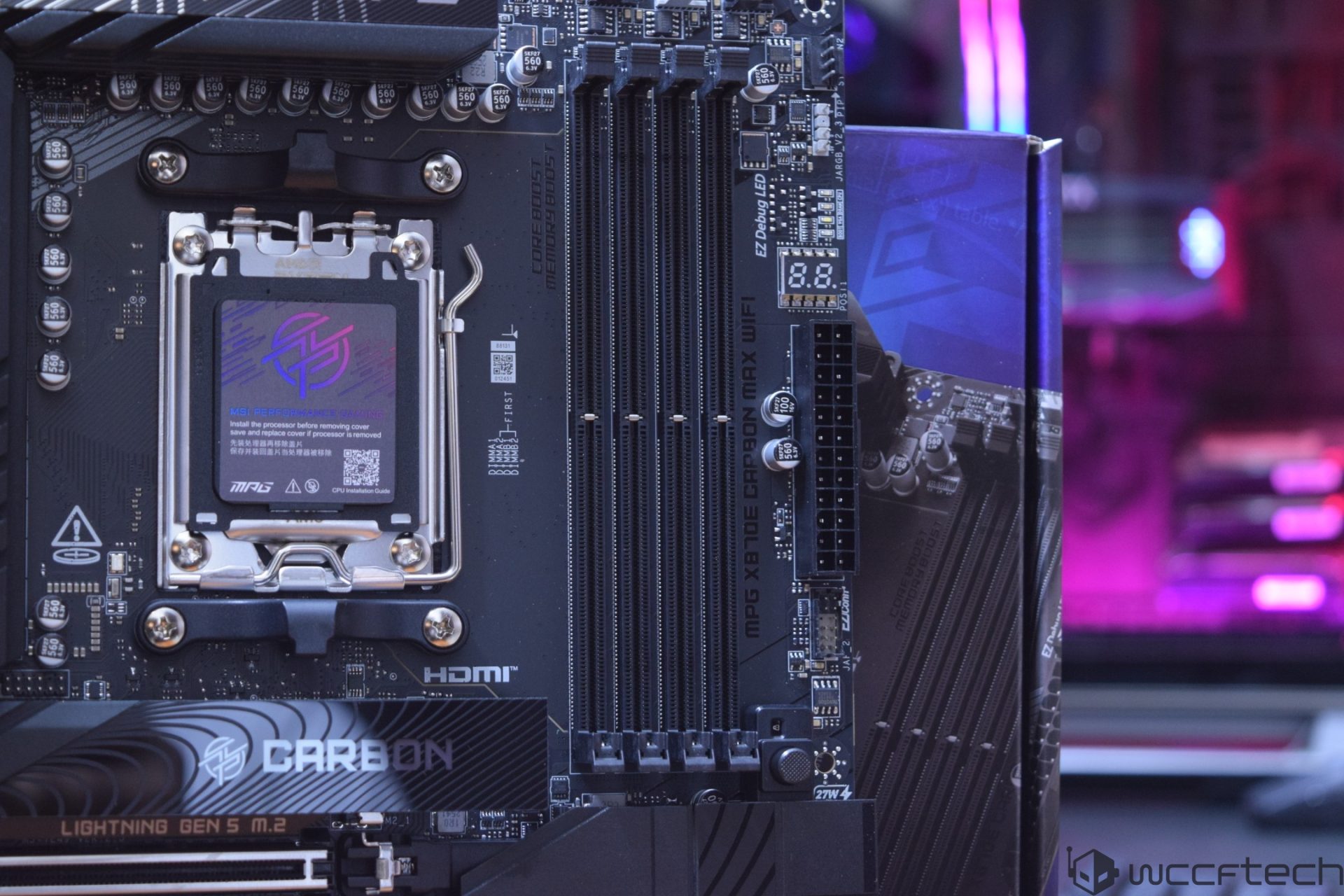
MSI has released a new BIOS update for its AM5 motherboard lineup, bringing improved DDR5 memory compatibility and restored security features for AMD Ryzen users. The update covers MSI’s AM5 800-series and 600-series motherboards, giving owners of both newer and previous-generation boards access to the latest firmware improvements.
One of the biggest changes is optimized support for CXMT DDR5 memory. As CXMT memory modules continue gaining traction, especially in the Chinese domestic PC market, motherboard manufacturers are moving quickly to improve compatibility, stability, and performance. MSI’s latest BIOS update is designed to help AM5 users get better results from these DDR5 kits, particularly when pushing memory speeds beyond standard settings.
The new BIOS includes AMD’s latest AGESA PI-1.3.0.1b Path A firmware, which brings platform-level refinements for Ryzen processors and AM5 motherboards. Alongside that, MSI has added specific tuning for CXSH-branded CXMT memory chips, allowing supported systems to run faster and more reliably with compatible DDR5 modules.
According to MSI’s testing, the new firmware can significantly improve memory speeds. CXMT DDR5 kits that previously operated around 6800 MT/s may now reach speeds above 8000 MT/s on select AM5 motherboards. That is a major leap for users interested in memory overclocking, gaming performance, and high-bandwidth workloads.
However, performance will depend on the motherboard layout and memory configuration. MSI notes that 2-DIMM motherboard designs are expected to deliver the best results, especially for users aiming for speeds above 8000 MT/s. Systems with 4-DIMM designs are currently shown reaching around 7200 MT/s in MSI’s internal testing, though further BIOS refinements and improved memory IC quality could help raise those limits over time.
This update is especially important for PC builders using AMD Ryzen 7000, Ryzen 8000, or Ryzen 9000 processors on MSI AM5 motherboards. Better DDR5 compatibility means users may have more flexibility when choosing memory kits, while enthusiasts can benefit from improved overclocking headroom.
Another key improvement in the latest MSI BIOS is the return of TSME support for AMD Ryzen 9000 CPUs. TSME, short for Transparent Memory Secure Encryption, is a hardware-based memory protection feature that automatically encrypts data stored in system RAM. The encryption key is generated by the processor during boot, helping protect sensitive information in memory.
Unlike standard Secure Memory Encryption, TSME works automatically once enabled in the BIOS and does not require operating system-level management. This makes it a useful security option for users who want memory encryption without additional software configuration.
TSME had recently become a point of discussion after being limited to certain professional Ryzen processors. Following user feedback, AMD moved to restore the feature for consumer-focused Ryzen chips, including the Ryzen 9000 series. MSI’s latest BIOS update now brings that functionality back to supported AM5 motherboards.
With this release, MSI is strengthening its AM5 platform by improving memory support, enhancing overclocking potential, and restoring an important security feature for Ryzen users. Owners of MSI 800-series and 600-series AM5 motherboards should check their motherboard support page for the latest BIOS version and update carefully according to MSI’s instructions.
For AMD PC builders, this update makes the AM5 platform more attractive, particularly for those planning to use high-speed DDR5 memory or Ryzen 9000 processors. As BIOS development continues, memory compatibility and performance on AM5 motherboards are likely to improve even further.