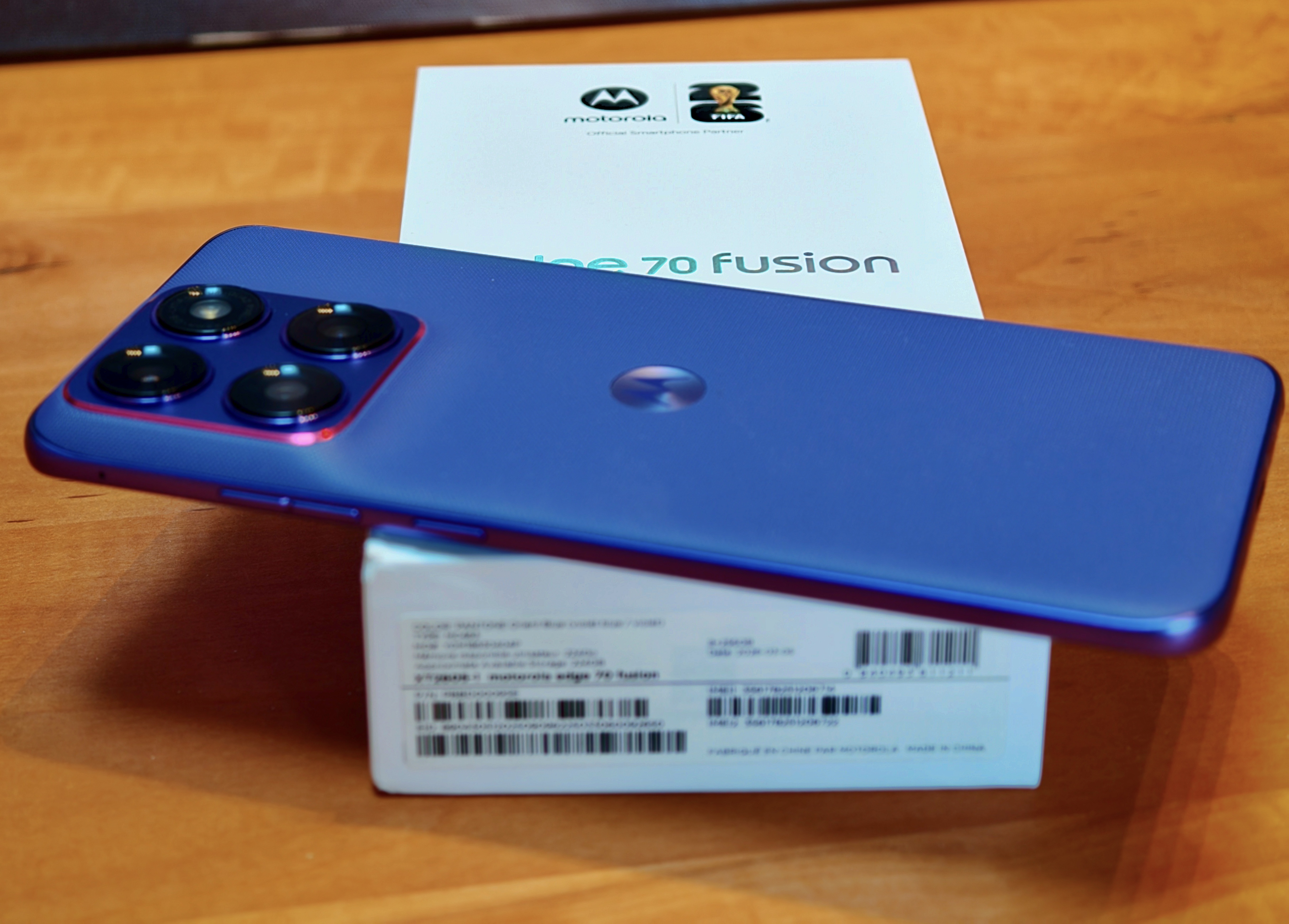
Motorola is making an unusually smart play in the mid-range smartphone market with the Edge 70 Fusion: it’s being sold in two battery sizes, giving buyers a real choice between maximum stamina and a slimmer, lighter feel. Instead of forcing everyone into one compromise, Motorola lets you pick what matters most for your daily routine.
Two Motorola Edge 70 Fusion battery options: what changes and why it matters
The Motorola Edge 70 Fusion comes in two variants: a 7,000 mAh model aimed at endurance, and a 5,200 mAh model designed for people who want a thinner, more comfortable phone in hand. Both target different priorities, and the trade-offs are clear.
7,000 mAh Motorola Edge 70 Fusion: built for battery life
If you’re tired of watching battery percentage drop throughout the day, the 7,000 mAh version is the obvious pick.
Pros
– Extremely long battery life: In testing under typical conditions, this version can last more than 24 hours and is capable of stretching into two full days of heavy use.
– Fast 68W charging: Despite the huge battery, it can go from 0 to 100% in about 45 minutes, which is impressive for a capacity this large.
Cons
– More weight and thickness: This model comes in at around 193 g and about 7.99 mm thick, so it feels bulkier than the alternative.
– Slightly higher price: Expect to pay roughly €20 more than the smaller-battery version.
5,200 mAh Motorola Edge 70 Fusion: slimmer, lighter, and quicker to top up
For users who value comfort, portability, and a more pocket-friendly feel, the 5,200 mAh variant is the more appealing everyday carry.
Pros
– Lighter, slimmer design: At about 177 g and 7.21 mm thick, it’s noticeably easier to handle and better suited for anyone who dislikes heavy phones.
– Better value: It’s the more affordable option, especially if you don’t need multi-day battery life.
– Even faster charging in practice: It supports the same 68W charging speed, but since the battery is smaller, it takes less time to fully recharge.
– Exclusive color option: The Pantone Country Air (bright blue) color is only available on this version.
Cons
– Shorter battery life: You’ll need to charge more often, particularly with intensive use like gaming, navigation, photography, or lots of screen time.
Beyond the battery: what the Motorola Edge 70 Fusion gets right (and where it falls short)
Battery choice is the headline feature, but the Edge 70 Fusion has more going for it than just stamina and dimensions. The phone is positioned as a premium-feeling mid-range device, with stand-out build quality and distinctive materials, plus Pantone colorways that help it look less generic than many competitors.
It also includes strong durability credentials, thanks to its IP68/IP69 dust and water resistance rating—something that’s still not guaranteed in this price segment.
On the display side, the Edge 70 Fusion features a 6.78-inch OLED panel that reaches up to 1,500 nits peak brightness. It delivers solid color reproduction and supports HDR, making it a good fit for streaming, scrolling, and general day-to-day use in bright conditions.
There are a few drawbacks to keep in mind. The screen uses PWM flicker at 120 Hz, which could be uncomfortable for users sensitive to PWM. The speakers also aren’t especially loud. And while Motorola offers five years of security updates, that update policy is behind the latest expectations in some regions.
Which Motorola Edge 70 Fusion should you buy?
Choose the 7,000 mAh Edge 70 Fusion if you want the best battery life possible and don’t mind a phone that’s thicker, heavier, and slightly more expensive.
Choose the 5,200 mAh Edge 70 Fusion if you care more about a lighter, slimmer design, faster real-world recharging, a lower price, and the exclusive bright blue color—while accepting that you’ll charge more often.
This two-battery strategy is a refreshingly practical approach to smartphone design, because it lets buyers decide which compromise they actually want, instead of being stuck with one “average” option.