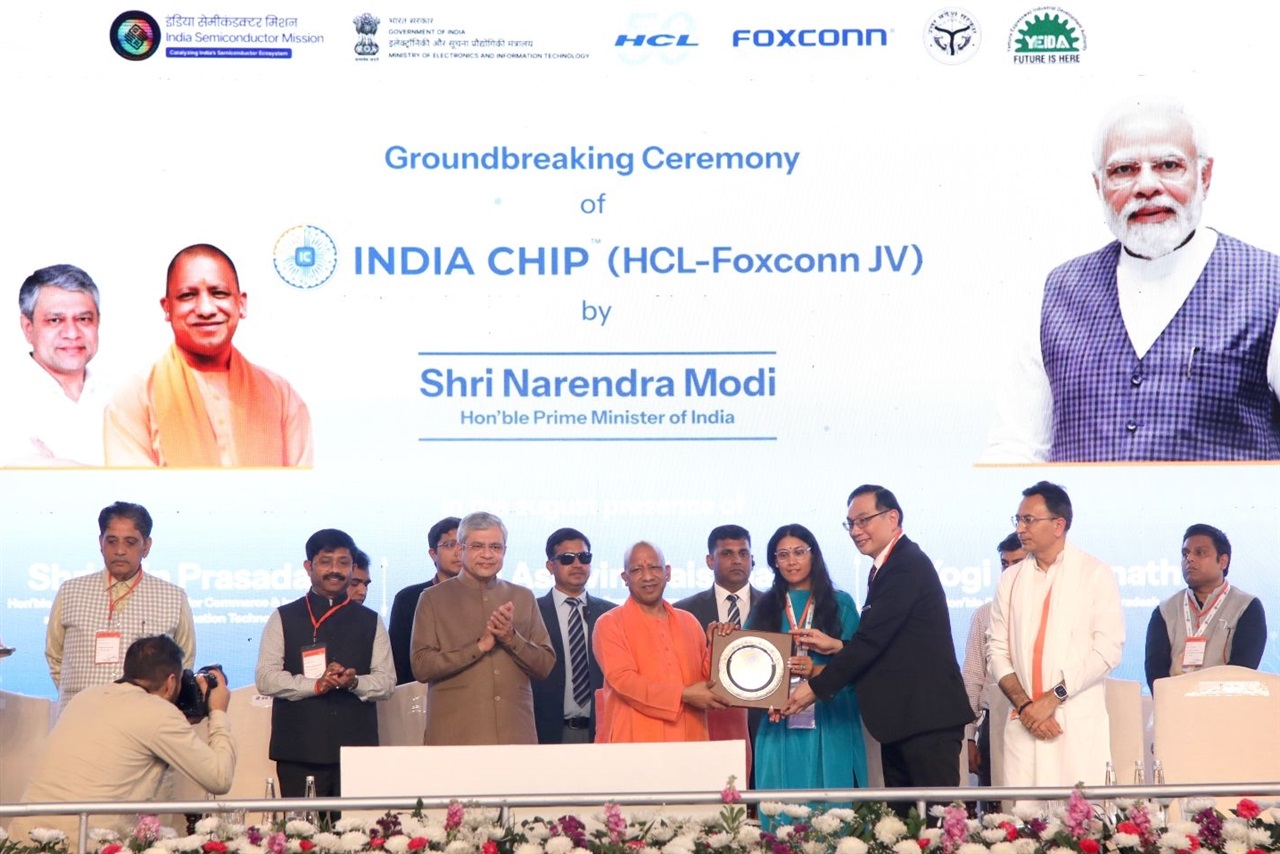
India took another significant step toward strengthening its semiconductor manufacturing ecosystem as Prime Minister Narendra Modi virtually laid the foundation stone for a new semiconductor facility in Jewar, Uttar Pradesh, on February 21, 2026.
The upcoming plant in Jewar is being positioned as part of India’s broader push to expand domestic chip production and reduce reliance on imports, an increasingly important goal as global demand for semiconductors continues to rise across smartphones, automobiles, consumer electronics, data centers, and emerging AI-driven technologies. With countries worldwide competing to secure chip supply chains, new facilities like this are drawing attention for their potential to improve resilience, boost innovation, and support long-term industrial growth.
Jewar, already gaining prominence due to major infrastructure development in the region, is expected to benefit from the investment through new job opportunities and strengthened local supply networks. Semiconductor projects typically create a wide range of roles, from high-skill engineering and cleanroom operations to construction, logistics, and support services, while also encouraging related industries to set up nearby.
The foundation stone event signals momentum in Uttar Pradesh’s efforts to attract large-scale, high-value manufacturing. It also aligns with national ambitions to make India a more competitive destination for advanced electronics manufacturing and chip production, a sector seen as essential for economic growth and strategic technological independence.
As work begins following the foundation-laying milestone, industry watchers will be looking for updates on the project’s construction timeline, production plans, and how the facility will integrate into India’s rapidly evolving semiconductor roadmap.