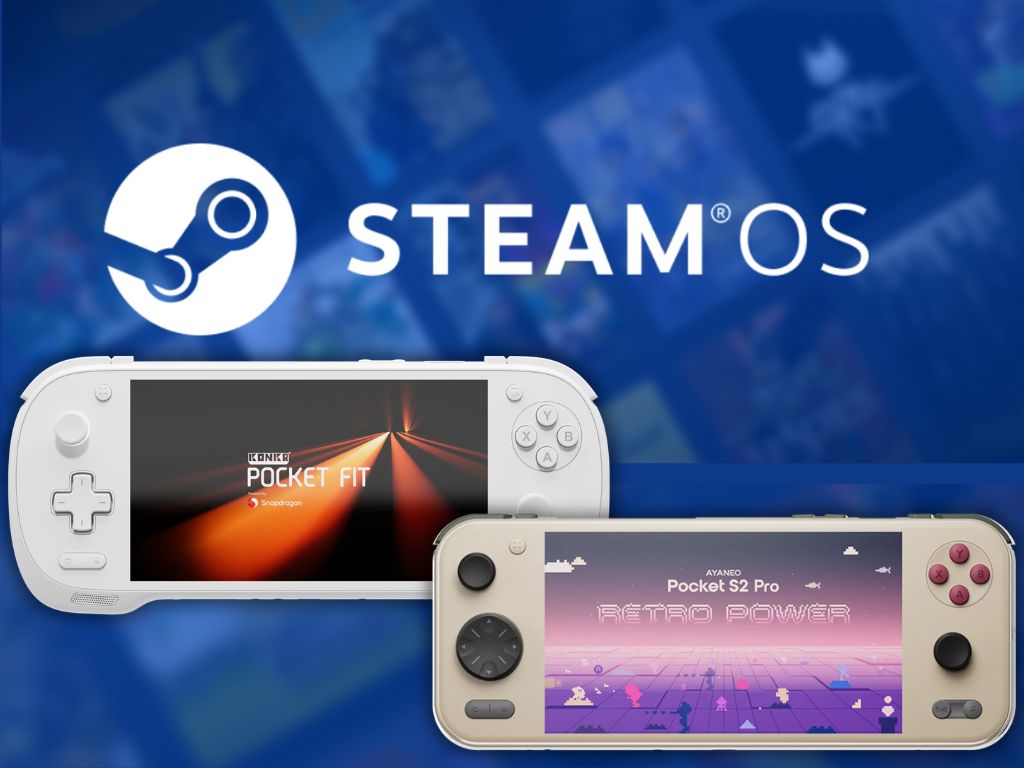
SteamOS is already spreading beyond Valve’s own hardware, but not in the way most people expected. Just days after Valve released SteamOS code for its ARM-based Steam Frame headset, independent developers managed to get the system running on Snapdragon-powered Android gaming handhelds.
The most surprising part is the choice of hardware. One of the first successful ports appeared on the AYN Odin 2, a popular Android handheld powered by Qualcomm’s Snapdragon 8 Gen 2 chip. That device was never designed for SteamOS, and Valve’s official build was not intended to boot on anything outside its own headset. Even so, the handheld modding community has moved quickly.
Developer MasieS4Fun ported Valve’s SteamOS ARM userspace to the Odin 2, keeping Valve’s official Game Mode and KDE Plasma desktop environment intact. Since the Odin 2 uses the Snapdragon 8 Gen 2 and Adreno 740 GPU, the same general silicon family used by Valve’s ARM-focused platform, it became a natural target for experimentation.
However, the work was not as simple as installing Valve’s software directly. Valve’s own kernel is locked to Steam Frame hardware, so the developers replaced the kernel and device trees with components from Rocknix, an Arch Linux-based project commonly used on handheld devices. This hybrid approach allows SteamOS features to run on hardware Valve did not officially support.
The effort did not stop with the Odin 2. Another developer, hashtagbasit, created a fork called SteamOS-ARM-SM8650 for devices using the Snapdragon 8 Gen 3. This brought early SteamOS support to handhelds such as the Konkr Pocket Fit G3 and Ayaneo Pocket S2. Rather than simply copying the original ARM build, the developer worked on fixing broken functions and adapting the system for the newer chipset.
These unofficial SteamOS ports are still in the very early stages. The repositories are only a few days old, and some device trees, including those for the Pocket S2 and AYN Thor, remain marked as untested by their authors. That means users should not expect a polished, consumer-ready experience yet. Bugs, missing features, and compatibility issues are likely.
Still, the progress is impressive. Both ports already support Valve’s Game Mode interface, the same console-style experience used on the Steam Deck, along with the KDE Plasma desktop for more traditional PC-style navigation. For Android handheld owners, this could eventually open the door to a more PC-like gaming experience without relying entirely on Android apps or game streaming.
A third project, known as Holodor and developed by teansentient, is also in the works. This one is targeting the upcoming Odin 3, which is expected to use Qualcomm’s Snapdragon 8 Elite chipset. If successful, it could push unofficial SteamOS support even further into high-end ARM gaming handheld territory.
The rise of SteamOS on Snapdragon handhelds shows how active and creative the portable gaming community has become. Valve may not officially support these devices, but its open software foundation is giving developers enough room to experiment. While these builds are not ready for casual users yet, they hint at a future where SteamOS could become a much broader platform for handheld gaming PCs, including ARM-based devices that were originally built for Android.
For now, this remains an enthusiast project. But if development continues at this pace, Snapdragon gaming handhelds like the AYN Odin 2, Ayaneo Pocket S2, and future ARM-based devices could become far more versatile than their manufacturers originally planned.