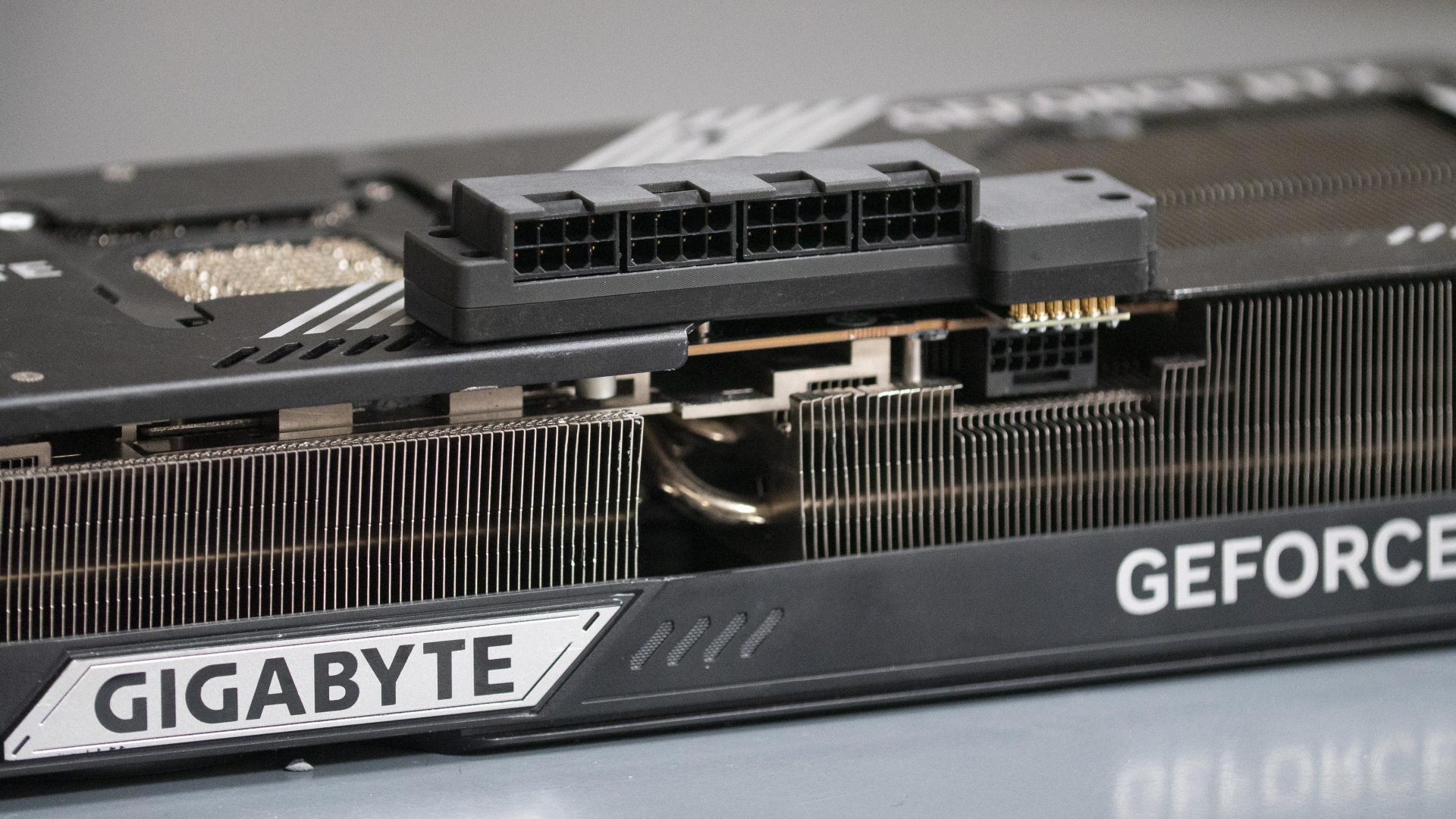
Modder Builds Quad 8-Pin Power Connector Upgrade for NVIDIA GeForce RTX 5090 to Reduce Heat and Current Load
A new custom power connector modification for NVIDIA’s GeForce RTX 5090 is drawing attention in the PC hardware community, especially among enthusiasts frustrated by ongoing concerns around the 12VHPWR and 12V-2×6 GPU power connectors.
The RTX 5090 is one of the most power-hungry graphics cards on the market, and its reliance on the compact 16-pin power connector has kept the debate around connector safety alive. While newer revisions of the connector were designed to improve reliability, reports of overheating and melted power plugs have continued to appear across high-end GPU builds.
Now, one modder has developed a more traditional alternative: a custom quad 8-pin PCIe power connector conversion for the RTX 5090.
The modification replaces the need to rely solely on the standard 16-pin GPU power connector by adding four conventional 8-pin PCIe power inputs. Unlike typical adapters, which still feed power through the same 12V-2×6 connector, this solution uses a custom printed circuit board that is soldered directly to the graphics card’s existing power delivery contacts.
That is an important difference. Most adapter cables do not truly eliminate the original connector as the main point of power transfer. This custom PCB approach is designed to spread the electrical load across more conductors, reducing stress on each individual wire and contact point.
According to the modder, the quad 8-pin conversion can operate independently from the original 16-pin connector or work alongside it. When used to distribute power across additional conductors, the current per conductor is said to be nearly cut in half compared to a standard 12V-2×6 setup.
At a 600W power draw, each conductor reportedly carries around 4.1A to 4.4A. The creator also claims a major temperature improvement, with the custom PCB reaching about 45°C during an 800W test load. That is said to be roughly 20°C cooler than the standard connector configuration under similar demanding conditions.
The modification has already been tested on a shunt-modded RTX 5090 at up to 800W. However, that does not mean the setup has been proven safe for long-term daily use at such high power levels. Running a graphics card beyond its official specifications always carries risk, and more testing is needed before this kind of solution can be considered fully reliable.
The custom module includes fused power connections, which adds a layer of protection. The creator is also planning optional features such as active monitoring and current limiting. Additional testing is reportedly in progress, including live current measurements, temperature monitoring, and a 24-hour sustained load test.
The continued interest in this type of modification highlights a broader issue with modern high-end graphics cards. The 12VHPWR connector problem first gained major attention during the GeForce RTX 40 series era, and concerns have continued into newer GPU generations. While the 12V-2×6 revision was introduced to address some of the original design weaknesses, many PC builders remain cautious when dealing with extremely power-dense connectors on expensive graphics cards.
This is not the first time enthusiasts have experimented with returning to older PCIe power standards. Other custom RTX 5090 projects have shown that multiple 8-pin PCIe connectors can power a flagship GPU when implemented correctly. The older connector design may be bulkier, but it has years of proven use in high-wattage gaming PCs and workstation systems.
The modder behind this quad 8-pin RTX 5090 conversion says support for more graphics card models is planned, including NVIDIA Founders Edition designs. A mail-in installation service is also expected, along with a physical storefront in Las Vegas planned for December. Pricing has not yet been announced.
Still, this is not a simple plug-and-play upgrade. The modification requires direct soldering to the graphics card, meaning it is invasive, highly technical, and almost certainly voids the GPU warranty. It should only be attempted by professionals or experienced hardware specialists with the proper tools and knowledge.
For now, the quad 8-pin RTX 5090 power connector mod remains an enthusiast experiment rather than a mainstream solution. Even so, it shows how far some PC builders are willing to go in search of safer, cooler, and more reliable GPU power delivery.
For graphics cards that cost thousands of dollars, many users believe dependable power delivery should not require custom engineering. Until connector concerns disappear completely, mods like this will continue to attract attention from high-end PC builders, overclockers, and anyone watching the future of GPU power design.