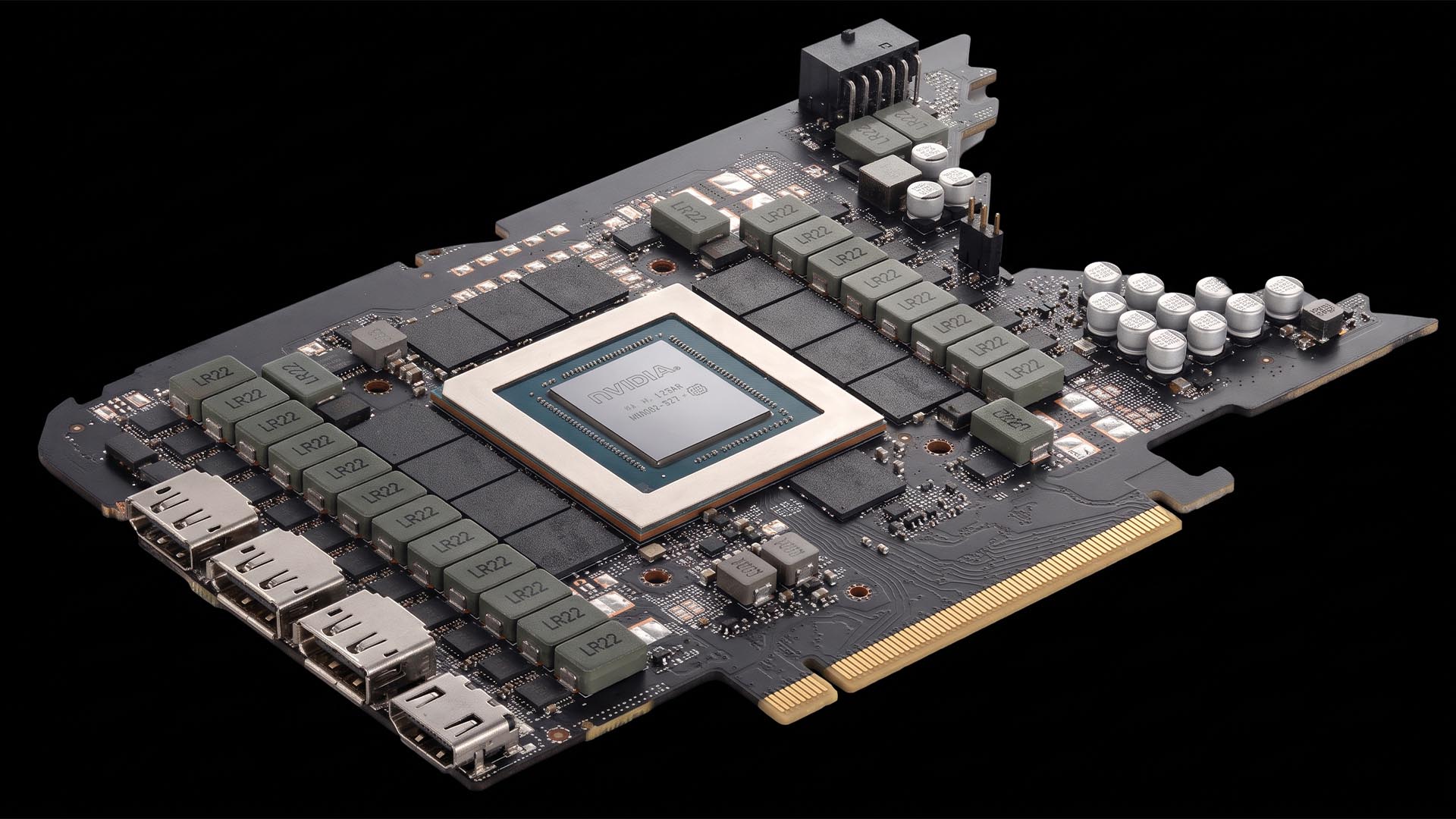
Modified NVIDIA RTX 5090 With 96GB VRAM Appears Online, Targeting AI Server Buyers
NVIDIA’s GeForce RTX 5090 has already been difficult to find in some markets, and one reason appears to be growing demand from hardware modders focused on artificial intelligence workloads. Instead of using the graphics card for gaming or workstation tasks in its original form, some modders in China are reportedly converting RTX 5090 units into specialized AI server GPUs by replacing the standard printed circuit board with custom designs.
Now, a new secondhand marketplace listing has drawn attention for advertising a heavily modified RTX 5090 with 96GB of video memory. That is a massive increase over the standard consumer configuration and matches the VRAM capacity found on high-end professional NVIDIA cards such as the RTX PRO 6000.
The listing reportedly appeared on Xianyu, also known as Goofish, Alibaba’s secondhand marketplace in China. It was posted by a seller based in Changsha using the handle “Super cute Minami Kotori.” According to the listing details, this is not being marketed to regular PC gamers or individual buyers. Instead, the seller is aiming the product at business-to-business customers, particularly those interested in AI servers and high-memory GPU computing.
The modified RTX 5090 is said to use NVIDIA’s GB202 GPU, paired with densely arranged Samsung memory modules. To reach the claimed 96GB VRAM capacity, the custom board reportedly uses a clamshell memory layout, placing memory chips on both sides of the PCB. This type of design allows modders to significantly increase the memory capacity beyond what a standard graphics card would normally support.
The seller is not just offering the modified graphics card itself. The package is claimed to include the custom PCB design and patched BIOS firmware needed to recognize and access the expanded memory pool. That suggests the product is being positioned as a complete solution for companies that may want to deploy or reproduce similar high-memory RTX 5090-based hardware for AI workloads.
However, the sales process appears to be highly restricted. The listing reportedly warns individual buyers not to attempt a purchase. Corporate buyers are asked to provide company details and sign a point-to-point confidentiality agreement. Hardware testing is also said to be available only through verified intermediaries, likely to reduce legal, regulatory, and intellectual property risks.
The placeholder price is eye-catching: 6,488,888 RMB, or roughly $900,000. That figure is not expected to represent the final selling price, as the seller appears to be open to private negotiation with serious business clients. Even so, the listed amount is far beyond the price of typical professional GPUs and underlines how unusual this modified RTX 5090 project is.
The appeal of a 96GB RTX 5090 is easy to understand. AI workloads, especially large language models, inference tasks, data processing, and model fine-tuning, can benefit enormously from large pools of VRAM. Consumer GPUs often offer strong raw performance but are limited by memory capacity compared with enterprise-grade accelerators. By modifying desktop GPU hardware with much larger memory configurations, modders may be attempting to create a more affordable or more readily available alternative for certain AI server deployments.
That said, major questions remain. There are currently no widely available independent benchmarks confirming the performance, stability, or compatibility of this 96GB RTX 5090 modification. It is also unclear how well the patched firmware works, whether the full 96GB memory capacity is usable in real-world AI tasks, and how reliable the hardware would be under heavy server workloads.
Thermals, power delivery, driver support, and long-term durability are also important concerns. A custom PCB with double-sided memory may require specialized cooling, and AI workloads can keep GPUs under sustained load for extended periods. Without proper validation, a modified card like this could be risky for mission-critical use.
Still, the listing is another sign of how strong demand for high-memory GPUs has become. As AI adoption continues to grow, companies are looking for ways to access more VRAM without relying solely on expensive enterprise accelerators. Whether this 96GB RTX 5090 proves to be a working product or simply an experimental showcase, it highlights the increasing pressure on the GPU market and the creativity of hardware modders trying to fill the gap.
If verified testing becomes available through third-party channels, the modified RTX 5090 could become one of the most interesting unofficial GPU projects tied to the current AI hardware boom. For now, it remains an intriguing but unproven example of how far modders are willing to push consumer graphics hardware in the race for more memory and better AI performance.