Midjourney Moves Beyond AI Art With a 60-Second Ultrasonic Full-Body Scanner
Midjourney, widely recognized for transforming text prompts into striking AI-generated images, is now exploring a surprising new direction: medical imaging. The company has unveiled plans for the Midjourney Scanner, an ultrasonic full-body scanning machine designed to create a detailed 3D map of the human body in less than one minute.
The new initiative, called Midjourney Medical, marks a major shift for the company. Instead of generating digital artwork, Midjourney is aiming to build technology that could change how people access advanced body scans, wellness screening, and preventive health insights.
The concept sounds futuristic, but the process is designed to be simple. A person steps onto a platform and is gradually lowered into water at a speed of around two inches per second. As the body descends, it passes through a circular scanner packed with around 500,000 microscopic ultrasound elements, each roughly the size of a grain of sand.
These tiny components send ultrasonic waves toward the body from all directions and capture the returning signals. Midjourney compares the effect to being surrounded by hundreds of thousands of tiny dolphins using echolocation at once. The reflected sound waves are then processed to generate a highly detailed 3D image of the body.
According to the company’s description, the Midjourney Scanner is being designed to deliver precision down to a fraction of a millimeter. That would put it in the same general category as advanced imaging technologies such as MRI, but with one major difference: speed.
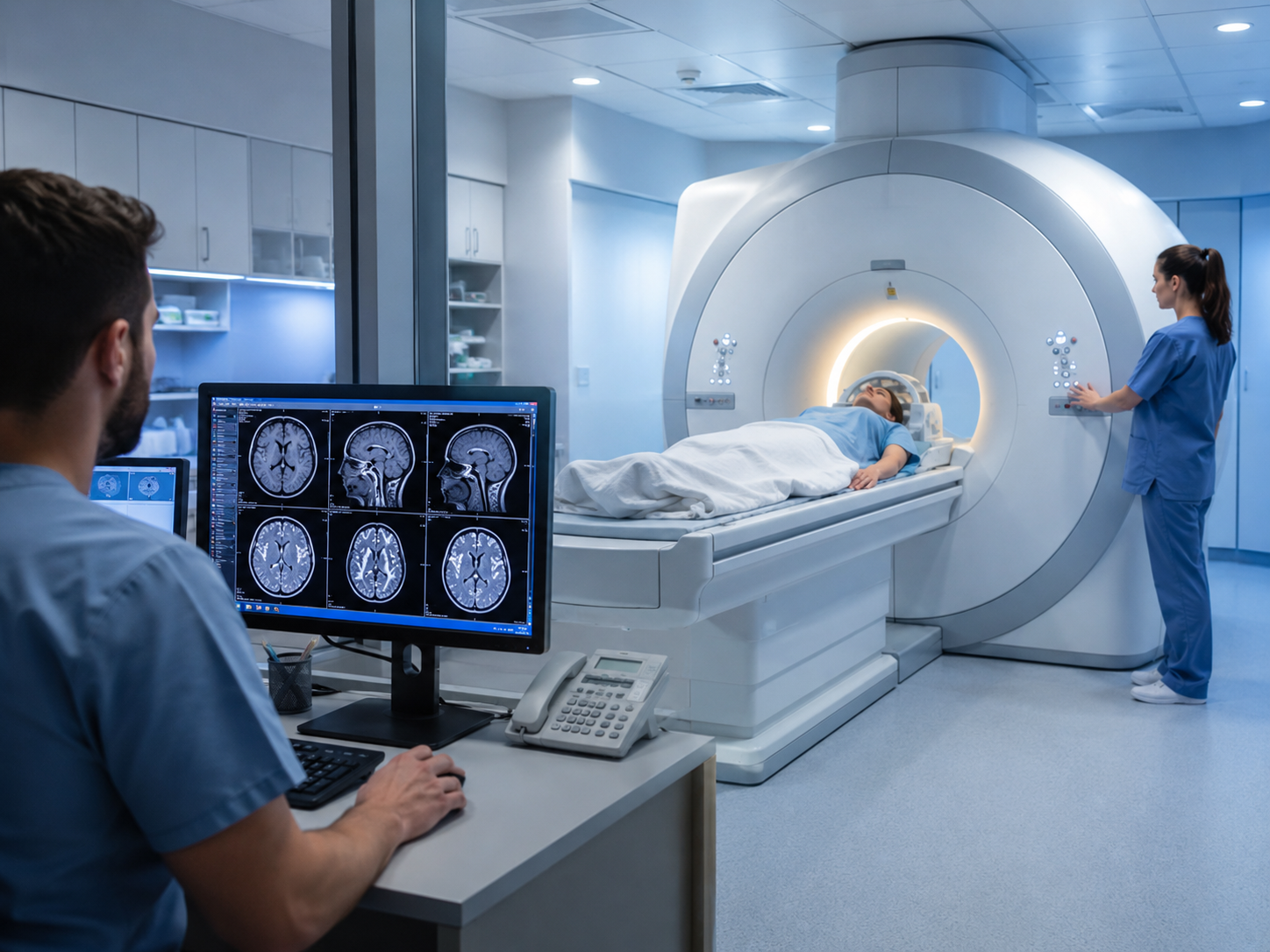
A traditional full-body MRI can take anywhere from 60 to 90 minutes. Midjourney’s goal is to complete a full-body ultrasonic scan in under 60 seconds. If successful, that speed could make detailed body imaging far more accessible, especially in settings focused on preventive care, wellness checks, and early detection.
The scanner is also expected to use custom silicon, which could help improve image quality, processing speed, and overall scanning performance. By combining specialized hardware with advanced imaging software, Midjourney appears to be positioning the device as more than a standard ultrasound machine.
To bring the project forward, Midjourney is working with Butterfly Network, a company known for developing ultrasound technology. The partnership is expected to focus on refining the scanner over the next year before it becomes available in select real-world locations.
Interestingly, the first rollout is not planned for hospitals or clinics. Midjourney intends to introduce the technology in spas, with the first location expected to open in San Francisco. This approach suggests the company may initially target wellness-focused consumers before moving deeper into regulated medical use.
After that, the company plans to pursue FDA approval, which would be a critical step if the scanner is to be used for broader medical purposes. Midjourney’s longer-term roadmap includes expansion to additional cities in 2028, followed by an ambitious goal of deploying 50,000 scanners worldwide by 2031.
If the technology performs as described, the Midjourney Scanner could become one of the most unexpected developments in medical imaging. A fast, high-resolution, full-body ultrasound scan could appeal to people looking for quicker, more convenient ways to understand their health.
For now, the project remains in development, and many questions remain about accuracy, pricing, regulation, privacy, and how the scans will be interpreted. Still, Midjourney’s move from AI image generation into full-body medical scanning shows how quickly technology companies are expanding into new fields.
What began as a platform for creating AI art may soon become part of a much larger conversation about preventive healthcare, body scanning, and the future of medical imaging.