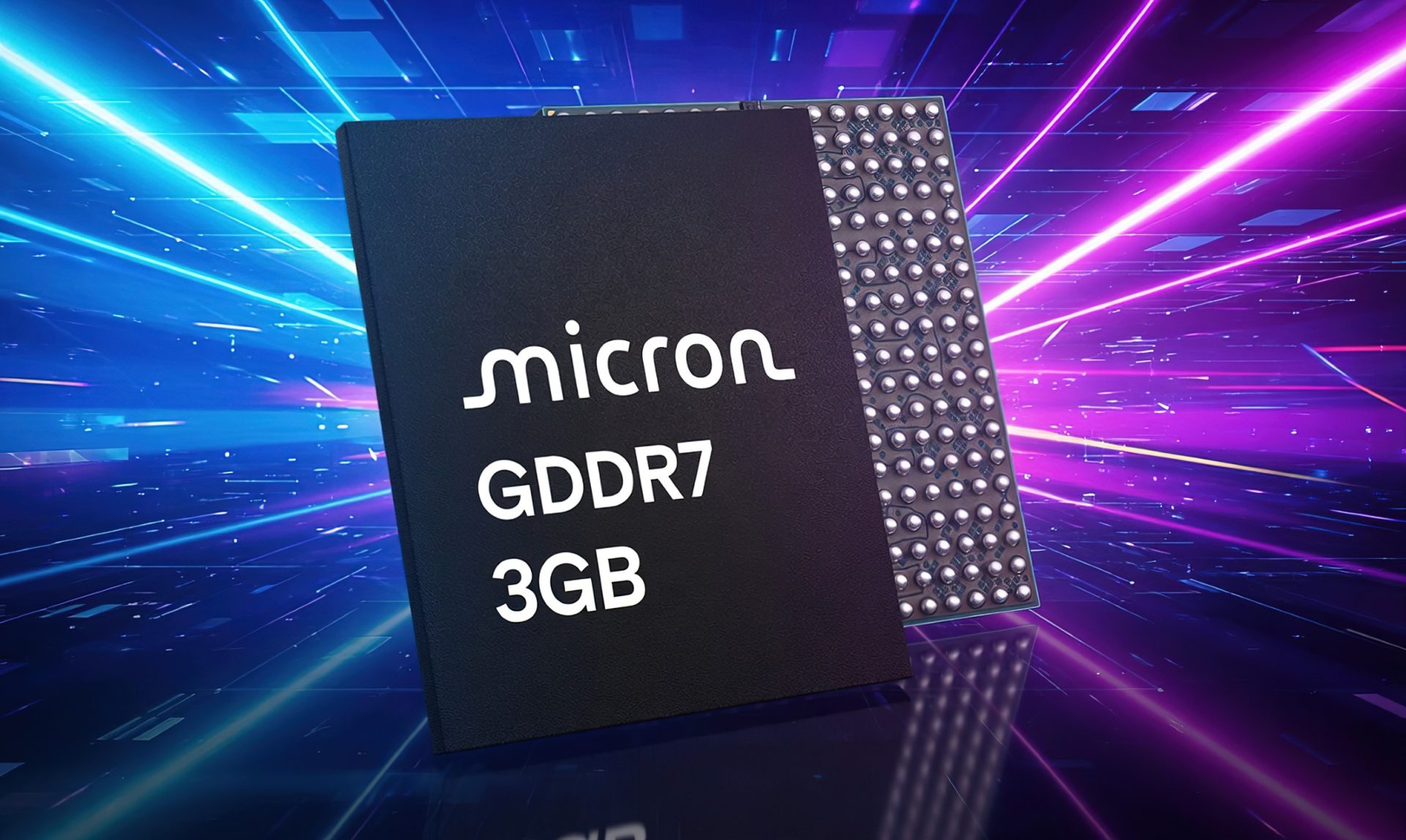
Micron has officially entered the high-capacity GDDR7 race, joining Samsung and SK Hynix as the third major memory manufacturer to develop 3 GB (24 Gb) GDDR7 memory chips for modern graphics cards. This is a notable development for the GPU market because higher-density GDDR7 modules can enable new VRAM configurations, potentially improving performance and longevity in upcoming gaming and workstation GPUs.
According to Micron’s own product listings, the company has added 3 GB GDDR7 graphics memory to its catalog in two speed grades: 28 GT/s and 32 GT/s. The 28 GT/s version is already marked as being in production, while the faster 32 GT/s version is currently in the sampling stage. Sampling typically indicates validation with partners and early integration testing, which can be an important step before the memory starts appearing in shipping graphics cards.
With Micron now in the mix, all three major players are producing 3 GB GDDR7 chips. That matters because NVIDIA’s latest GeForce RTX 50 series and Blackwell-based workstation cards rely on GDDR7, and wider availability of higher-capacity chips can make it easier for GPU makers to expand VRAM options across more models. In practical terms, using 3 GB modules can help manufacturers create VRAM configurations that weren’t as straightforward with older 2 GB-based designs, and it could influence future refreshes or updated SKUs within the current generation.
So far, 3 GB GDDR7 memory has been most closely associated with Samsung in NVIDIA’s ecosystem, and only a limited number of products have used this higher-density approach. However, more models could adopt 3 GB modules over time, especially as supply improves and more vendors qualify their parts. There have also been reports of NVIDIA exploring different memory configurations for entry-level cards, including a rumored GeForce RTX 5050 concept with 9 GB of GDDR7 that would depend on three 3 GB memory chips—though final plans may change. At the same time, NVIDIA is rumored to be revisiting older options like the GeForce RTX 3060, likely as a way to address current market conditions.
Memory speed is another key part of the story. SK Hynix previously became the second manufacturer to reveal 3 GB GDDR7 chips, and its parts have been associated with very high data rates—often cited around 36 Gbps for certain designs—aimed at boosting memory bandwidth. Samsung’s GDDR7 implementations are commonly seen around 28 Gbps in real-world deployments. Micron’s 32 GT/s option sits between those approaches, offering a faster step up from 28 GT/s, even if it may not match the very highest-rated parts discussed for competing offerings.
The big remaining question is timing: Micron’s 28 GT/s 3 GB GDDR7 is already in production, and the 32 GT/s version is sampling, but it’s not yet clear when these chips will be adopted in retail GPUs. Still, Micron’s entry into 3 GB GDDR7 production increases competition, improves supply flexibility, and could help accelerate broader use of higher-capacity GDDR7 memory in future NVIDIA graphics cards—particularly in refreshed variants where VRAM configurations and bandwidth upgrades can make the most noticeable impact.