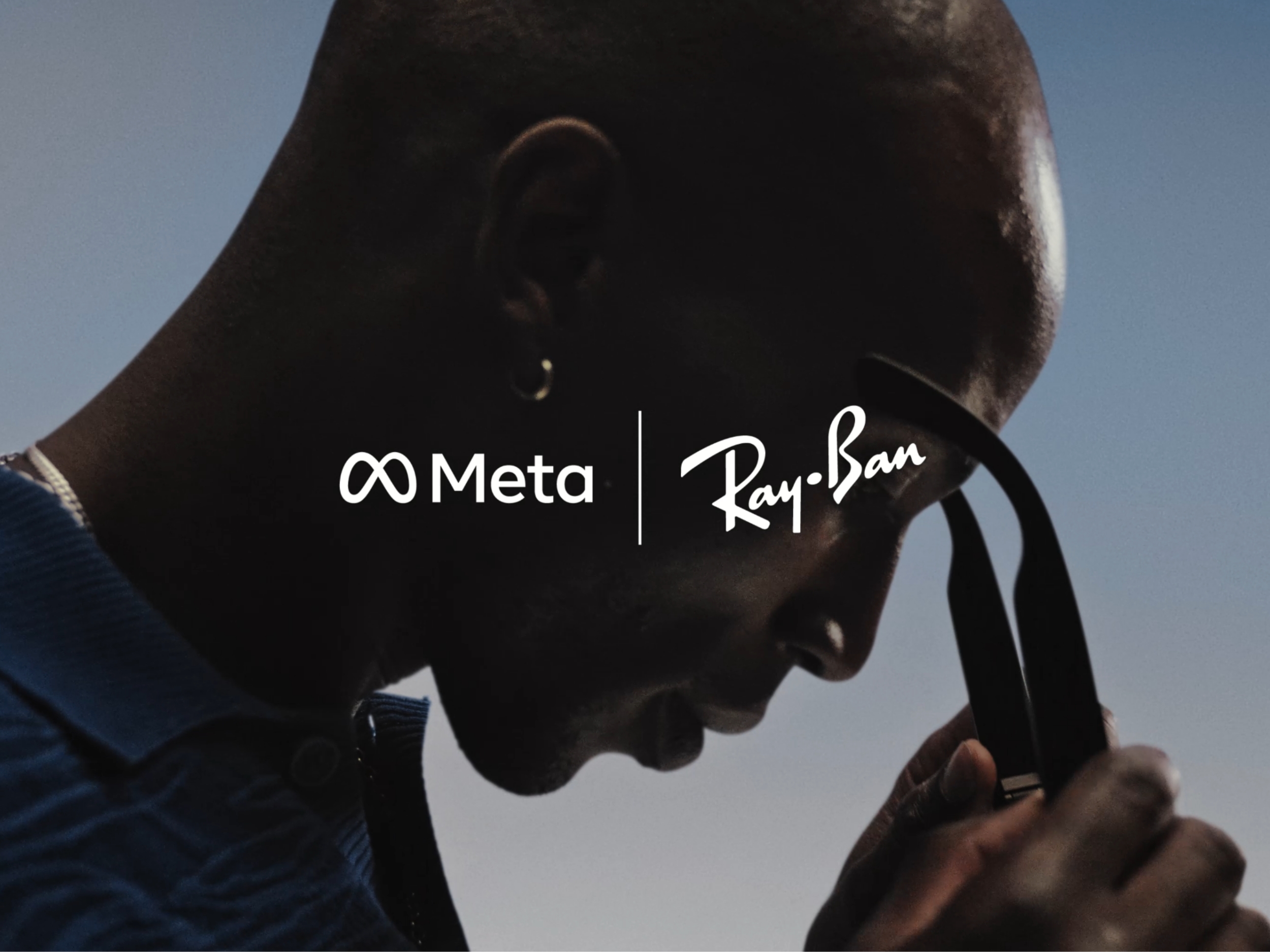
Meta Ray-Ban Display smart glasses are getting one of their biggest upgrades yet, bringing new AI-powered video calling, improved navigation, expanded notifications, calendar tools, app discovery, and enhanced video recording. The update also marks a major international expansion, as the Ray-Ban Display is moving beyond the United States and launching in Germany, the United Kingdom, Canada, France, and Italy.
The most eye-catching addition is a new Hologram feature designed to make video calls feel more personal. Because the Ray-Ban Display does not have a camera pointed at the wearer’s face, people on calls have previously seen only the user’s point of view. That is useful for sharing what you are looking at, but it does not feel like a traditional face-to-face call.
Meta’s solution is a photorealistic digital avatar. After a short self-capture process in the Meta AI app, the glasses can generate a lifelike version of the wearer for video calls. Instead of relying on a face camera, the avatar is animated using the user’s voice. The system analyzes speech, tone, rhythm, and expression to create matching lip movements, facial reactions, and emotional cues.
The Hologram feature is expected to arrive first as an Early Access option for WhatsApp this fall. At launch, it will be available only to users in the United States, but it could become one of the most important features for making smart glasses more practical for everyday communication.
Navigation is also getting a meaningful upgrade. The Meta Ray-Ban Display will support cycling routes and live public transport information, including buses and trains. Users will be able to start navigation with voice commands, while turn-by-turn directions, transit details, and departure times appear directly in the glasses’ display.
For now, these new navigation tools will launch in the United States and Canada. However, Meta is also working on a more natural style of pedestrian navigation that could make walking directions easier to follow. Instead of relying only on street names, the glasses may use visible landmarks in the real world. For example, rather than saying “turn left onto Third Street,” the glasses could say “turn left at the yellow house.”
This kind of landmark-based navigation could make smart glasses feel much more intuitive, especially in unfamiliar cities or busy areas where street signs are hard to spot. Meta has not yet confirmed when this feature will roll out or which regions will receive it first.
Another major addition is Explore, a new central hub for apps and experiences built for the Ray-Ban Display. Explore is intended to help users discover content designed specifically for smart glasses, including learning tools, entertainment, games, and location-based discovery features. This could become an important step toward turning the glasses into more than just a wearable camera and display.
Meta is also expanding everyday smartphone-style features. Notifications from messages and other apps will be able to appear directly in the glasses’ display, giving users a quick way to stay updated without pulling out their phone. Users will be able to choose which notifications appear, helping prevent the display from becoming distracting or overloaded. A specific release date for this notification feature has not yet been announced.
Video recording is improving as well. The Ray-Ban Display will gain support for recording videos with Dolby Atmos audio. This should make captured footage feel more immersive by adding a stronger sense of space and direction to sound. When users watch their videos later, it should be easier to tell where voices, traffic, music, or other sounds were coming from.
Calendar integration is also becoming more useful. In future updates, users will be able to view meeting participants, accept or decline invitations, and join meetings directly from the glasses. This fits into Meta’s broader goal of making the Ray-Ban Display a more independent productivity device, rather than just an accessory that depends heavily on a smartphone.
Taken together, these updates show a clear direction for Meta’s smart glasses strategy. The company wants the Ray-Ban Display to handle more everyday tasks on its own, from calls and navigation to notifications, calendar management, app discovery, and video capture. The goal is simple: let users keep their phone in their pocket more often while still staying connected.
With its international launch and a growing list of AI-powered features, the Meta Ray-Ban Display is becoming a more ambitious wearable device. The new Hologram avatar could make video calls feel more natural, while improved navigation and smarter notifications may make the glasses more useful throughout the day. If Meta can continue expanding availability and refining these tools, the Ray-Ban Display could become one of the most important smart glasses platforms on the market.