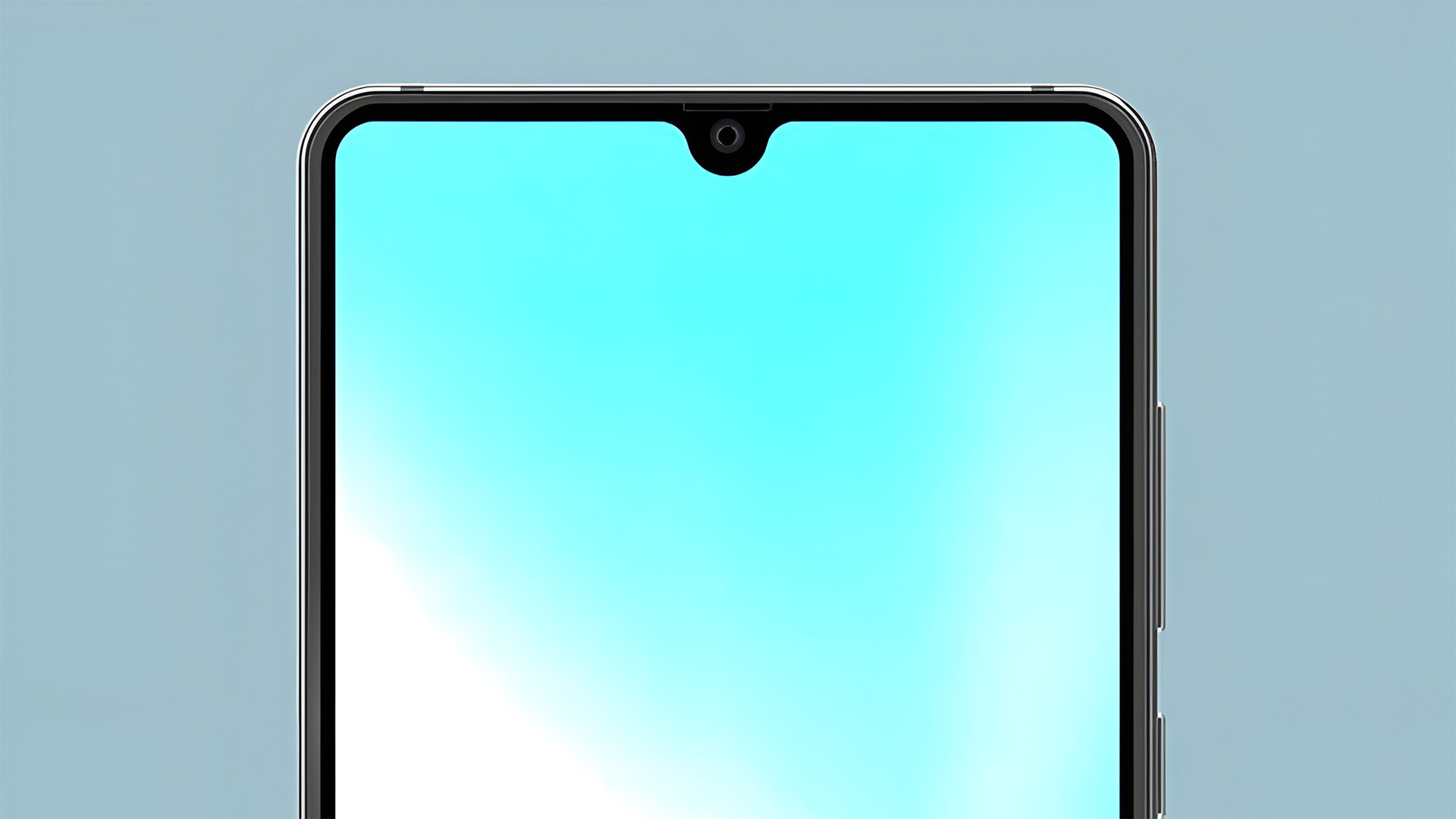
The teardrop notch is on the verge of a comeback, and it’s not because phone makers suddenly fell back in love with 2017-era design. A new wave of rumors suggests smartphone brands may be preparing to roll back several popular features—everything from punch-hole cameras to 120Hz displays—in response to surging memory and storage costs that are squeezing profit margins across the industry.
The core problem is the ongoing DRAM shortage, which is reportedly driving up prices for the components that matter most in modern phones: RAM and fast storage. When these parts get expensive, manufacturers have two choices—raise prices even more or cut costs elsewhere. And according to multiple supply chain chatter points, many companies may choose the second route.
One of the biggest visual changes could be the return of the teardrop notch. It originally took off as a way for Android phones to increase screen-to-body ratio while staying distinct from Apple’s design direction. Over time, the punch-hole cutout became the cleaner, more modern standard. But if brands need cheaper display solutions and less complex front camera integration, the teardrop approach could once again become attractive simply because it’s easier and less costly to implement at scale.
Alongside that, 90Hz screens may also reappear in a bigger way. Before 120Hz became the default “smooth display” spec in many mid-range and flagship models, 90Hz hit a sweet spot: noticeably smoother scrolling and animations than 60Hz, without hitting battery life as hard—and crucially, often cheaper to produce than 120Hz panels. If manufacturers are trying to keep prices from climbing too high, dialing refresh rates back to 90Hz could become an easy lever to pull.
Memory limits are another area where buyers might feel the change. The rumor mill suggests RAM configurations could be capped at 8GB for many models, while entry-level devices may drop as low as 4GB to keep costs under control. That would be a notable shift at a time when apps, camera processing, and on-device AI features continue to demand more memory.
There is, however, one feature that could return in a way many users will actually welcome: microSD card expansion. The talk is that some brands could reintroduce SIM trays that support both physical SIM cards and expandable storage. With storage prices rising, giving buyers a way to increase capacity later—without paying for higher built-in storage tiers—could be a practical compromise.
Cost-cutting may also extend to materials. Instead of aluminum frames and more premium chassis designs, future phones could lean more heavily on polycarbonate or plastic builds. While this can make devices feel less premium in-hand, it’s a straightforward way for companies to reduce manufacturing costs when key internal parts are getting more expensive.
The bigger takeaway is hard to ignore: consumers could end up paying more while getting less—older notch designs, lower refresh-rate screens, reduced RAM options, and more budget-oriented materials. For shoppers, it may soon become essential to look beyond marketing and focus on spec sheets, real-world performance, and long-term value before upgrading.
If these rumors play out, the next generation of smartphones may not be about pushing cutting-edge hardware everywhere—it may be about surviving rising component prices with as few compromises as buyers will tolerate.