Samsung, SK Hynix and Micron Rethink In-House CXL Controller Plans as Market Strategy Shifts
Samsung Electronics, SK Hynix and Micron Technology are reportedly changing direction in the fast-moving Compute Express Link market, with the three memory giants said to be reducing or delaying efforts to commercialize their own internally developed CXL controller chips.
Instead of pushing ahead with fully in-house controller designs, the companies are expected to rely more heavily on specialized fabless chip suppliers. This shift could reshape how future CXL memory products are developed, especially as demand grows for faster, more flexible memory solutions in AI servers, cloud data centers and high-performance computing systems.
CXL, short for Compute Express Link, is a next-generation interconnect technology designed to improve communication between CPUs, GPUs, accelerators and memory devices. It is seen as an important part of the future data center, particularly as artificial intelligence workloads require much larger memory pools and more efficient bandwidth management.
For memory makers, CXL opens the door to new products beyond traditional DRAM modules. CXL memory expansion devices can help servers access additional memory capacity without being limited by conventional CPU memory channels. This makes the technology attractive for hyperscale cloud operators, enterprise servers and AI infrastructure providers looking to improve system performance and reduce bottlenecks.
However, building CXL controller chips is complex. These controllers must manage communication between the host processor and attached memory while meeting strict requirements for latency, stability, compatibility and power efficiency. As the CXL ecosystem continues to mature, working with dedicated controller design companies may allow major DRAM manufacturers to move faster and reduce development risks.
Samsung, SK Hynix and Micron are not abandoning CXL memory altogether. Instead, the reported strategy suggests a more practical approach: continue developing CXL memory modules and related products while outsourcing or partnering on the controller side. This lets memory companies focus on their strengths, including DRAM production, packaging, module design and system-level validation.
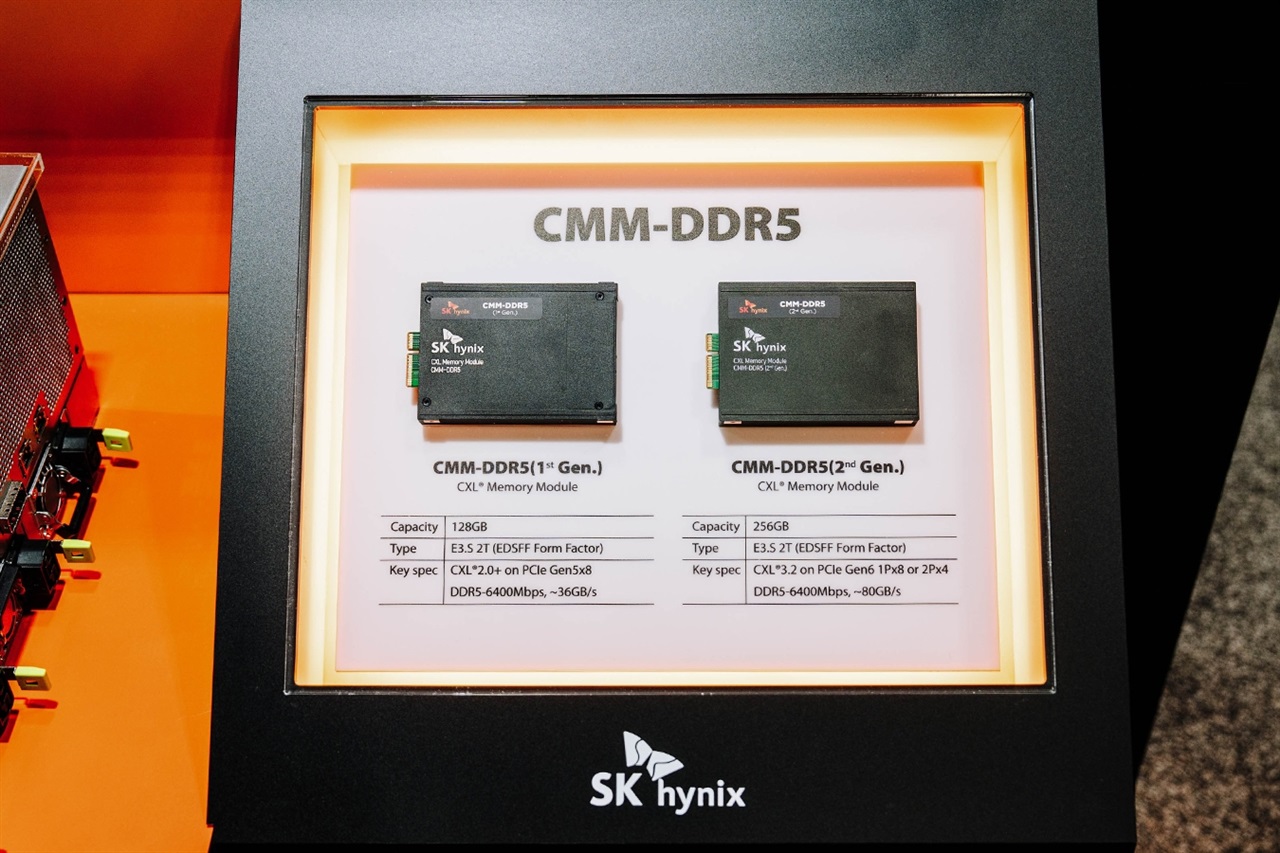
SK Hynix, for example, has already showcased CMM-DDR5 modules, demonstrating how CXL-based memory expansion could work with modern DDR5 technology. These types of products are expected to play a bigger role as server platforms evolve and more processors add broader CXL support.
The decision to lean on fabless suppliers could also benefit the broader semiconductor industry. Specialist controller companies may gain more opportunities as CXL adoption expands, while memory manufacturers can bring products to market with greater flexibility. This type of collaboration is common in advanced chip development, where no single company always handles every part of the design and production chain.
The timing of this shift is also important. While CXL has generated strong interest, commercial adoption is still developing. Many data center customers are testing use cases, evaluating compatibility and waiting for broader platform support before deploying CXL memory at scale. By slowing or scaling back internal controller commercialization, major memory vendors may be avoiding unnecessary cost while the market continues to take shape.
For customers, the long-term impact could be positive. If partnerships with fabless controller suppliers lead to better-tested, more reliable and more cost-effective CXL memory products, data centers may adopt the technology more confidently. CXL has the potential to improve memory utilization, lower infrastructure costs and support increasingly demanding workloads such as generative AI, analytics and large-scale virtualization.
The move also highlights a larger trend in the semiconductor market: specialization is becoming more important. As chip technologies become more advanced, companies are increasingly focusing on the areas where they have the strongest advantage. For Samsung, SK Hynix and Micron, that advantage remains memory manufacturing, advanced DRAM technologies and the ability to deliver high-volume products for global server and PC markets.
CXL memory is still expected to become an important growth area, but the path to mass adoption may be more gradual than early expectations suggested. By adjusting their controller strategies now, leading memory makers appear to be positioning themselves for a more efficient rollout when demand becomes stronger.
In the end, this is less a retreat from CXL and more a recalibration. Samsung, SK Hynix and Micron still have strong incentives to support the technology, but they may no longer see internally built CXL controller chips as the fastest or most effective route to commercialization. As AI and cloud computing continue to push memory requirements higher, CXL remains one of the key technologies to watch in the next generation of data center hardware.