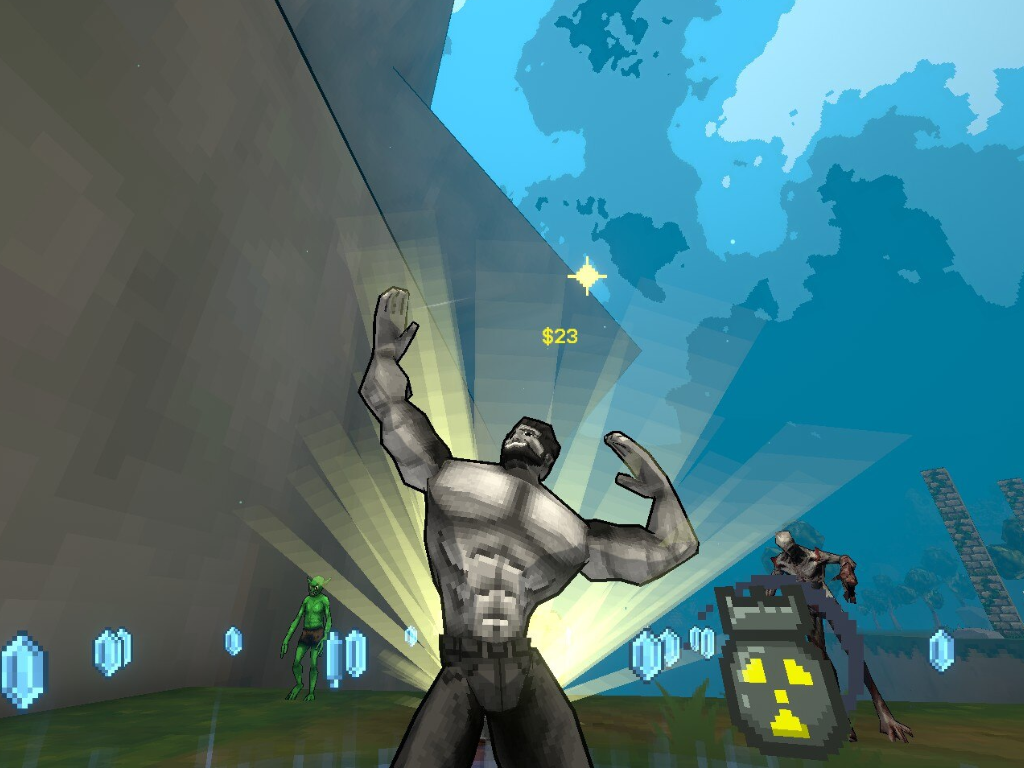
Megabonk, a one-person passion project from developer Vedinad, has erupted into one of 2025’s biggest surprise hits. Launching right as the roguelike scene was heating up, this 3D reverse bullet hell shooter has turned pixelated charm and a relentless progression loop into serious momentum, selling an estimated 1.3 million units and climbing the Steam charts with unprecedented speed.
What’s fueling the craze is how sticky the gameplay feels. Runs are packed with an abundance of weapons, tomes, items, and unlockables, encouraging just-one-more-try marathons as players experiment with goofy, offbeat characters and synergistic builds. The aesthetic may be rustic and deliberately low-fi, but the feedback loop is anything but: it’s fast, readable, and endlessly replayable.
That formula has translated into eye-popping player counts. On October 5, Megabonk hit an all-time Steam concurrent peak of 117,336, outpacing Hades 2’s high-water mark of 112,947 set on September 28. For context, the game that helped popularize the reverse bullet hell craze, Vampire Survivors, peaked at 77,061 concurrent players roughly 3.7 years ago. Over the past week, Megabonk has repeatedly broken into Steam’s top ten most-played, at times surpassing heavyweights like Hades 2, Path of Exile 2, Warframe, and Dead by Daylight.
Even with Hades 2 available on more platforms, Megabonk’s momentum on Steam is undeniable. The newcomer is averaging around 100,000 players daily on the platform. Between October 2 and October 5, Hades 2’s average daily player count slipped from about 80,000 to roughly 55,000 over the same period.
Player sentiment mirrors the surge. Megabonk sits at a 92% user rating from roughly 23,000 Steam reviews. Hades II remains a juggernaut in its own right, holding a 93% user score across approximately 81,000 reviews—an important reminder that these two hits are excelling in different ways. Comparing them head-to-head misses the nuance: Hades 2 is celebrated for deep storytelling, layered roguelike systems, and branching dialogue, while Megabonk leans into zany personality and approachable, arcade-fast action.
What makes Megabonk’s rise even more remarkable is how early it is in its content cycle. Right now, the game features two maps—Forest and Desert—each with three difficulty tiers. Despite the relatively lean map count, the sheer variety of items and abilities keeps runs fresh. And there’s more coming. Vedinad has outlined plans for ongoing content updates and the addition of multiplayer, both of which could supercharge engagement and extend the game’s lifespan well into next year.
The broader takeaway is clear: 2025 is a banner year for indie games that know their audience and deliver instantly gratifying action. Megabonk’s surge shows there’s still room for fresh twists within the roguelike and reverse bullet hell spaces—especially when tight design meets a strong sense of identity. If the planned updates land, this underdog could cement itself as a long-term staple on Steam’s most-played charts while continuing to convert curiosity into word-of-mouth momentum.
For players, that means now is a great time to jump in, experiment with builds, and watch the meta evolve. For the indie scene, Megabonk is a reminder that a clear vision, responsive updates, and compelling replay value can break through—even against the biggest names in the genre.