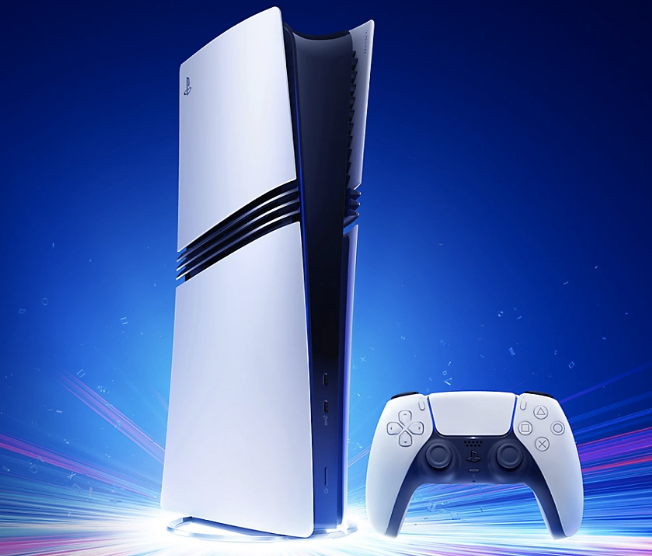
The PlayStation 5 Pro comes with a hefty price tag, no doubt about it. Costing $699 and an additional $75 if you want a physical disk drive, it’s clear that Sony is targeting serious gamers willing to pay for high performance. But for that much money, could you build a PC that competes—and perhaps even outperforms—the PS5 Pro?
To match the PS5 Pro’s $699 price, you might have to compromise by dipping into older hardware generations. The PS5 Pro packs some impressive specs: an 8-core processor, 16GB of DDR6 memory, a 2TB SSD, and a GPU roughly equivalent to an RTX 4060 or 4070, or an RX 6650 XT, 7700 XT, or 6800 XT.
When trying to build a comparable PC at this price point, one approach is to consider AM4 CPUs, which allow you to stay within budget while still offering decent performance. Newer AMD or Intel processors would quickly exceed the budget unless you sacrifice core count, which wouldn’t give a fair comparison to the PS5 Pro’s 8-core architecture.
This leaves about $192.31 to spend on a GPU, or $267.31 if you factor in the PS5 Pro’s disk drive. Keeping within this budget to match the PS5 Pro’s GPU is challenging. An RTX 4060, though mid-range, would likely exceed the budget, whereas an RX 6650 XT would only put you slightly over budget by $38.
However, this build features older components and slower RAM, meaning it might struggle to deliver the PS5 Pro’s level of performance, especially in graphically intensive games at 4K resolution.
There are alternatives, like looking for deals, considering a 6-core CPU to save money for a better GPU, or exploring the second-hand market for even greater savings. Still, this doesn’t align perfectly with the new, warranty-backed PS5 Pro’s experience.
Ultimately, this comparison shows that you can build a highly capable PC for a similar price—a machine that serves multiple purposes beyond gaming. But if high-fidelity gaming is your primary focus, the PS5 Pro presents itself as a competitively priced option.
The bottom line: Building a PC that matches the PS5 Pro’s performance for the same price is possible, but it might involve older components and potential compromises in gaming experience. For pure gaming, the PS5 Pro might be a better investment than it seems at first glance.