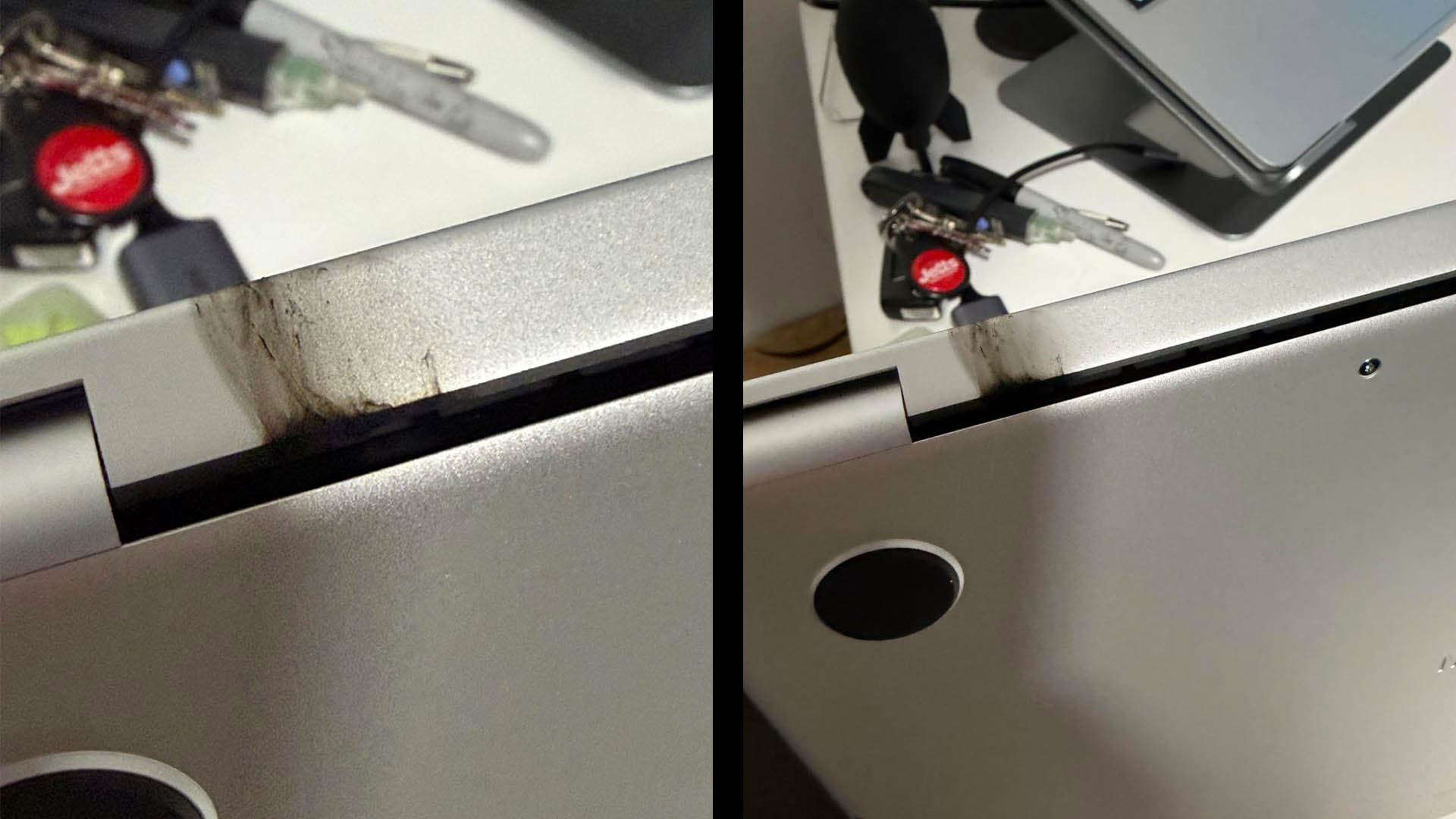
Apple is known for strict quality control, with the goal of making premium devices that last for years while keeping manufacturing defects to a minimum. But when a company ships millions of units each year, even a tiny failure rate can still leave a few customers with a rare, frustrating problem. That’s exactly what appears to have happened to one new M5 MacBook Pro owner, whose laptop reportedly died just two days after purchase following a spark triggered by normal hinge movement.
The incident was shared by Reddit user “ethanmcdonald00,” who posted images suggesting a hardware defect. While the exact configuration wasn’t listed, the base M5 MacBook Pro typically starts around $1,541.50 at major online retailers, offering 16GB of unified memory and a 512GB SSD. For many buyers, that’s a significant investment—making any early-life failure especially alarming.
One detail drawing attention is a possible explanation raised in the discussion: electronics repair technician and YouTuber Louis Rossmann has previously pointed out that Apple routes increased power near the data lines on the display connector. If that’s the case, hinge movement could potentially contribute to a short in a worst-case scenario—particularly if something inside the unit is slightly out of place or improperly insulated. In theory, contact between components that should remain separated could lead to sparking and sudden failure.
Anyone familiar with laptop repairs has heard the standard warning: disconnect the battery before doing anything internally, because even a brief short can cause major motherboard damage. What makes this situation different is that the customer wasn’t repairing or modifying anything—this appears to have happened during normal use, which is why it’s likely to become an interesting case for Apple’s engineering teams.
The good news for the owner is that a brand-new MacBook Pro failing almost immediately is the kind of issue Apple typically handles quickly. If the customer explains what happened at an Apple retail store, a replacement is likely to be issued with minimal hassle.
As for the bigger picture, one dramatic failure doesn’t mean Apple is “mass producing defective” MacBooks. Even with a carefully managed supply chain and extensive checks at the factory level, rare defects can still slip through—especially at scale. What matters most is how the company responds, and Apple’s reputation for strong customer service suggests it will address the individual case while also investigating the underlying cause to prevent repeats.
More details may emerge as the situation develops and as Apple potentially reviews the affected unit.


