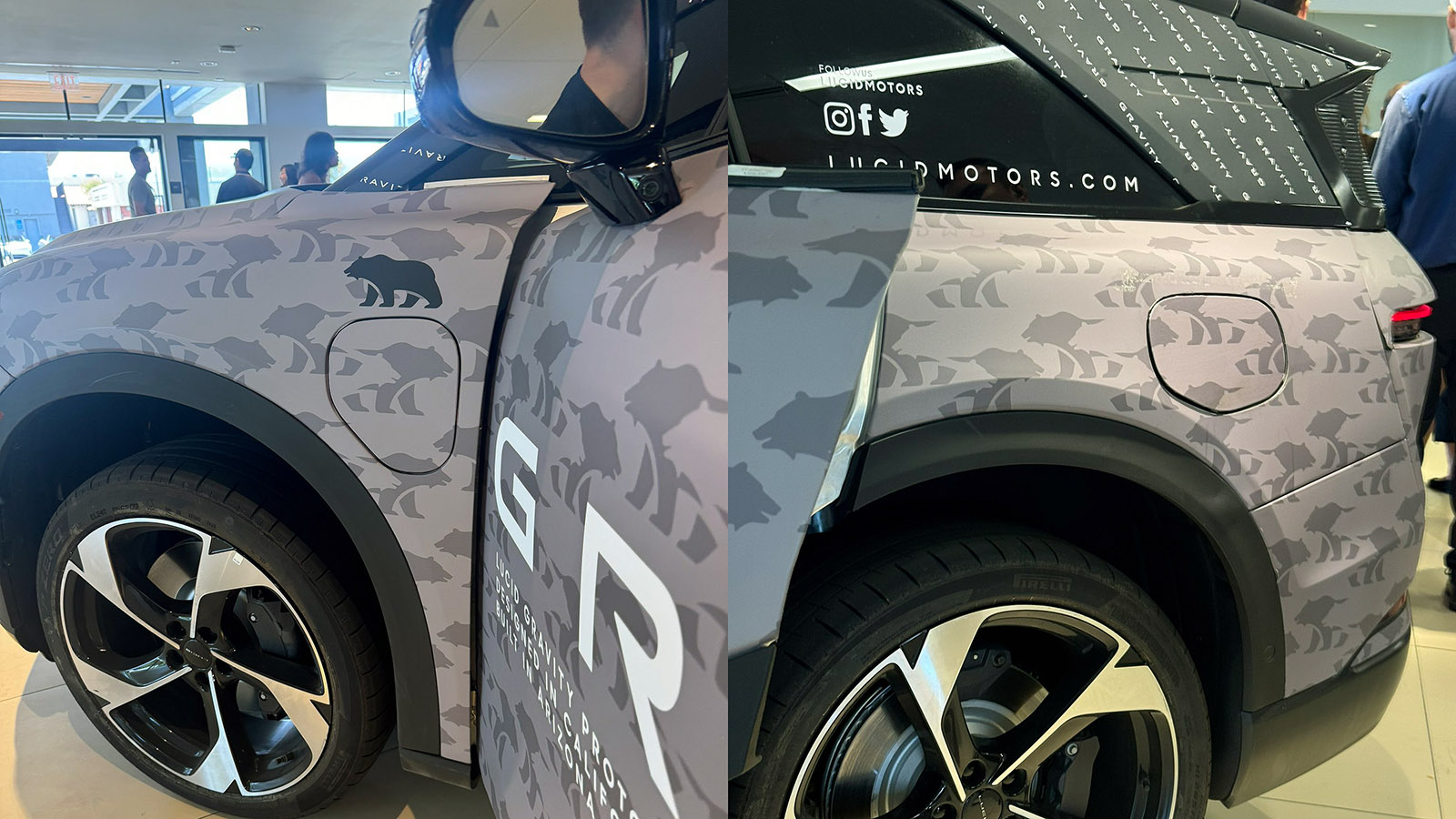
The electric vehicle (EV) market continues to evolve rapidly, and one of the standout developments is Lucid’s latest move with its upcoming Gravity model. In a bid to offer unparalleled charging convenience to its users, Lucid has announced that the Gravity will come equipped with two types of charging ports: the North American Charging Standard (NACS) and the Combined Charging System (CCS).
In what appears to be a user-centric approach, Lucid has positioned the NACS charging port akin to where Tesla typically places them. This strategic placement likely caters to user familiarity and convenience. Additionally, Lucid has added a CCS charging port on the front driver’s side of the vehicle. This means that users will have the flexibility of using multiple charging options without the hassle of carrying adapters or dealing with logistical inconveniences such as unhooking a trailer or aiming for end charging units.
While integrating two charging port types might escalate the manufacturing costs of the Gravity, it seems Lucid has preemptively considered this in their pricing strategy. The starting price for the Lucid Gravity has been announced at around $80,000, which may well include the costs for this added charging convenience.
Although Lucid is currently operating at a loss, continued financial support from Saudi Arabia’s sovereign wealth fund has enabled the company to prioritize customer needs and innovations over immediate production costs as it forges into new EV categories.
Rivian, another player in the EV space, has also taken note of consumer feedback regarding charging port placements. The company is considering repositioning the NACS charging port on the upcoming R2 model to the driver’s side rear. This decision could facilitate easier access to Tesla Supercharger stations, aligning with the preferences of future R2 SUV owners.
The placement of charging ports is a topic of much debate among EV users. While some may prefer a front passenger side port for easier charging access while towing, others argue that a driver’s side location is generally more convenient for the majority of charging scenarios, including at Tesla Supercharging stations. With Tesla’s anticipated V4 Superchargers set to replace the older versions that have shorter cables, this may become an even more pressing consideration for EV manufacturers.
In the ever-advancing world of electric vehicles, manufacturers like Lucid are taking bold steps to enhance the EV charging experience. Offering dual charging ports can significantly boost the flexibility and appeal of EVs, potentially serving as a catalyst for broader adoption by alleviating one of the minor, yet significant pain points of electric vehicle ownership — charging logistics.
As the industry continues to grow, we can expect to see more innovative solutions that prioritize usability and convenience, ultimately easing the lifestyle transition for many from conventional combustion engines to the sustainable future of electric mobility. For EV owners, the dual charging port system could offer a new level of convenience that simplifies the transition and enriches the overall EV experience.