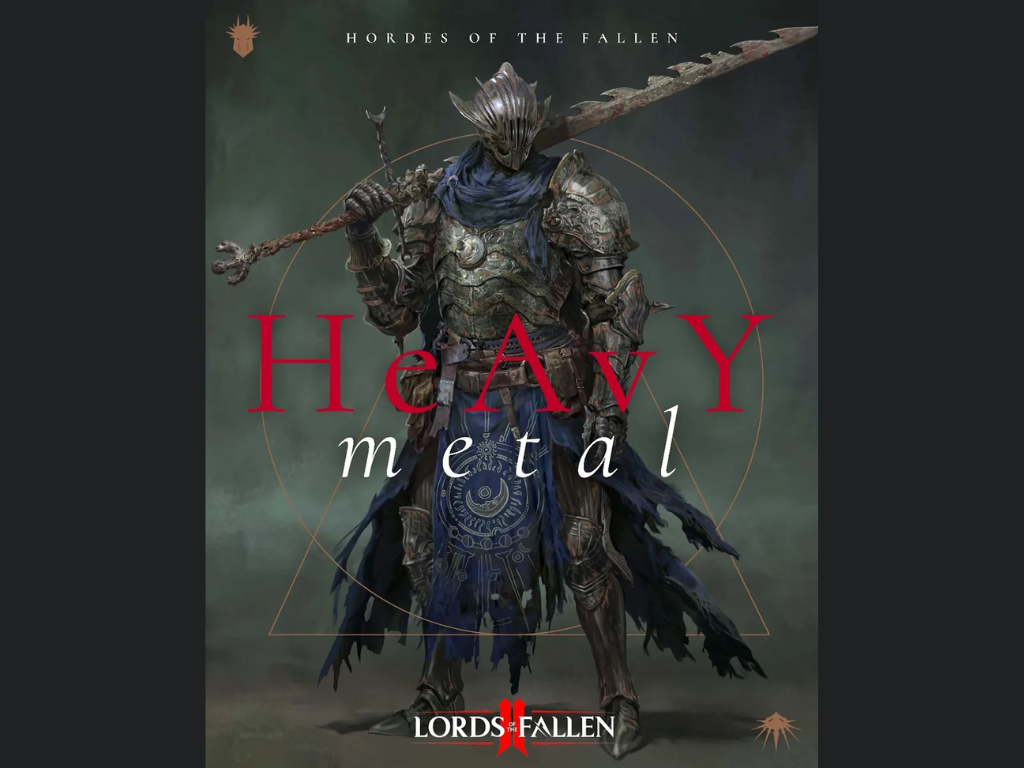
The team behind Lords of the Fallen 2 is pushing back hard against online accusations that it copied enemy designs from Elden Ring: Nightreign. The dispute flared up after CI Games shared concept art for a new soldier-type enemy tied to the moon goddess Menaslide, and fans immediately began comparing its look to Nightreign’s newly revealed character, Wylder.
The artwork at the center of the controversy shows a knight-like figure in blue armor with cloth accents, wielding a serrated greatsword. Those details, along with the character’s stance and overall silhouette, led some players to argue the design felt uncomfortably close to familiar FromSoftware imagery. A few commenters even pointed to similarities with Dark Souls’ Artorias, adding more fuel to the debate, especially since Wylder is associated with an optional Artorias-inspired skin in Elden Ring: Nightreign.
CI Games CEO Marek Tyminski has firmly denied any plagiarism claims and says the studio can prove the design existed well before Nightreign was made public. To support that claim, he shared a screenshot from an internal Slack conversation dated July 2024. According to Tyminski, the chat shows an artist posting a render of a character then referred to as “HallowedBro,” which later evolved into the Menaslide Soldier concept recently shown to the public.
Tyminski also laid out a specific production timeline to reinforce the studio’s position. He said the armor design was finalized by July 14, 2024—months before Elden Ring: Nightreign was officially announced. He further claimed the character model was imported into Lords of the Fallen 2 by October 23, 2024, which he believes makes the sequence of development clear.
In his response, Tyminski argued that shared visual themes can happen naturally in medieval fantasy settings, where certain armor shapes, colors, and heroic knight silhouettes are common design territory. While emphasizing respect for FromSoftware, he insisted CI Games does not copy other studios and said he has full confidence in the originality of the art team. He also pointed to the positive reception of the first game’s armor designs, suggesting the studio’s visual work has already earned credibility with players.
For now, the debate remains split between those who see the resemblance as too close to ignore and those who accept the explanation that overlapping fantasy inspirations can produce similar-looking characters. What’s clear is that CI Games is treating the criticism seriously—and is willing to back its defense with dates, internal documentation, and a direct stance on creative integrity.


