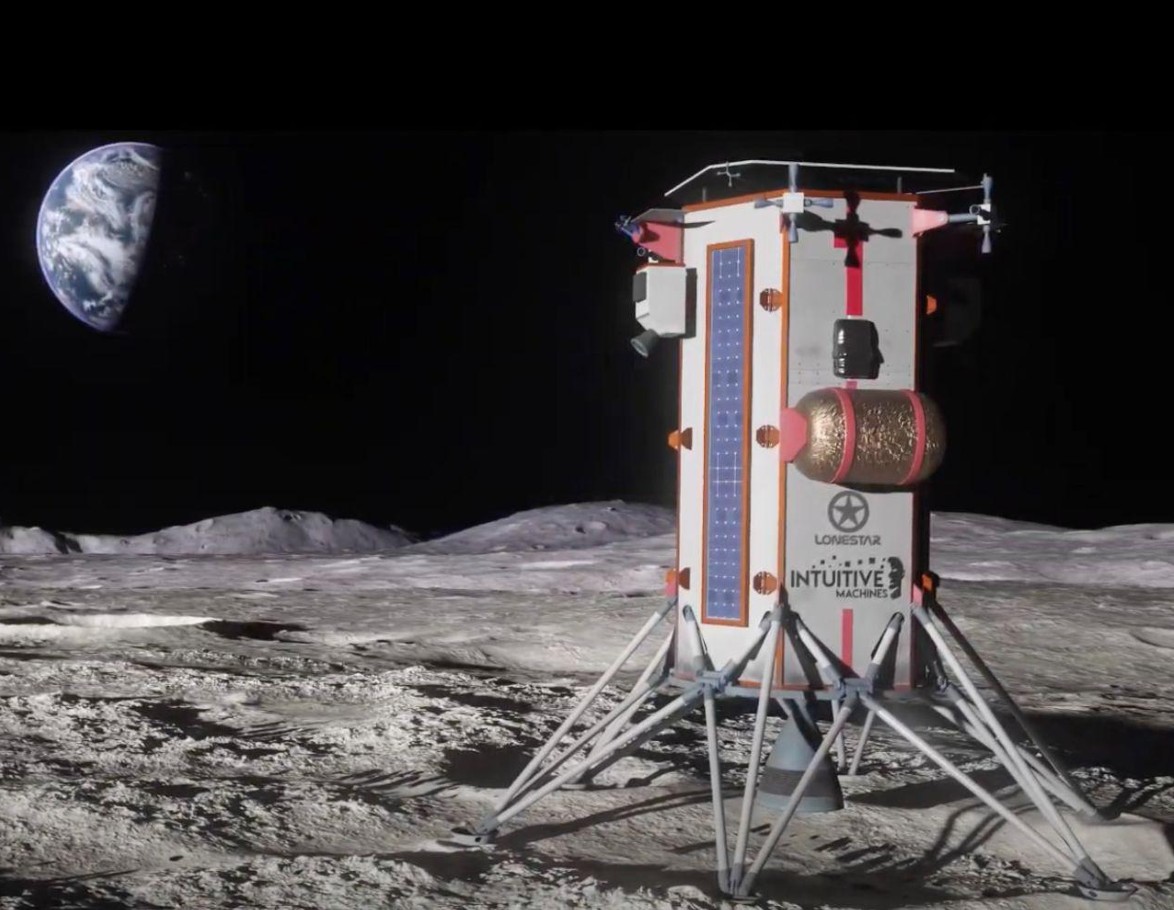
Lonestar Data Holdings is making waves with its groundbreaking mission to launch the Freedom Lunar Data Center to the Moon. With successful testing and the final integration into Intuitive Machines’ lunar lander, Athena, the payload has recently arrived at Cape Canaveral, Florida, signaling the imminent lift-off slated for late February 2025. This leap into space represents a monumental step in offering innovative data solutions beyond the Earth.
This venture is poised to redefine how we perceive data backup and disaster recovery. Positioned on the Moon, Freedom aims to provide unmatched global backup services, ensuring resilience in the face of data disasters with their Disaster Recovery and Resiliency as a Service (RaaS). By establishing the first physical data center in lunar territory, Lonestar is pioneering a new era in data storage and edge processing, reaching the final frontier – cislunar space.
The Freedom mission isn’t Lonestar’s first foray into space. Their debut mission, featuring the Independence virtual data center, proved tremendously successful in cislunar space operations and set the groundwork for current and future lunar data ventures. The data retrieval from Independence showcased the potential and reliability of lunar-based information management, setting new industry standards.
The Freedom Data Center doesn’t just promise technological excellence; it embodies a tribute to the space exploration legacy. Its 3D-printed exterior, a creative masterpiece by renowned architect Bjarke Ingels and his team, pays homage to astronauts Charlie Duke and Nicole Stott, highlighting the spirit of the Artemis campaign. The choice of astronauts as inspiration brings a symbolic connection between past and present exploration efforts.
Crafted by Lonestar’s contractor SpaceBlt, and incorporating top-tier storage solutions from Phison, the data center is thoroughly equipped for its lunar mission. Among the cutting-edge technology on board is an ARMAS Radiation sensor, also engineered by SpaceBlt’s Environmental Technologies division, ensuring advanced protection for the duration of the mission.
Already a sought-after solution, Freedom’s entire capacity is booked, demonstrating immense interest and trust in off-planet data storage solutions. This mission not only embraces the future of data processing but also revolutionizes the landscape of space-based technology applications, hinting at a universe of possibilities waiting to be explored. As we look to the stars, Lonestar Data Holdings stands at the forefront, unlocking unprecedented opportunities for resilience and innovation in data management.