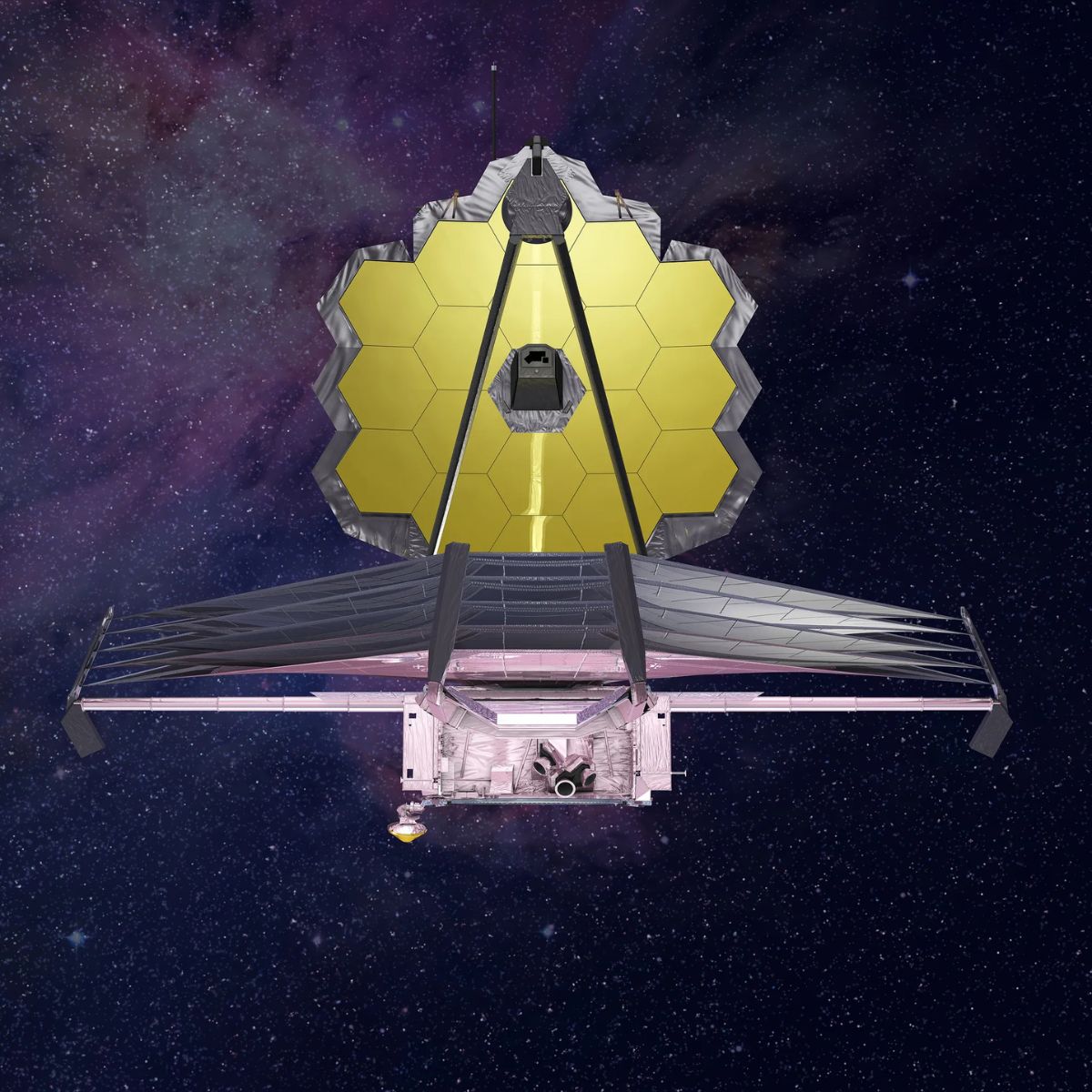
The James Webb Space Telescope is giving astronomers an unprecedented look at the early universe, and one of its most intriguing finds is a population of mysterious tiny red objects showing up in deep-space images. These faint reddish specks, known as LRDs, appear to be extremely small proto-galaxies that existed when the universe was still very young. In cosmic terms, they’re minuscule—only a few hundred light-years across—yet they may hold outsized clues about how galaxies, black holes, and even the building blocks of life began to take shape.
What makes these early galaxies so fascinating is what seems to be hiding at their centers. Observations suggest that many LRDs contain massive black holes that could be millions of times the mass of the Sun. That’s a startling mismatch: the host galaxies are tiny, but their central black holes look enormous. For perspective, the Milky Way’s own central black hole, Sagittarius A*, is about 4 million solar masses. Seeing similarly hefty black holes inside galaxies that are only a fraction of the Milky Way’s size raises a big question in modern astronomy: how did such large black holes form so quickly in the early universe?
Normally, a black hole feeding on surrounding material is anything but subtle. Growing black holes often light up their neighborhoods with intense radiation, strong X-rays, and sometimes powerful jets that can influence the entire galaxy. That’s why these LRD proto-galaxies are so puzzling. Despite the likelihood of huge black holes at their cores, they appear surprisingly calm. Instead of blasting their surroundings with extreme high-energy output, they show weak high radiation and seem to sit in quieter, dust-rich environments.
That calm, dusty picture has an interesting parallel much closer to home: the center of our own Milky Way. Sagittarius A* sits within a complex region surrounded by thick clouds of gas and dust. One particularly important area is the Central Molecular Zone (CMZ), a dense, cold band of molecular material near the galactic core. The CMZ is packed with heavy concentrations of gas, abundant cosmic dust, and cold molecular clouds—ingredients that can shield regions from harsh radiation and create conditions where chemistry can flourish.
In places like the CMZ, low radiation and dense dust can encourage chemical reactions that would be disrupted in more energetic environments. Scientists have even detected complex organic molecules in these regions, including nitriles found in a cloud known as G+0.693-0.027. Discoveries like these matter because they support the idea that many of the organic molecules found in our solar system may have originally formed in interstellar clouds long before planets existed.
That’s where LRDs become even more exciting. If these tiny early galaxies truly do host massive black holes while remaining wrapped in dust-rich, relatively low-radiation environments, they could provide ideal conditions for complex organic chemistry—possibly similar to what’s observed near the Milky Way’s center. In other words, these ancient proto-galaxies may not only help explain how supermassive black holes grew so fast, but also offer a glimpse into how the chemical foundations for complex molecules could form in the universe’s earliest epochs.
As the James Webb Space Telescope continues to study these faint red specks, LRDs may turn into key laboratories for understanding the early universe: how the first galaxies assembled, how black holes became giants, and how dust-shrouded regions might have nurtured rich chemistry long before solar systems like ours came to be.