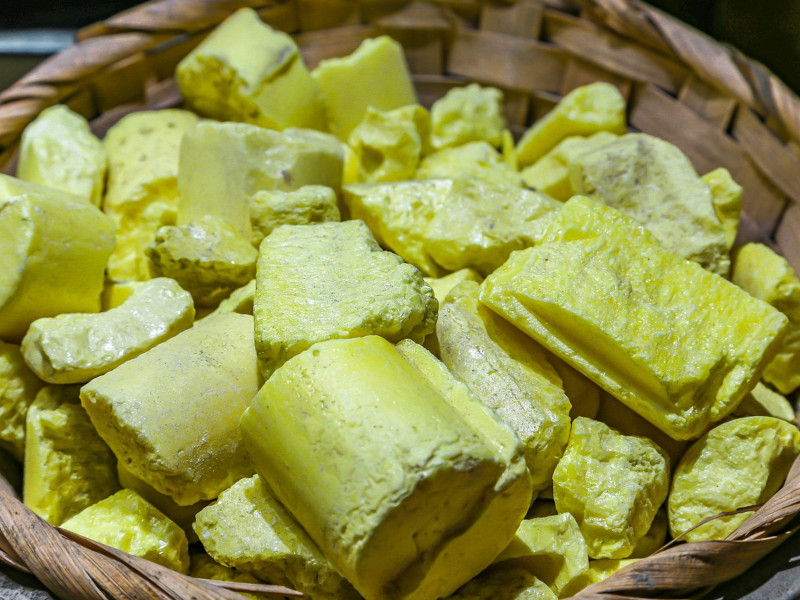
New advances in the development of lithium-sulphur (Li-S) batteries promise a more sustainable, powerful, and longer-lasting energy storage solution. Lithium and sulphur are abundant elements, making them a less expensive alternative to rare materials, even as the mining processes currently in use may not be the most environmentally friendly.
The energy density of Li-S batteries significantly surpasses that of the conventional lithium-ion batteries. A lithium-ion unit typically stores up to 700 watt-hours per kilogram – sufficient for a sizable e-bike battery. In contrast, lithium-sulphur batteries have a theoretical energy capacity of up to 2,500 watt-hours per kilogram, more than tripling the energy storage. Despite additional components like housing and electronics, Li-S batteries maintain a considerable weight advantage over current battery technologies.
Historically, the major hurdle for Li-S batteries has been their limited durability. Their performance and capacity tend to diminish after only a few charge cycles. Despite various reports claiming a thousand-charge-cycle life span, the real-world implications have hindered the practical application of this theoretically advantageous technology. However, a recent study has presented a more favourable outlook, demonstrating an impressive 87 percent residual capacity after 400 charge cycles at room temperature.
The breakthrough in enhancing the lifespan of Li-S batteries involves the addition of iodine to the cathode material composed of both lithium and sulphur. Iodine performs as a healing agent within the sulphur lattice structure. Notably, the cathode’s melting point is just 65 degrees Celsius, enabling regular melting to repair any defects and extend the battery’s lifespan.
If these advancements prove to be viable and replicable, solid-state lithium-sulphur batteries (SSLSB) could become a groundbreaking reality. Incorporating readily available and inexpensive materials, combined with their exceptionally high energy density, Li-S batteries stand poised to transform energy storage solutions in various applications, heralding a new era of high-performance, sustainable power.