AMD Zen 6 CPUs Move Closer to Launch as New Linux Patches Add Support for 32 More Models
AMD’s next generation of processors is slowly taking shape, and the latest Linux kernel updates offer another strong clue that Zen 6 development is progressing behind the scenes. While AMD has not officially revealed the full Zen 6 lineup, recent Linux patches show that support for a wider range of upcoming CPUs is already being added to the operating system.
Linux updates often provide early signs of unreleased hardware. Before new processors arrive on the market, companies must ensure that operating systems can properly detect and manage them. This includes everything from basic CPU identification to power management, compiler support, and instruction set compatibility. In AMD’s case, the Linux ecosystem has been receiving steady updates tied to Zen 6, suggesting that preparation for the next major CPU architecture is well underway.
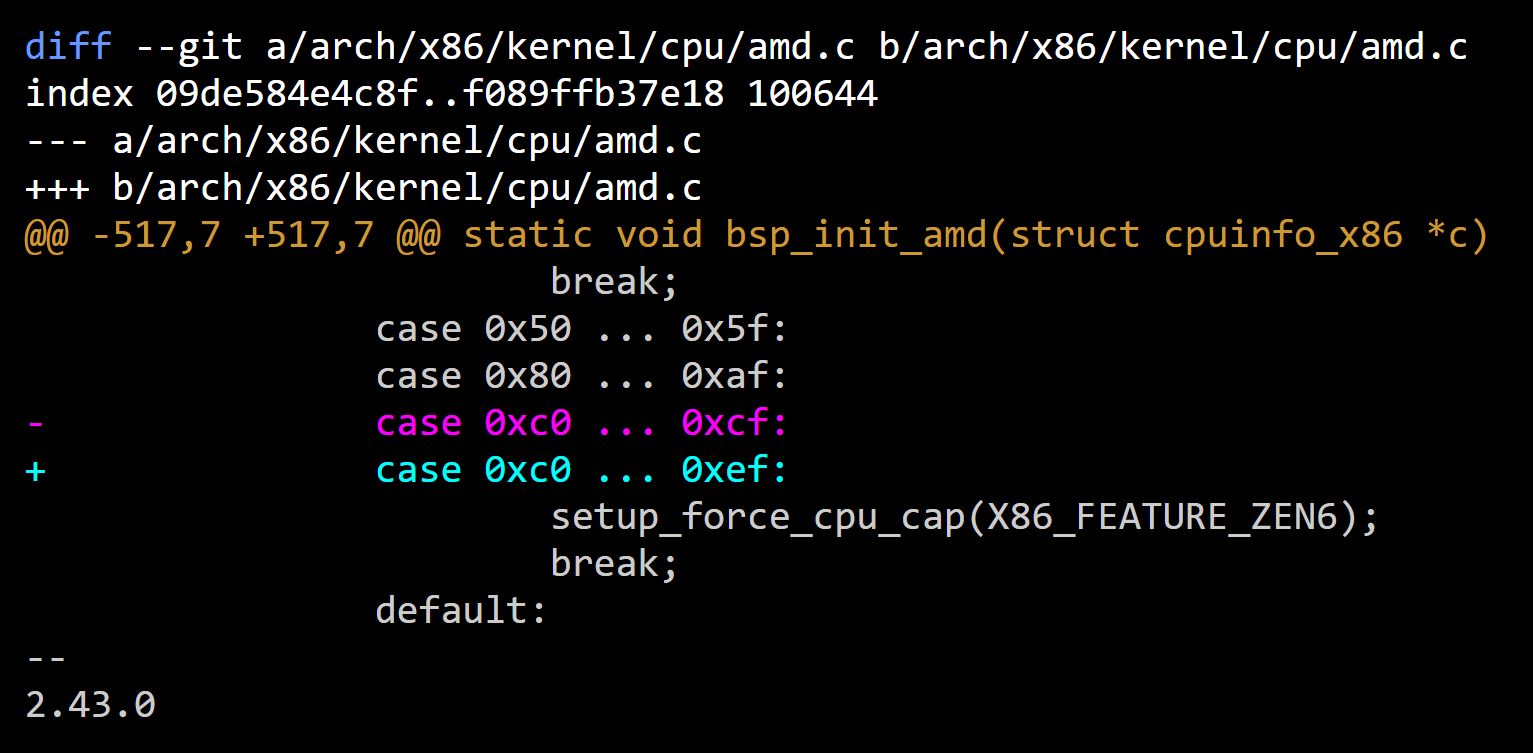
The latest patches expand Linux support for AMD’s Zen 6 processor family by adding 32 more CPU model IDs. Earlier updates allowed the Linux kernel to recognize Zen 6 models ranging from 192 (0xc0) to 207 (0xcf). With the new patches, that range now extends up to model 239 (0xef). This means the supported Zen 6 model range has grown significantly, pointing to a broader stack of future processors.
Although the patches do not reveal official product names, core counts, clock speeds, or platform details, they suggest AMD is preparing a large Zen 6 lineup. These models could cover multiple segments, including desktop Ryzen processors, laptop chips, workstation products, and enterprise-focused EPYC CPUs. However, it is also important to note that not every listed model ID necessarily becomes a retail product. Some IDs may be reserved for testing, internal development, or unreleased configurations.
AMD has used this type of Linux groundwork before ahead of major CPU launches. Similar updates appeared before previous Ryzen and EPYC generations, allowing the software ecosystem to support the hardware in advance. This early preparation helps ensure smoother compatibility when the processors eventually launch.
Beyond CPU identification, AMD has also been working on other Zen 6-related improvements in Linux. Recent development has included updates to the Power Management Controller driver, which plays an important role in efficiency, sleep states, and overall platform behavior. There have also been signs of support for new instruction sets, including enhancements related to AVX-512, which could benefit workloads such as scientific computing, rendering, AI processing, data compression, and other performance-heavy applications.
Zen 6 is expected to be a major step forward for AMD’s CPU roadmap. While details remain limited, the growing number of Linux patches indicates that AMD is actively preparing its next-generation architecture for future platforms. More kernel updates are likely to appear over the coming months as development continues and the launch window gets closer.
Current expectations point to AMD Zen 6 processors arriving sometime in late 2026 or early 2027, though AMD has not confirmed an official release date. Until then, Linux kernel activity will likely remain one of the best early indicators of how the Zen 6 product family is shaping up.