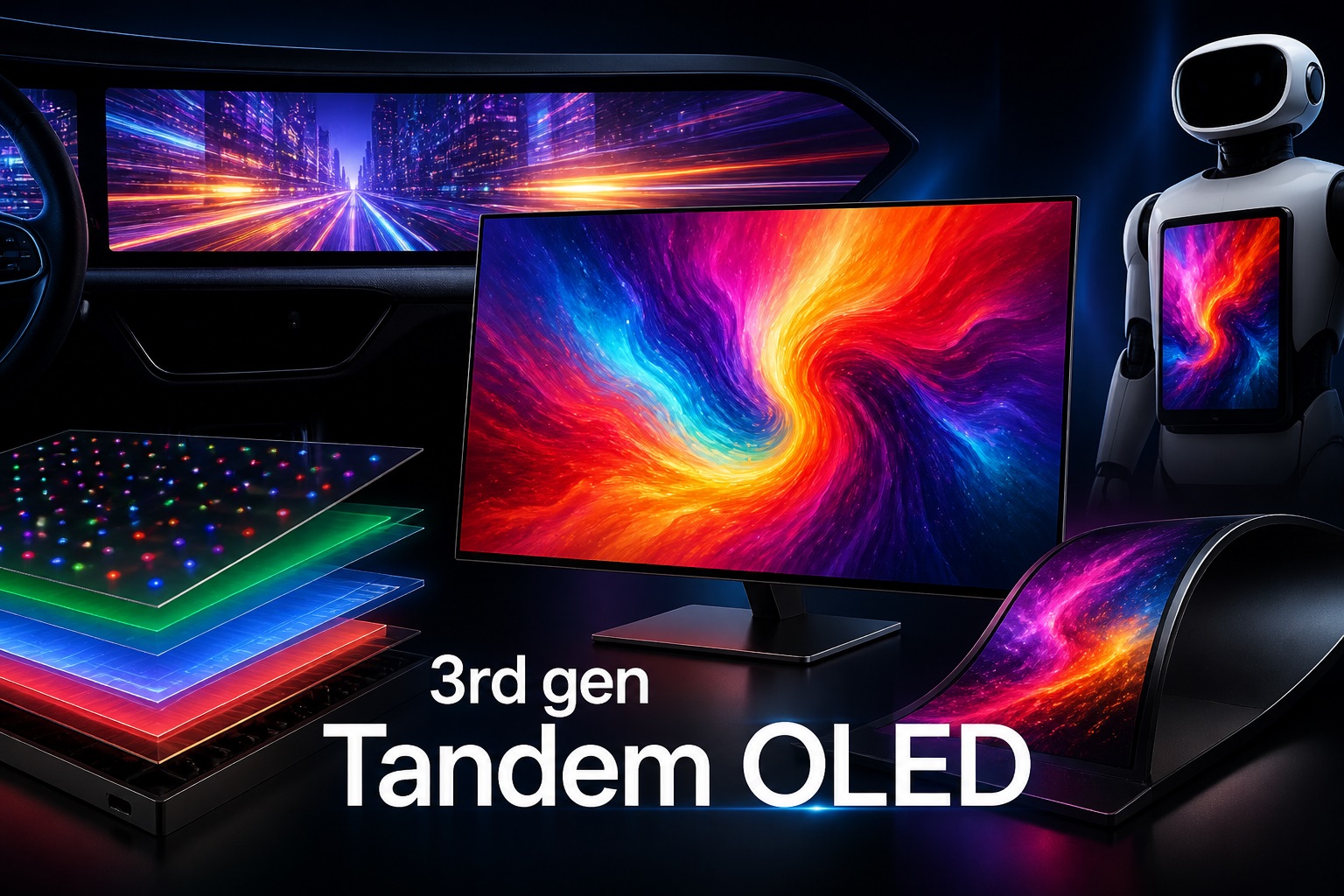
LG Display turned heads at SID Display Week 2026 in Los Angeles with a fresh wave of OLED innovations, but one announcement clearly stole the spotlight: its 3rd-generation Tandem OLED technology. Designed to tackle the biggest pain points of earlier OLED panels, this new Tandem OLED stack focuses on two areas people care about most—power efficiency and long-term durability—while also pushing brightness to levels that open the door to more demanding real-world uses.
According to LG Display, the 3rd-gen Tandem OLED can cut power consumption by 18% and nearly double durability versus previous OLED generations. That’s a meaningful upgrade in a category where brighter screens and longer life often come with trade-offs. The company is positioning this technology as a major step forward for devices that need sustained performance without draining power or degrading quickly over time.
One of the first products built on the new Tandem OLED approach is an automotive display panel that can reach up to 1200 nits of brightness. That level of brightness is especially important in vehicles, where sunlight and reflections can wash out dimmer screens. LG Display also notes a lifespan of over 15,000 hours at room temperature, underscoring the long-term reliability that car manufacturers demand for in-cabin displays.
LG Display says mass production of these Tandem OLED automotive panels is set to begin this year, and the company plans to expand the technology beyond vehicles into IT devices and broader consumer products later on. In other words, what starts in cars could ultimately influence the next generation of OLED monitors, laptops, and more.
Beyond Tandem OLED, LG Display also previewed several forward-looking OLED concepts aimed at new use cases. The company discussed a P-OLED solution designed for humanoid robots, signaling growing interest in flexible and adaptable display formats for robotics. Another eye-catching idea was a massive 57-inch pillar-to-pillar automotive display, built to create a more immersive digital cabin experience by stretching across the dashboard.
LG Display also showcased a 32-inch slidable OLED concept that hints at future expandable monitors or screens that can change size depending on how you use them—an idea that could appeal to creators, multitaskers, and premium workspace setups if it reaches commercial products.
For monitor enthusiasts, another standout reveal was a 5K OLED panel featuring an RGB stripe subpixel layout and a pixel density around 220–221 PPI. That’s a notable jump in sharpness compared to a previously announced 27-inch UHD OLED panel with 160 PPI, and it points toward clearer text, finer detail, and a more “print-like” look—features that matter for productivity, photo editing, and professional design work as much as they do for high-end entertainment.
LG Display also highlighted a 16-inch Tandem OLED panel aimed at AI PCs. The company says this panel is thinner, lighter, and more power-efficient than conventional OLED panels, with an estimated battery life gain of about 2.3 hours. In premium laptops—where performance, bright displays, and portability all compete for battery—this kind of efficiency boost could be a major selling point.
Taken together, LG Display’s SID Display Week 2026 lineup signals a clear direction: OLED isn’t just getting brighter or prettier—it’s becoming more efficient, longer-lasting, and better suited for new categories like advanced automotive interiors, AI laptops, flexible form factors, and even robotics. The 3rd-gen Tandem OLED, in particular, looks poised to be a foundation technology that could shape many of the OLED screens people will use in the years ahead.