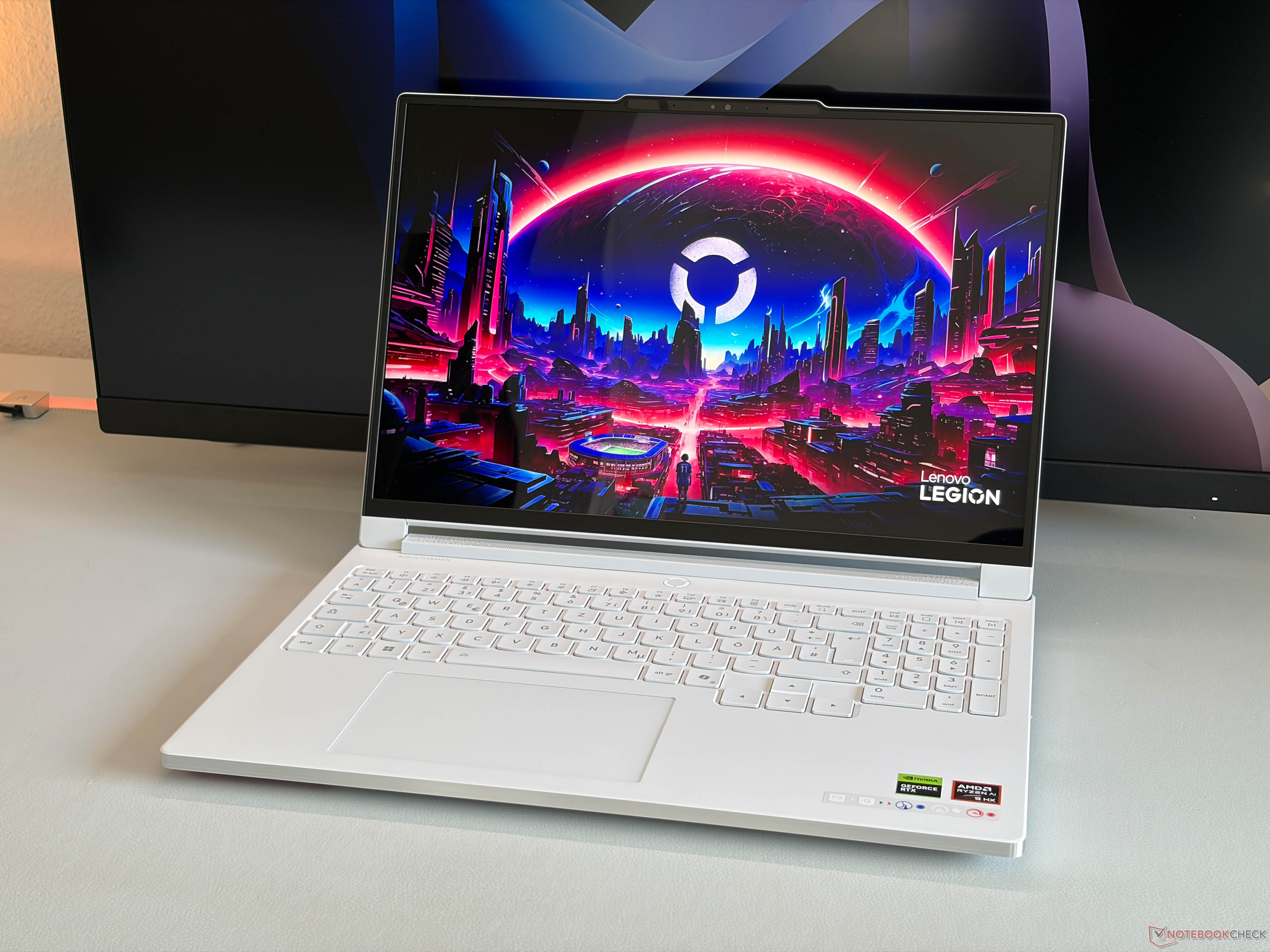
Lenovo is pushing the limits of what a portable 16-inch gaming laptop can be with the new Legion 7a 16 G11. Last year’s Legion 7 16 G10 already stood out for being unusually lightweight for its size, but the latest model trims things down even further. The AMD version drops around 200 grams compared to its predecessor, bringing the total weight to under 1.8 kg. For gamers and creators who want a powerful machine that’s easy to carry every day, that number matters.
Despite the diet, Lenovo hasn’t cheapened the build. The aluminum chassis remains impressively sturdy, and the overall design still looks clean and premium. Lenovo also keeps one of its biggest strengths intact: the typing and control experience. The input devices remain comfortable and well-suited for long sessions, whether you’re gaming, editing, or working on the go.
Where the Legion 7a 16 G11 truly separates itself from many rivals is the display. Lenovo equips it with a 16-inch OLED screen that runs at 240 Hz and supports VRR along with G-Sync. In practical use, that translates to smoother motion, reduced tearing, and a more responsive feel in fast-paced games. HDR fans also have a lot to like here, thanks to a peak brightness that reaches about 1100 nits. If you care about contrast, deep blacks, and punchy HDR highlights, this is the kind of panel that can make games look dramatically better than the typical IPS alternatives.
But Lenovo’s lighter design comes with trade-offs, and performance is where you’ll notice them most. The previous Legion 7 16 G10 could be configured with a stronger Intel Core Ultra 7 255HX and offered upgradeable RAM. With the new model, Lenovo switches to an AMD Ryzen AI 9 HX470 paired with 32 GB of soldered memory, which means you’re locked into that RAM configuration with no future upgrade path.
Graphics are handled by the mobile Nvidia GeForce RTX 5060, and the laptop supports Advanced Optimus for smoother GPU switching. However, Lenovo reduces the maximum GPU power in Performance mode from 115W down to 95W. There is a manual mode that allows pushing the TGP back up to 115W, but it must be enabled manually through software each time, making it less convenient than a simple performance toggle. The result is that CPU performance, GPU performance, and overall gaming performance lag behind last year’s model.
Even so, when you consider how light the Legion 7a 16 G11 is for a 16-inch gaming laptop, its performance remains respectable. This is still a stylish, premium-feeling machine that targets people who value mobility almost as much as frame rates. The real question is what matters more to you: maximum performance for the money, or a slimmer, lighter gaming laptop with one of the best OLED displays in its class.
Pricing complicates that decision. The reviewed configuration is listed at $2279, which is steep—especially when the older, faster Legion 7 16 G10 can be found for much less, sometimes under $1800. For shoppers focused on value, that gap is hard to ignore.
In the end, the Lenovo Legion 7a 16 G11 is most appealing to buyers who want a highly portable 16-inch gaming laptop with a top-tier 240 Hz OLED HDR display, premium build quality, and a sleek design. If you prioritize raw performance per dollar and prefer upgradeable components, last year’s model may still be the smarter buy.