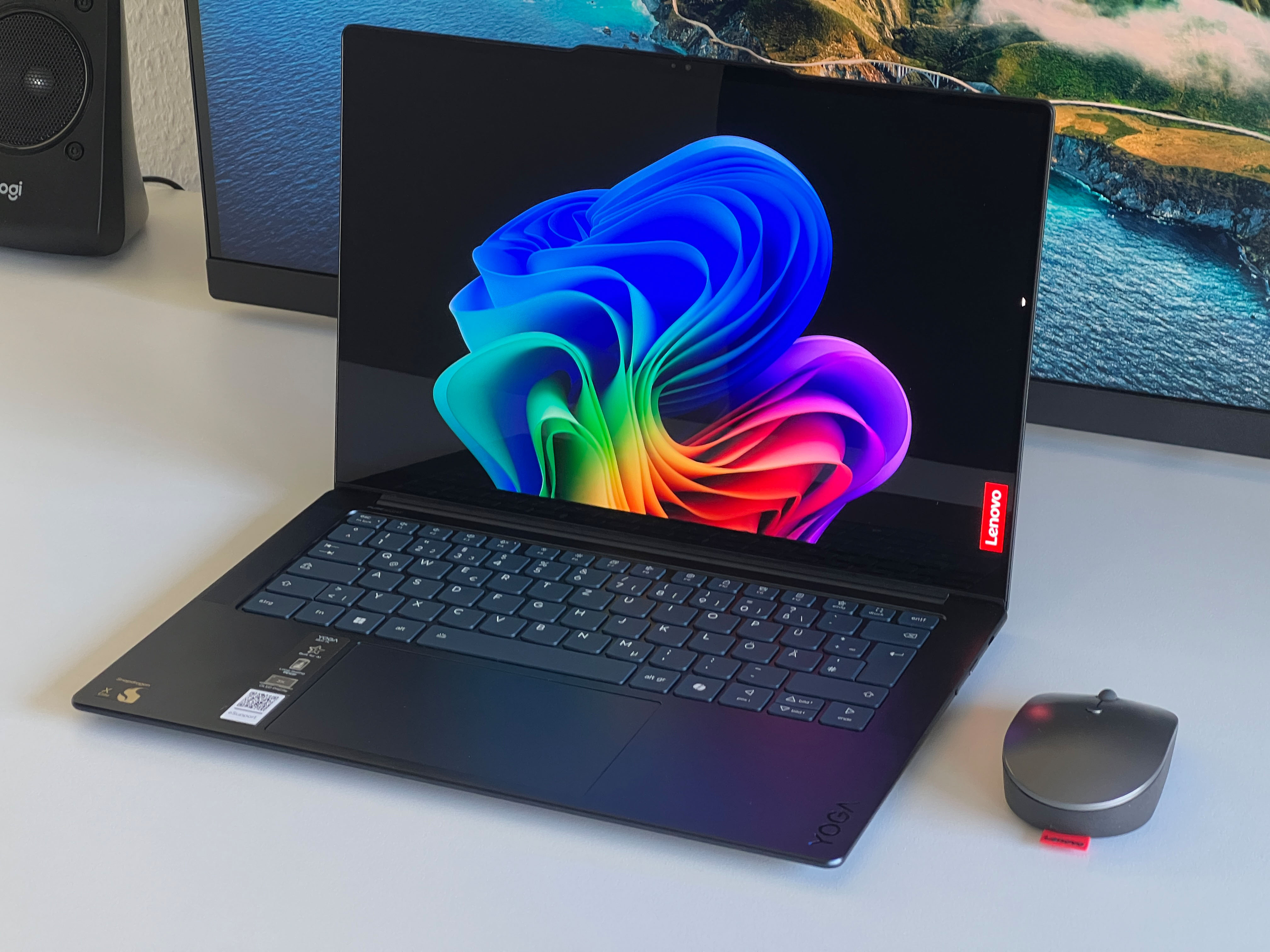
The Lenovo Yoga Slim 7x 14 G9, a multimedia laptop that has recently caught the attention of consumers looking for a combination of performance and visual experience. The standout feature of this model is its impressive 3K OLED display, which ensures vivid color and sharp visuals, making it an excellent choice for media consumption and productivity tasks that benefit from superior screen quality.
The Yoga Slim 7x 14 G9 also comes equipped with the Snapdragon X Elite platform, which promises to deliver not only powerful performance but also enhanced connectivity options. With this chipset at its core, users can expect efficient multitasking and seamless operations in various applications.
Benchmarking results show that this Lenovo model offers competitive read and write speeds, often surpassing other laptops in its class. For instance, compared to competitors like the Huawei MateBook X Pro 2024 and Samsung Galaxy Book4 Pro 14, the Yoga Slim 7x 14 G9 demonstrates solid SSD performance rates across various metrics. For users who prioritize fast and reliable storage, these figures indicate that Lenovo’s offering will not disappoint.
The performance benchmarks further compare favorably against other entries like the Asus Zenbook 14 OLED and the Xiaomi RedmiBook Pro 14, with this Lenovo laptop maintaining a strong position, often outpacing other subnotebook category devices in sequential read and write tests.
While these detailed technical benchmarks are insightful for those with an advanced understanding of computer hardware, everyday users will appreciate the laptop’s speed and responsiveness, which translate to a smooth computing experience for both work and entertainment.
The Lenovo Yoga 7x 14 G9’s impressive display and robust performance, supported by promising benchmark results, show that it is a competitive option for a subnotebook that caters to multimedia enthusiasts and professionals alike. Whether you’re editing photos, streaming high-definition content, or just breezing through everyday tasks, this Lenovo laptop seems well-suited to handle a variety of needs with efficiency and aplomb.When selecting a new laptop, particularly a subnotebook, it’s essential to look at the specifications and performance data to make an informed decision. This class of laptops is designed to be portable while offering good performance. Various models, such as the Lenovo Yoga series, Huawei MateBook X Pro, Xiaomi RedmiBook Pro, Samsung Galaxy Book, Asus Zenbook, and SCHENKER VIA, offer diverse options in terms of components like storage drives and SSDs.
For instance, when considering SSDs, it’s noted that models like the Samsung 990 Pro 2 TB (MZVL72T0HDLB), Western Digital’s PC SN740, and Micron 2400 (MTFDKBA1T0QFM) are utilized across different laptops. These SSDs provide varying ranges of storage speeds and capacities, influencing both performance and available space for files and applications.
The featured Samsung SSD in particular has been recorded to perform within certain ranges in the subnotebook class. These metrics can include aspects such as sequential read and write speeds, an important consideration for tasks that involve large file transfers or loading large applications and games, which could affect productivity or entertainment experiences.
While reviewing the average benchmarks for the mentioned SSDs and comparing them to the class average, it’s crucial to remember that higher numbers in sequential read and write speeds are generally better, as they imply faster data handling capabilities. Averaging the performance data gathered from a series of tests provides a good understanding of where these drives stand compared to others.
Moreover, looking at the subnotebook category as a whole, which includes a vast range of models and configurations, can give you an overview of how these laptops typically perform. Evaluating averages across different brands and configurations over the last couple of years reveals trends and standards in the industry.
Factors contributing to variations in performance include the type of SSD, the specific laptop model’s other components, and even firmware optimizations by the manufacturer. Attributes like thermal management in a subnotebook also play a role in maintaining performance under different workloads.
When making a decision on purchasing a subnotebook, users should consider the kind of tasks they will be performing, storage capacity requirements, and their preferences for speed versus price points. Evaluating these aspects alongside the average performance metrics can help pinpoint the best subnotebook for one’s personal or professional use.
It’s advisable to conduct more comprehensive research based on current market offerings and individual needs. This approach enables potential buyers to find a machine that strikes an ideal balance between power, mobility, and value for their specific situation.