Lenovo ThinkPad T14 Gen 7 vs Dell Pro 5 14: Which 14-inch business laptop is the better choice?
While the consumer PC market has slowed because of rising memory prices, business laptop demand remains far more stable. Companies still need to refresh employee devices, especially when three- to five-year leasing cycles come to an end. That makes commercial laptops a crucial category for major PC brands, with reliable sales and long-term customer relationships.
Two of the strongest competitors in this space are Lenovo and Dell. Lenovo’s ThinkPad series has long been one of the most recognizable names in business laptops, while Dell continues to push its professional lineup with models like the Dell Pro 5 14. Since 14-inch laptops are the sweet spot for many office users, comparing the Lenovo ThinkPad T14 Gen 7 and the Dell Pro 5 14 gives a clear look at what modern mainstream business notebooks can offer.
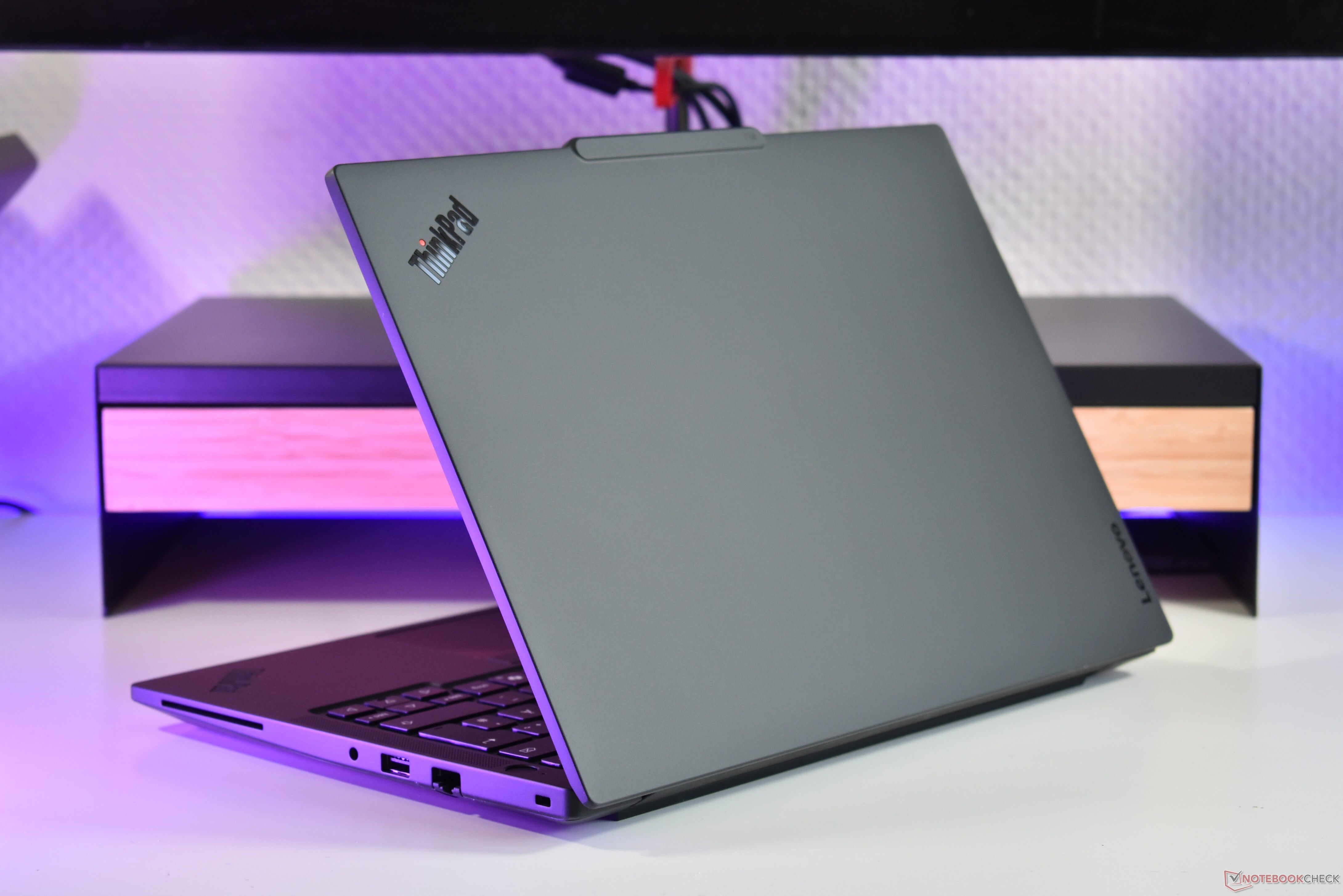
At first glance, both laptops follow a familiar professional design language. They are understated, practical, and built for corporate environments. Both use dark chassis designs, though the Dell Pro 5 14 can be configured with an aluminum lid, while the ThinkPad T14 Gen 7 uses a carbon fiber and glass fiber mix.
The Dell Pro 5 14 is slightly larger and heavier than the ThinkPad, but it is also a bit thinner. In daily office use, the difference is unlikely to be dramatic, though frequent travelers may appreciate the ThinkPad’s more compact footprint.
Connectivity, upgrade options, and security features are very similar across both machines. That means both are well suited for business fleets, IT management, and long-term deployment. However, Lenovo has a few practical advantages. The ThinkPad T14 Gen 7 includes a user-removable keyboard, the classic red TrackPoint, and dedicated mouse buttons. These features remain important for many ThinkPad loyalists and users who prefer precise cursor control without relying only on a touchpad.
The Dell Pro 5 14 does not include a TrackPoint-style pointing stick, but it does offer a larger touchpad, which many modern laptop users may prefer. If you are used to gestures and touchpad navigation, Dell’s approach may feel more spacious and familiar.
Display quality is one of the biggest differences between the two laptops. The Lenovo ThinkPad T14 Gen 7 has the edge because it can be configured with a 2.8K OLED display with a resolution of 2,880 x 1,800. This gives the ThinkPad a major advantage for users who care about sharp visuals, deep contrast, richer colors, and a more premium viewing experience.
The tested Dell Pro 5 14 came with a more basic WUXGA IPS display at 1,920 x 1,200. Dell does offer better screen options, including a WUXGA OLED panel and a 2.5K IPS panel, but Lenovo’s 2.8K OLED option still gives the ThinkPad T14 Gen 7 the stronger overall display lineup.
For office work, spreadsheets, video calls, and web browsing, both laptops are more than capable. But for users who spend long hours reading text, working with visuals, or multitasking across documents, the ThinkPad’s sharper OLED panel is a clear benefit.
Performance is much closer. Both tested laptops used Intel’s Panther Lake platform. The Lenovo ThinkPad T14 Gen 7 was equipped with an Intel Core Ultra 366H, while the Dell Pro 5 14 used an Intel Core Ultra X7 368H. In CPU performance, the two laptops were almost evenly matched, meaning both should handle productivity tasks, heavy multitasking, conferencing, and business software without trouble.
The Dell has an advantage in graphics performance thanks to its Core Ultra X7 chip, which is expected. However, the ThinkPad can also be configured with this processor, so buyers who need stronger integrated graphics are not locked into the Dell model.
Cooling and noise are where the user experience starts to differ. Under load, the Dell Pro 5 14 became noticeably louder, even though both laptops showed similar heat output. For quiet offices, meeting rooms, or shared workspaces, the ThinkPad may feel more refined during demanding tasks.
Battery life favors the Dell Pro 5 14 in the tested configuration. Its more efficient display and larger 70 Wh battery helped it last longer away from the charger. The ThinkPad T14 Gen 7 tested here used a 60 Wh battery, but Lenovo also offers a larger 75 Wh option for users who prioritize battery endurance.
That means battery life depends heavily on configuration. A ThinkPad with the larger battery could close the gap or potentially become more competitive, while the Dell’s advantage is strongest when compared against the 60 Wh ThinkPad model with the higher-resolution OLED display.
Choosing between the Lenovo ThinkPad T14 Gen 7 and the Dell Pro 5 14 depends on what matters most to your business or workflow.
The ThinkPad T14 Gen 7 is the better pick if you want the stronger keyboard experience, classic ThinkPad pointing controls, a more compact body, easier keyboard replacement, and a superior high-resolution OLED display option. It feels especially appealing for users who type all day, travel often, or value traditional business laptop ergonomics.
The Dell Pro 5 14 is a strong choice if you prefer a larger touchpad, longer battery life in the tested setup, a thinner chassis, and solid all-around performance. It is also a dependable option for companies buying laptops in bulk for office deployments.
Overall, the Lenovo ThinkPad T14 Gen 7 has a slight advantage thanks to its excellent input devices and better display option. Still, the Dell Pro 5 14 remains a very capable 14-inch business laptop and would fit well into a corporate laptop fleet. Both are practical, modern, and powerful enough for demanding business users, but the ThinkPad feels a little more polished for those who care about the details of everyday productivity.