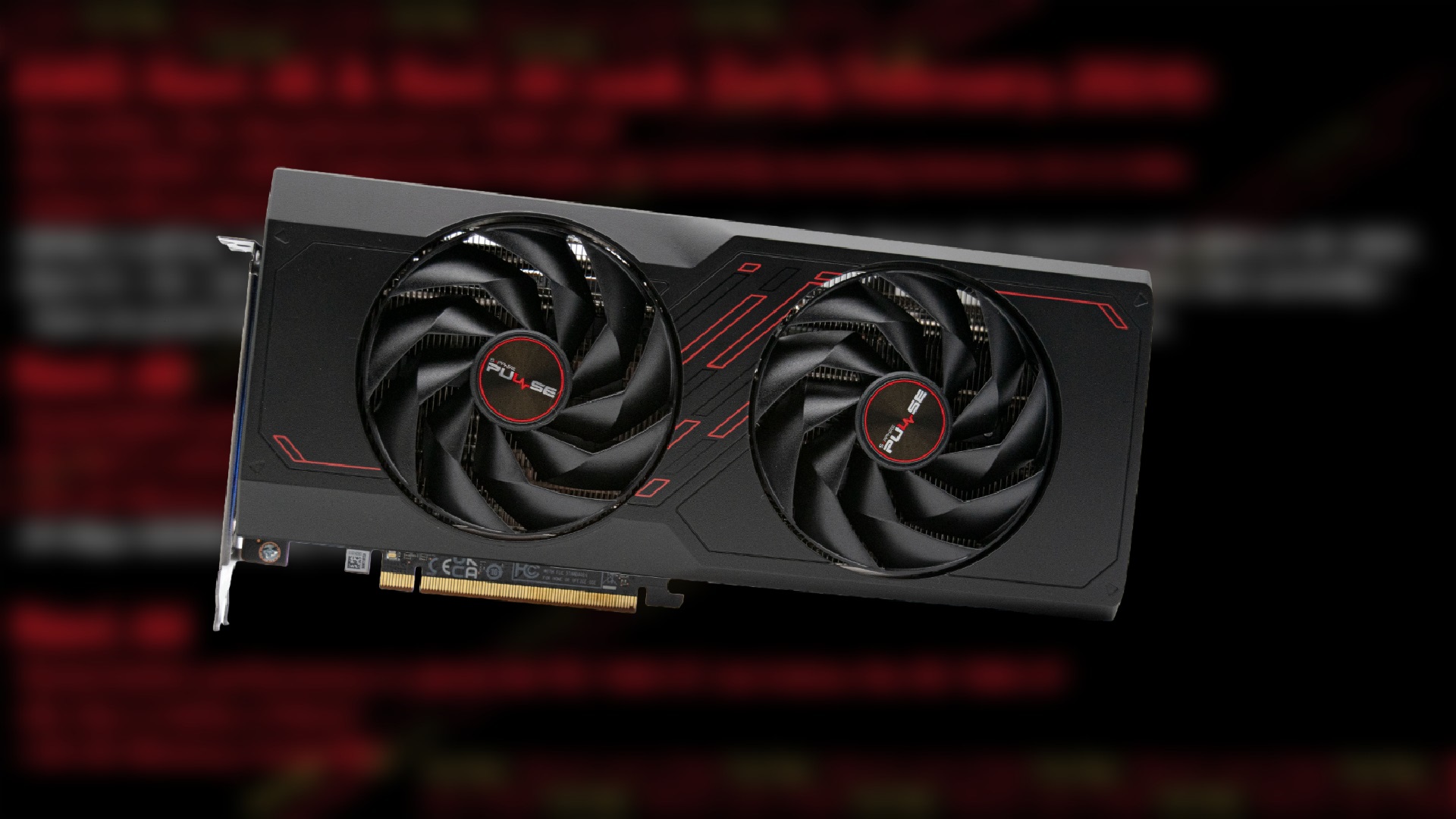
AMD is set to expand its graphics lineup with the introduction of the RDNA 4 series GPUs, targeting the entry-level and midrange segments, as recent leaks suggest the absence of new high-end RX 8000 series cards. Despite the seemingly modest positioning, the forthcoming RDNA 4 series promises competitive performance.
Navi 48: Balancing Performance and Size
Sources indicate that the top-tier card within the RDNA 4 series, the Navi 48, will offer performance that lands somewhere between the current RX 7900 XT and RX 7900 XTX models. With a die size estimated at 300 to 350 mm², the Navi 48 appears significantly smaller than the 529 mm² die of the Navi 31 in the RX 7900 XT, yet remains larger than that of the RTX 4070 Ti SUPER, which utilizes a 379 mm² AD103 die.
The Navi 48 is also rumored to feature a 256-bit memory controller, and the initial units may be equipped with 20 Gbps GDDR6 memory modules. Possibilities remain open that AMD could implement various memory configurations for different iterations of the Navi 48 in the future.
Navi 44: Poised for the Mainstream
For the mainstream audience, the Navi 44 GPU is reported to have a die size of less than 210 mm², aligning it closely with the Navi 33 found in the RX 7600 XT, which boasts a die size of 204 mm².
Notably, leaks suggest that the RDNA 4 GPUs will be monolithic in design, produced using TSMC’s N4P process. This represents a shift from AMD’s current RDNA 3 GPUs, which utilize multi-chip module (MCM) designs in the mid-range and top-end tiers, contrasting with monolithic designs at the entry-level tier.
Anticipated Clock Speeds and Launch Timeline
Engineering samples of the new RDNA 4 GPUs are currently clocking boost frequencies between 3 – 3.3 GHz, which exceeds the 2.499 GHz boost clock of the Navi 31 chip in the RX 7900 XTX. This could indicate a notable leap in potential performance for the upcoming lineup.
However, the official release of the RDNA 4 series cards is not expected until at least the third quarter of 2024, and it could be pushed back to the first quarter of 2025. This timeframe implies that considerable time remains before AMD confirms any details.
Enthusiasts and consumers interested in AMD’s future GPU offerings should take these leaks with appropriate caution, as official specifications and performance benchmarks will only be available closer to the launch date. The highly anticipated details of the RDNA 4 series will undoubtedly be of keen interest as the release date approaches.