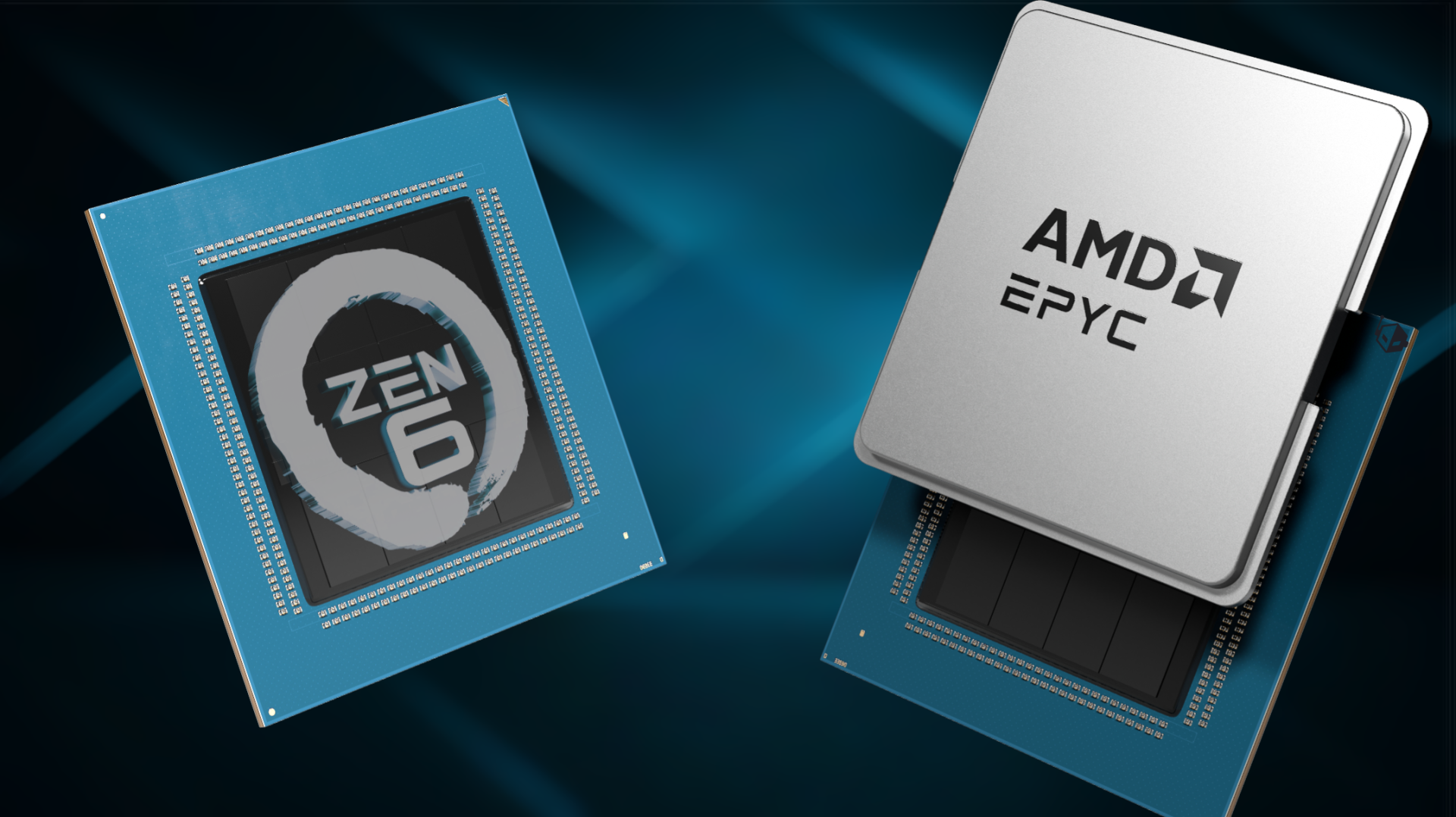
Early engineering samples of AMD’s next-generation EPYC Venice processors have surfaced in public benchmark results, offering a first glimpse at what the upcoming Zen 6-based server lineup and the new SP7 platform could bring to data centers. Venice is expected to succeed the current EPYC “Turin” generation, and these leaks suggest AMD is already seeding evaluation hardware to partners as it ramps toward a broader launch.
What makes this leak especially interesting is that it doesn’t point to a single test machine—it shows multiple SP7 evaluation boards appearing under codenames that reference African countries, including Congo, Kenya, and Nigeria. Each platform entry is tied to a different Venice engineering sample, along with detailed memory configurations and benchmark workloads. While these are still pre-release chips and their performance can change significantly before retail silicon arrives, the results help outline AMD’s direction for core counts, clocks, memory bandwidth, and platform scaling.
The “Congo” SP7 evaluation board appears in two notable configurations. One entry lists an AMD engineering sample identified as 100-000001053-03 with 192 cores and 384 threads, plus a reported clock speed of 4.02 GHz. That system was paired with 8 sticks of 64 GB DDR5 running at 8000 MT/s, a high-end memory setup that hints at the bandwidth targets AMD is aiming for on SP7.
A second Congo entry shows a more modest Venice sample: 100-000001863-02 with 64 cores and 128 threads. This system used 4 sticks of 64 GB DDR5 at 6400 MT/s. Both Congo configurations were tested using a 7-Zip compression workload, a common CPU-focused benchmark that can highlight scaling with threads and memory throughput.
Next is the “Kenya” platform, which also shows Venice in more than one form. One highlighted sample, labeled 100-000001056-09, is listed with 128 cores and 256 threads at a reported 4.02 GHz. Interestingly, the memory configuration here is different: 2 sticks of 128 GB DDR5 at 8000 MT/s. This Kenya system ran the x265 benchmark, which tends to stress CPU compute in media encoding scenarios and can be useful for comparing throughput across architectures and core counts.
The “Nigeria” entries are where things get even more revealing, because they point to a dual-socket SP7 setup (2P), meaning two EPYC CPUs in one system—exactly the kind of configuration popular in enterprise servers. Three Nigeria 2P results show different core count samples in the same general platform category:
A 64-core engineering sample: 100-000002138-02
A 128-core engineering sample: 100-000001056-03
A 192-core engineering sample: 100-000001051-08
The memory setup listed for the Nigeria 2P platform is massive: up to 32 sticks of 64 GB DDR5 at 8000 MT/s. That equals 2 TB of memory in the configuration shown, with room to go higher using denser modules—an important detail for virtualization, in-memory databases, and AI inference deployments where capacity matters as much as raw compute.
So what do these early EPYC Venice benchmarks actually suggest? The most important takeaway is that, even as engineering samples, the leaked results appear to land close to—or in some cases match—performance levels expected from comparable core-count chips in the current EPYC Turin family. That’s notable because engineering samples typically don’t represent final clocks, final firmware, or final platform tuning. If Venice is already competitive at this stage, it positions AMD well heading into launch.
Beyond these specific benchmark sightings, Venice is widely expected to introduce major improvements tied to the Zen 6 architecture along with platform-level upgrades on SP7. The leak reiterates expectations that EPYC Venice will scale to very high core counts, with talk of configurations reaching as high as 256 cores in the broader lineup. AMD has also signaled ambitious gains for this generation, including claims of a sizable performance and efficiency uplift combined with increased compute density—exactly the kind of improvements hyperscalers and enterprise buyers look for when refreshing fleets.
Looking further out, AMD has also indicated that EPYC Venice will integrate into a larger roadmap that pairs EPYC CPUs with Instinct accelerators, including use in the Helios AI rack planned for the second half of 2027. That timeline underscores AMD’s longer-term goal: deliver a CPU platform that not only wins traditional server workloads, but also complements GPU-accelerated AI infrastructure at rack scale.
For now, the key point is simple: AMD’s EPYC Venice “Zen 6” processors are already showing up in the wild on SP7 evaluation boards, across single-socket and dual-socket systems, with extremely high-end DDR5 configurations. As more samples circulate and benchmarks expand beyond compression and encoding tests, we should get a clearer picture of real-world performance, efficiency, and how far AMD can push core counts and memory bandwidth in the next generation of EPYC servers.