LattePanda IOTA squeezes x86 power and rich connectivity into a Raspberry Pi–sized board
If you’ve been waiting for a tiny x86 single-board computer that doesn’t skimp on performance or ports, the LattePanda IOTA deserves a look. Measuring just 88 x 70 mm, it’s only slightly larger than a Raspberry Pi, yet it packs a 4‑core Intel N150 processor (Twin Lake) that can turbo up to 3.6 GHz, plus a surprisingly expansive set of I/O aimed at makers, tinkerers, and edge deployments.
Key hardware highlights
– CPU: Intel N150 with 4 cores, up to 3.6 GHz
– Memory: 8 GB or 16 GB LPDDR5 at 4800 MT/s
– Storage: 64 GB or 128 GB onboard eMMC, plus an M.2 2230 slot for expansion
– Expandability: PCIe via FPC connector (PCIe 3.0), suitable for add-on storage or even an external GPU with the usual bandwidth and power caveats
– USB: Three USB 3.2 Gen 2 Type‑A ports at 10 Gbps
– Networking: Gigabit Ethernet onboard
– Display: One native 4K output, with an additional display available via eDP
– GPIO: Header managed by an RP2040 microcontroller for real-time control and maker projects
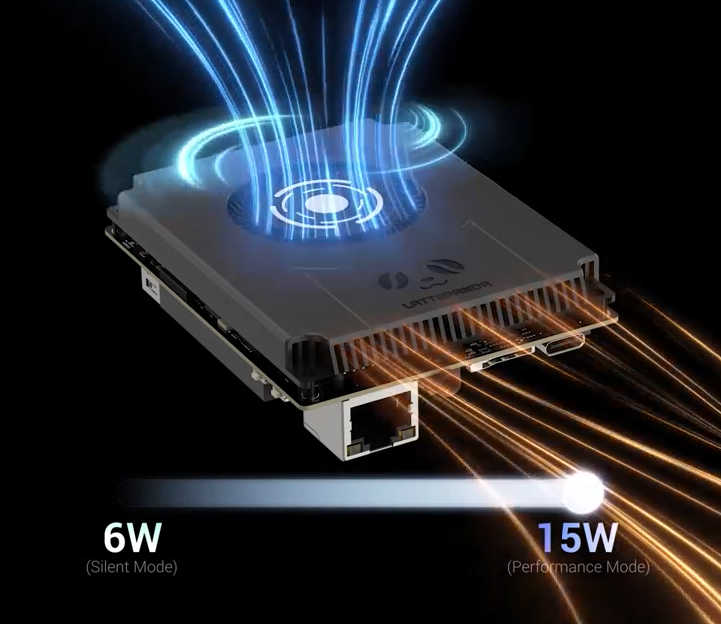
– Cooling and power: Configurable TDP between 6 W and 15 W enables passive or active cooling
– Removable media: microSD slot (USB 2.0 interface)
– Wireless options: Add Wi‑Fi 6E (AX210) or Wi‑Fi 7 (BE200) via M.2, noting this uses the same M.2 slot you might otherwise dedicate to storage
What stands out is how much the board does in such a small footprint. With onboard eMMC for the OS, the M.2 2230 slot is free for fast NVMe storage—unless you opt to install a Wi‑Fi module there. If you need even more expandability, the PCIe FPC connector opens the door to additional M.2 storage or niche peripherals. There are also three 10 Gbps USB ports for speedy external drives, capture cards, or high-bandwidth accessories, plus a Gigabit Ethernet port for reliable wired networking. For displays, you get a 4K output and the option to add a second screen over eDP—great for kiosks, dashboards, and digital signage.
For developers and hardware hackers, the RP2040-driven GPIO header is a big win. It offloads timing-sensitive tasks, giving you microcontroller-level responsiveness alongside a capable x86 system. Thermal flexibility is another strong point: the CPU’s 6–15 W configurable TDP lets you go fanless for silent builds or add active cooling for sustained bursts under heavy loads.
Price and who it’s for
A currently discounted configuration at $166.80 pairs 8 GB RAM and 64 GB eMMC with a passive cooler and a Wi‑Fi 6E module. It’s not the cheapest option in the x86 SBC space, and some compact mini PCs deliver similar raw specs for comparable money. But the IOTA counters with maker‑friendly I/O, an onboard microcontroller for GPIO, and modular expansion paths you don’t always get in a sealed mini PC.
Perhaps the most intriguing capability is support for Windows with in‑band ECC memory. That combination is rare at this size and price, making the IOTA a compelling candidate for industrial control, edge gateways, and space-constrained servers where data integrity matters. In a home lab, it can anchor a tiny NAS or storage node when paired with an M.2‑Key to SATA 3.0 expansion, while still leaving room to experiment with PCIe add‑ons and real‑time GPIO projects.
Bottom line
The LattePanda IOTA is a compact, flexible x86 single-board computer that blends desktop-class features with hacker-grade expandability. If you need a Raspberry Pi–sized board that runs Windows, offers in‑band ECC, embraces PCIe and M.2 upgrades, and can run cool and quiet at 6 W, this little workhorse checks an awful lot of boxes.