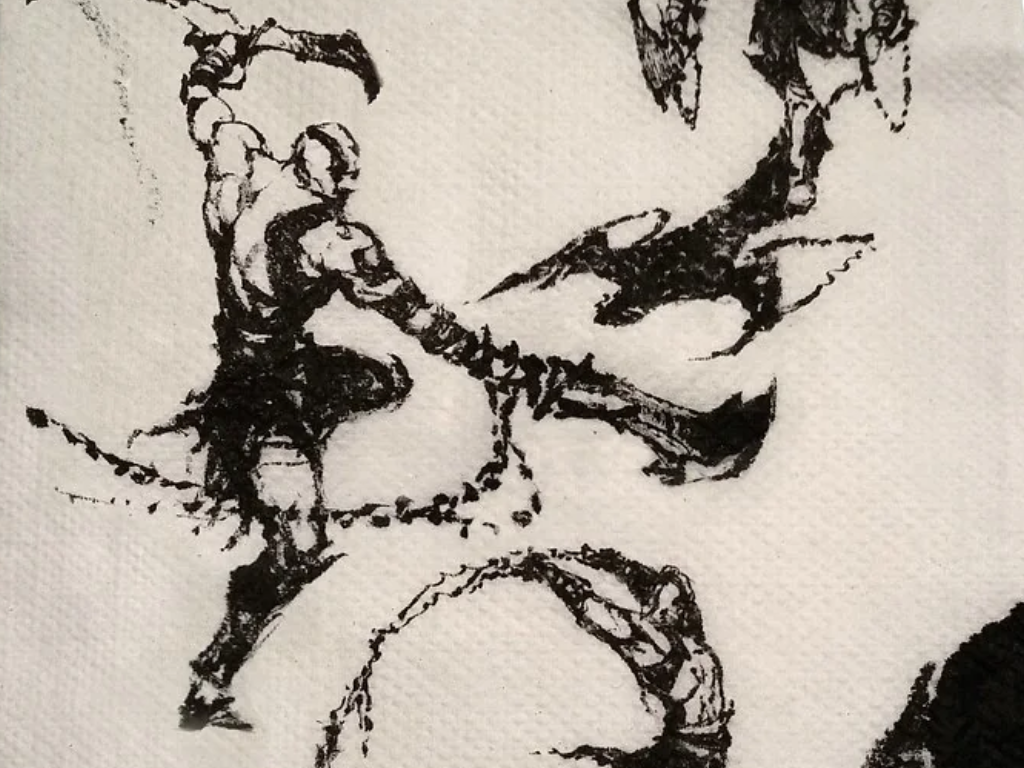
Kratos, the Ghost of Sparta, is one of the most recognizable characters in gaming history. His pale, ashen skin and the vivid red markings across his face have become inseparable from the God of War identity, instantly signaling rage, tragedy, and the brutal legacy that follows him. For many fans, that haunting look feels like something carefully planned from the very beginning, a deliberate creative choice designed to reflect the character’s dark backstory.
But Kratos’ signature appearance wasn’t born from an elaborate lore bible or a long string of design meetings. It started as a happy accident.
Stig Asmussen, who worked as the lead environment artist on the original God of War for PlayStation 2 in 2005 and later directed God of War III, revisited the early development story in Retro Gamer Magazine. He explained that the team was building environments rich in white marble, and the game’s engine made it possible to push sharper reflections and stronger visual contrast. That artistic direction helped shape the game’s signature atmosphere: clean, bright surfaces set against the chaos of combat, with blood and destruction standing out in stark detail.
Asmussen noted that the brutal scenes looked especially striking against those pale environments, and Kratos benefited from the same visual principle. With a light-toned character model in the middle of violent action, the player could clearly read the scale of the slaughter on screen because Kratos always stood out in the carnage he created.
Even so, the real reason Kratos became the “ashen” Ghost of Sparta is surprisingly simple. The original God of War director, David Jaffe, reviewed early concept art from lead concept artist Charlie Wen. At that stage, the drawings were still unfinished—created on white paper, with no final skin treatment or tone applied yet. Kratos appeared as a stark white figure on the page, more like a raw concept than a complete character design.
Jaffe saw that unfinished look and thought it was “really cool,” and the team decided to keep it. Asmussen recalled that Kratos being covered in white ash was determined early, sparked by that initial illustration where the skin treatment hadn’t been added. Whether the story implications were fully formed in that moment or not, the look became the catalyst.
From there, the developers did what great storytellers do: they fused the visual design into the narrative. Kratos’ pale skin became a permanent, cursed reminder of the most horrific act of his life—killing his wife and daughter while under Ares’ influence. Their ashes, fused to his body, turned his appearance into an eternal punishment and a constant symbol of guilt. The red markings only intensified that visual identity, making Kratos feel both mythic and marked by trauma every time he stepped into battle.
Years later, the series evolved with God of War (2018) and God of War Ragnarök, shifting into a Norse mythology setting and giving Kratos a noticeably different silhouette, including a full beard and a heavier, older build. Yet the most important elements remained untouched. His ashen skin and red streaks still carry the weight of the Greek saga, keeping his past alive even as his world—and his role within it—changes.
It’s a rare case where an unfinished concept sketch didn’t just influence a character’s final design, but helped define one of PlayStation’s most iconic heroes. Sometimes the most unforgettable looks aren’t carefully engineered from day one—they’re discovered in the moment, recognized for their power, and then transformed into legend.


