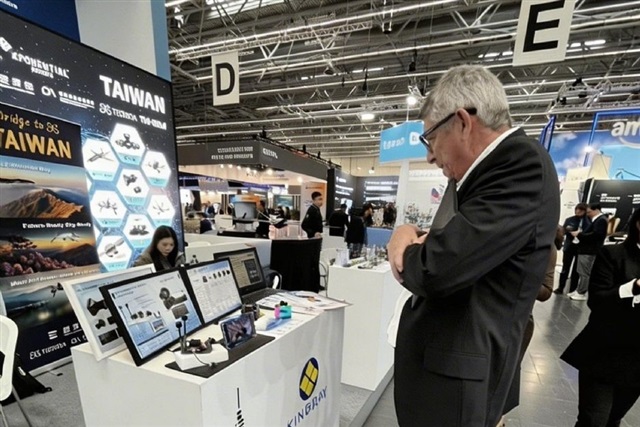
KingRay Technology is making a clear push into Europe’s fast-growing counter-drone and security technology space, bringing its imaging and AI recognition expertise to the international stage at XPONENTIAL Europe 2026 in Germany. Appearing under the Taiwan Pavilion, the company presented a lineup of solutions designed for demanding real-world use cases, including military, law enforcement, and broader public security operations.
With drones increasingly used for both legitimate and malicious purposes, European organizations are actively looking for smarter ways to detect, identify, and respond to aerial threats. That demand is fueling rapid growth in the drone defense market across the region, and KingRay Technology is positioning itself as a practical technology partner by highlighting capabilities that combine advanced imaging with AI-based recognition.
Supported by Taiwan’s Ministry of Economic Affairs Industrial Development Bureau, KingRay’s presence at the event underscores Taiwan’s broader effort to introduce high-value industrial technologies to global markets. For buyers and integrators in Europe, it also signals that the company is taking long-term international expansion seriously—especially in sectors where reliability, accuracy, and proven performance matter.
At the heart of KingRay’s showcase were imaging systems paired with AI recognition that can help security teams make faster, more confident decisions. In modern drone defense and surveillance environments, the challenge isn’t only spotting an object in the sky; it’s classifying what it is, understanding whether it poses a risk, and doing so quickly enough to act. AI-assisted recognition, when paired with strong imaging, can improve situational awareness and reduce false alarms—two factors that are critical for defense and policing applications.
By presenting these solutions at a major European aerospace and unmanned systems event, KingRay Technology is aiming to build partnerships and increase visibility among government agencies, security contractors, and technology integrators. As European counter-UAS programs expand and organizations upgrade their surveillance infrastructure, companies offering robust imaging and AI recognition tools are likely to see rising interest—particularly those that can support both detection and identification workflows for security and defense missions.