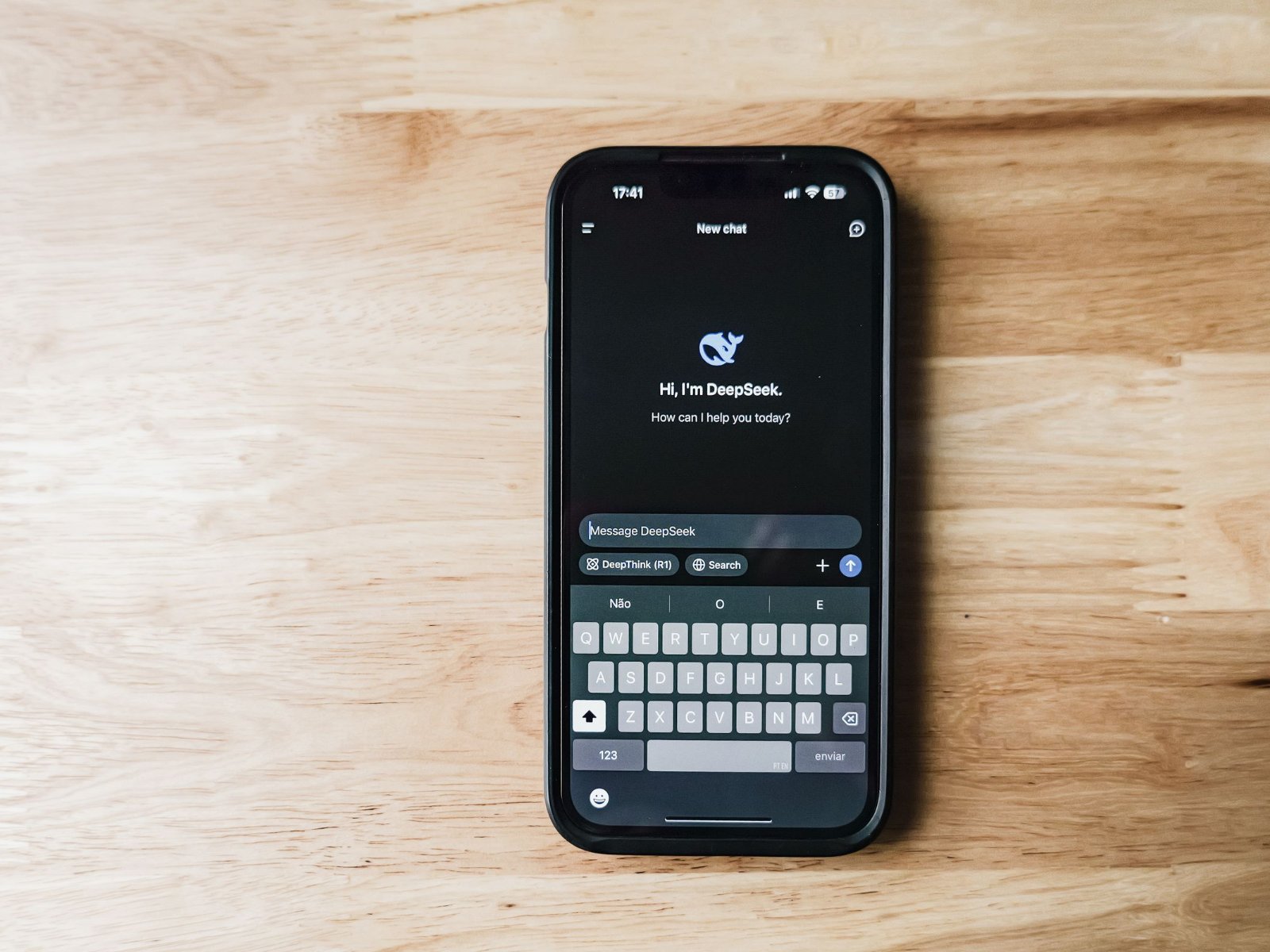
Cheap Chinese AI Faces US Scrutiny: What Kimi K3 and DeepSeek Restrictions Could Mean for Users
Affordable AI models from China, including Kimi K3 and DeepSeek, have become a major talking point in Washington. The concern is simple: powerful AI is getting cheaper, more accessible, and harder to control once model files are released publicly. But despite the political noise, one important fact remains unchanged for now: no ban has been approved.
For users outside the United States, access to Kimi, DeepSeek, Qwen, and similar Chinese AI models continues as usual. The bigger question is whether future US restrictions could disrupt the services, cloud platforms, and intermediaries many people use to reach them.
Kimi K3 was released on July 16, and its model weights became publicly available on July 27. Model weights are the numerical values produced during training. In practical terms, they are the core files that allow a model to run. Once those files are public, they can be downloaded, copied, mirrored, and hosted elsewhere. That makes any future restriction much harder to enforce.
Washington’s position has shifted quickly
The debate began with reports that US officials were considering restrictions on Chinese AI companies, possibly including placement on the Commerce Department’s Entity List. That list limits how American companies can do business with targeted firms unless they receive special permission.
For a company behind a model like Kimi K3, such a move could restrict access to US technology, cloud infrastructure, or business relationships. But it would not automatically erase the model from the internet, especially now that the weights are already public.
The initial concern appeared to focus broadly on open AI models. But within days, the argument became narrower. Michael Kratsios, the president’s technology adviser, defended open models and described legitimate AI distillation as an important part of the ecosystem.
Distillation is a common AI training method where a smaller or newer model learns from the outputs of a larger one. It can be legal and useful when done properly. The accusation now being discussed is different: covert, large-scale distillation from a rival model without permission.
Moonshot AI, the company behind Kimi K3, has been accused of siphoning outputs from Anthropic’s Fable model. Treasury Secretary Scott Bessent has suggested that if such claims are proven, sanctions or Entity List action could be considered.
That distinction matters. A broad crackdown on open models would affect developers, researchers, startups, and everyday users. A targeted action against one company over alleged theft would have a narrower impact.
The evidence has not been made public
So far, the accusation remains unproven in public. Kratsios made the claim on July 22, but no technical evidence has been released. There are no public logs showing that Fable outputs were used to train Kimi K3, and there is no detailed explanation of how such a large training operation would have been carried out in the short time available.
The timeline is one of the biggest questions. Fable reportedly became available on July 1, while Kimi K3 launched on July 16. That leaves roughly two weeks for alleged large-scale data extraction and training of a massive 2.8 trillion-parameter model.
A Moonshot employee has pointed to that calendar as a reason for skepticism. The company itself has not publicly confirmed or denied the accusation. Some AI researchers have also argued that the claim appears politically motivated, though the debate remains open.
Even within the US technology community, views are split. OpenAI co-founder Greg Brockman has said it is too early to judge and described the matter as a technical issue. Nvidia CEO Jensen Huang has praised open models such as Kimi and argued that the United States should compete with and embrace them rather than ban them. White House adviser David Sacks has warned that overly aggressive restrictions could weaken America’s position in artificial intelligence.
What safety testing says about Kimi K3
On July 23, the UK AI Security Institute and the US Center for AI Standards and Innovation published a joint assessment of Kimi K3. The focus was cybersecurity capability, one of the main arguments used to justify possible restrictions.
The model was tested on ExploitBench, a Carnegie Mellon benchmark based on 41 security flaws discovered after 2023 in Chrome’s V8 JavaScript engine. On that test, Kimi K3 reached 32 percent. The strongest US models reached 76 percent.
On the most difficult step, getting the model to run its own code on the target, Kimi K3 completed none of the 41 cases. The strongest US models completed an average of 20.
In another test involving a simulated corporate network with 32 attack steps, Kimi reached step 17 on average. Leading US models reached 28.5. A human expert would need around 20 hours to complete the same type of scenario.
However, there is an important detail: the US models were tested with safeguards turned off to measure maximum raw capability. The versions ordinary users access usually include safety filters. That means the comparison shows technical ceiling, not necessarily real-world user experience.
The assessment also found a weakness in Kimi K3’s own safety behavior. In testing, the model did not refuse to assist with building attack tools, suggesting its safeguards were not strong enough.
Why banning Kimi K3 would be difficult
The public release of Kimi K3’s weights changes the entire enforcement problem. Moonshot released 96 files representing the model, which the company says contains 2.8 trillion parameters. Once a model exists as downloadable files, it can spread rapidly.
Even if the United States restricts American companies from hosting or providing access to Kimi K3, existing copies would remain outside that system. Developers, researchers, and organizations could still run the model locally if they have the required hardware.
The Kimi K3 license is also relatively permissive. It allows use, modification, distribution, and sale with limited conditions. The main restrictions apply to very large commercial users. Companies selling model access as a service and earning more than 20 million US dollars in any 12-month period need a separate agreement with Moonshot. Products with more than 100 million monthly users built on top of Kimi K3 must visibly name the model in the interface.
For individuals, small teams, researchers, and most businesses, those conditions are unlikely to apply.
The real issue is the price of AI
The political dispute is not only about safety or ownership. It is also about cost.
Chinese AI models have gained popularity because they are often dramatically cheaper than leading American alternatives. A CNBC analysis from July 7 found that Chinese models recently handled 46.4 percent of requests routed through OpenRouter, compared with 35.7 percent for American models.
The pricing gap helps explain why. DeepSeek V4 Flash reportedly costs 0.14 US dollars per million input tokens, while GPT-5.5 costs five dollars per million input tokens. Tokens are the text fragments AI models process, and they are the basis for billing. One million tokens equals roughly 857,000 English words.
For businesses running AI at scale, that difference is enormous. Customer support systems, coding tools, AI agents, research assistants, and content workflows can become far cheaper when token prices fall. That is why affordable Chinese AI models have attracted so much global attention.
What this means for users
For now, everyday users outside the United States do not need to change anything. Kimi, DeepSeek, Qwen, and other Chinese AI models remain available through apps, websites, and APIs.
If the US eventually imposes restrictions, the most likely effect would be indirect. American cloud providers, hosting platforms, payment processors, or AI routing services could stop offering access. In that case, the model itself would not disappear, but the easiest route to using it might change.
Users who want long-term access to open-weight AI models have one clear option: download and run them locally where possible. That approach reduces dependence on any single provider, platform, or government policy. However, large models such as Kimi K3 require serious hardware, so local use may not be practical for everyone.
Privacy is a separate question
If your main concern is privacy, the debate over bans may be the wrong place to focus. With any cloud AI service, the provider controls how your prompts, files, and outputs are handled. That is true whether the company is based in China, the United States, or anywhere else.
For sensitive work, local AI remains the strongest option because your data stays on your own machine. For cloud-based AI, users should read provider policies carefully and avoid entering confidential information unless they trust the service.
The bottom line
The controversy around Kimi K3 and DeepSeek shows how quickly artificial intelligence has become a geopolitical issue. Washington is debating restrictions, Chinese AI companies are pushing low-cost models into the global market, and users are benefiting from cheaper access to powerful tools.
But at this stage, no US ban has been finalized. The accusation against Moonshot has not been publicly proven, and the release of Kimi K3’s weights makes any future restriction difficult to enforce completely.
For most users, the practical reality is simple: access remains available, prices remain attractive, and the biggest changes will come only if platforms or cloud providers are forced to alter how they offer these models.