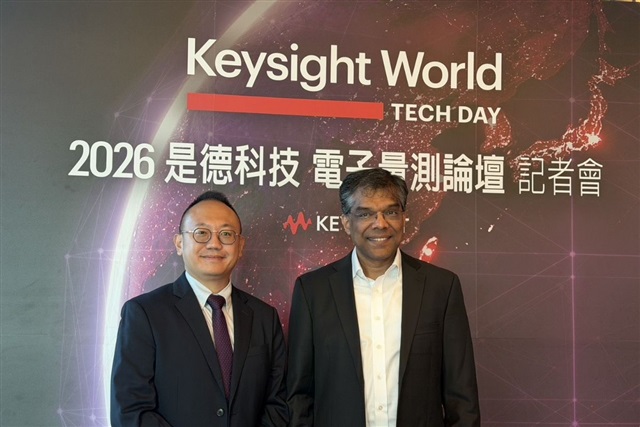
Keysight Advances AI Cluster Validation as Global AI Spending Surges
AI is moving quickly from experimental projects into everyday business operations, and that shift is putting enormous pressure on companies to prove that their systems can perform reliably at scale. As industries invest more heavily in artificial intelligence, testing and validation are becoming critical steps in turning AI innovation into dependable real-world deployments.
According to Gartner’s latest forecast, worldwide AI spending is expected to reach US$2.7 trillion in 2026, representing a 49.5% increase. That figure is projected to climb even higher in 2027, reaching around US$3.6 trillion. This rapid growth highlights how deeply AI is becoming embedded across enterprise technology, cloud infrastructure, data centers, automation, healthcare, finance, manufacturing, and consumer services.
With that level of investment, organizations can no longer afford uncertainty in AI performance. AI clusters must be validated before deployment to ensure they can handle demanding workloads, maintain stability, deliver low-latency performance, and operate efficiently under real production conditions. This is especially important as businesses rely on increasingly complex AI models that require powerful compute, networking, storage, and acceleration technologies working together without disruption.
Keysight is positioning its design-to-deployment approach as a way to help companies validate AI clusters more effectively throughout the development lifecycle. Instead of treating testing as a final step, this method supports validation from the earliest design stages through full-scale deployment. The goal is to help engineering teams identify performance bottlenecks, interoperability issues, and infrastructure weaknesses before they impact business operations.
As AI systems become larger and more distributed, cluster validation is becoming a key requirement for data center operators, cloud providers, semiconductor companies, network equipment makers, and enterprises building private AI infrastructure. Proper validation helps ensure that GPUs, accelerators, high-speed networking, storage platforms, and software frameworks can work together under heavy AI training and inference workloads.
The rising demand for AI also means that performance alone is not enough. Companies must consider power efficiency, system reliability, scalability, thermal behavior, and long-term operational stability. A poorly validated AI cluster can lead to downtime, slower model training, higher operating costs, and reduced return on investment.
By focusing on validation from design to deployment, AI infrastructure teams can move faster while reducing risk. This approach supports more confident rollouts, stronger system performance, and smoother adoption of advanced AI technologies across industries.
As global AI spending continues to accelerate, testing and validation will play an even bigger role in shaping the future of artificial intelligence. Businesses that invest in reliable AI infrastructure today will be better prepared to support the next generation of intelligent applications, from generative AI and autonomous systems to real-time analytics and enterprise automation.