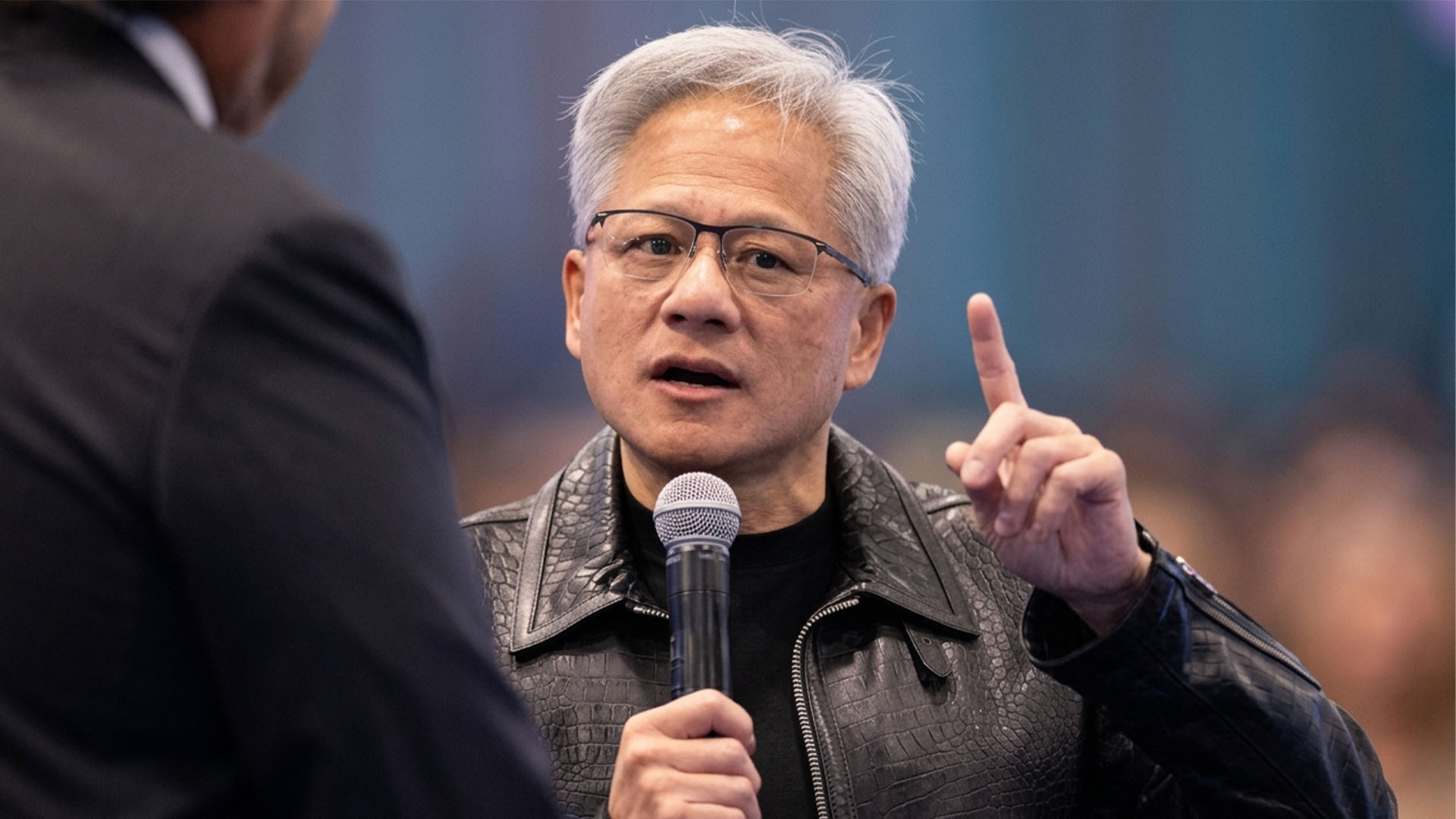
NVIDIA CEO Jensen Huang Pushes Back on Full China AI Chip Ban: “America Must Compete”
The debate over U.S. AI chip exports to China is heating up, and NVIDIA CEO Jensen Huang is making his position clear. While some leaders in the artificial intelligence industry are calling for a complete ban on sending advanced American AI hardware to China, Huang argues that cutting off entire global markets would weaken U.S. competitiveness rather than protect it.
In a recent interview, Huang directly challenged the idea that American companies should stop selling all advanced AI technology to China. His comments came in response to Anthropic CEO Dario Amodei, who has urged U.S. officials to block shipments of powerful AI processors and semiconductor manufacturing tools to China.
Huang said he supports giving American companies and institutions first access to the most advanced U.S.-made technology. However, he strongly disagrees with a broad strategy that prevents American businesses from competing internationally.
According to Huang, the United States should lead by building the best technology, serving global customers, and winning market share. He argued that abandoning overseas markets would only create opportunities for competitors outside the U.S.
“I completely disagree that we should ban China of all American products,” Huang said. He added that every layer of the American AI industry, from chipmakers to AI model developers, should be competing around the world. In his view, America’s strength comes from competition, not retreat.
Huang also emphasized that the global AI market does not belong to any single company or executive. His message was blunt: one AI lab should not decide which markets U.S. hardware companies can serve.
The NVIDIA chief also pointed to America’s current lead in AI computing. He revealed that NVIDIA’s next-generation Vera Rubin platform is already in volume production and is being supplied to American research labs and major AI companies first. Huang said this puts the United States several years ahead of China in advanced AI infrastructure.
He stressed that this approach is exactly how U.S. technological leadership should work: America gets priority access to cutting-edge innovation, and then American companies compete globally from a position of strength.
Huang warned, however, that the AI industry should not be viewed only through the lens of frontier AI models. While companies building large language models receive much of the attention, he described artificial intelligence as a much broader ecosystem.
In Huang’s view, AI depends on multiple layers: energy production, semiconductor hardware, AI models, data, and applications. Each of these layers must be strong if the United States wants to remain the global leader in artificial intelligence.
He said the real AI transformation will not be limited to a handful of model companies. Instead, major businesses across logistics, retail, healthcare, finance, manufacturing, and many other sectors will become AI-driven companies. Huang specifically highlighted companies like FedEx and Walmart as examples of traditional enterprises that can evolve through AI adoption.
His argument is that restricting American chipmakers from selling abroad could reduce revenue, slow innovation, and weaken the very hardware foundation that supports U.S. AI leadership. For NVIDIA, global demand helps fund the rapid development of new processors, systems, and software that keep the company ahead of international rivals.
The export control debate has intensified as Washington continues to limit China’s access to NVIDIA’s most advanced AI chips. NVIDIA’s B300 GPUs are currently subject to U.S. export restrictions, meaning they are not officially available to Chinese customers. Still, reports have suggested that a small number of these units appeared in systems linked to China Telecom, raising questions about how restricted hardware may still reach China through indirect channels.
Whether such hardware arrived through unauthorized routes or other means remains unclear. But the situation highlights a broader challenge: demand for high-performance AI chips is enormous, and countries and companies are searching aggressively for ways to secure them.
Huang’s position reflects a growing divide in the AI industry. On one side are those who believe the U.S. should use strict export bans to slow China’s AI development. On the other are technology leaders who believe America’s best strategy is to innovate faster, prioritize domestic access, and compete for global markets rather than surrender them.
For Huang, the path forward is not isolation. It is competition.
His message is that the United States can protect its technological edge while still allowing American companies to participate in the global AI economy. In his view, winning the AI race requires more than blocking rivals. It requires building the strongest chips, supporting the widest ecosystem, and ensuring that American companies remain at the center of the worldwide AI boom.