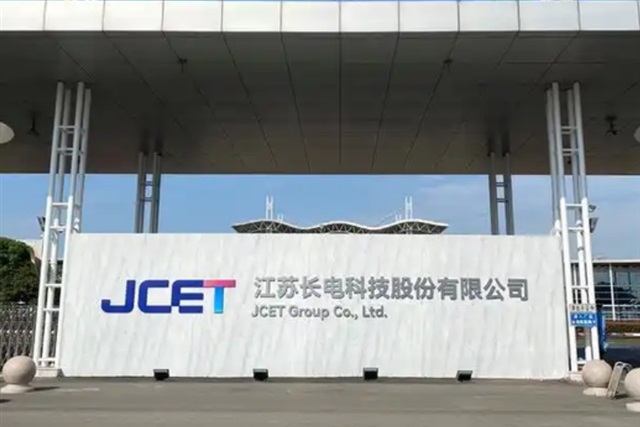
JCET Group Invests $1.1 Billion in Shanghai AI Chip Packaging Plant to Boost Advanced Semiconductor Capacity
JCET Group is moving quickly to strengthen its position in the fast-growing AI semiconductor market with a major new investment in Shanghai. The company plans to spend CNY 7.8 billion, or about US$1.1 billion, on an advanced chip packaging and testing facility in Shanghai Lingang, a key technology hub that continues to attract high-value semiconductor projects.
The new plant is designed to expand JCET Group’s capabilities in advanced packaging, a crucial part of the semiconductor supply chain as demand rises for AI chips, high-performance computing processors, and high-density integrated circuits. As artificial intelligence workloads become more complex, chipmakers are increasingly relying on advanced packaging technologies to improve performance, reduce power consumption, and support higher bandwidth.
AI computing is placing enormous pressure on the global chip industry. Traditional chip manufacturing improvements alone are no longer enough to meet the needs of data centers, cloud computing platforms, autonomous systems, smart devices, and next-generation industrial applications. Advanced packaging has become a key solution, allowing multiple chips or chiplets to work together more efficiently in compact, high-performance designs.
JCET Group’s Shanghai Lingang project is expected to support this shift by increasing production capacity for cutting-edge semiconductor packaging and testing services. The facility will focus on technologies needed for AI processors, high-performance chips, and dense chip architectures that are used in modern computing systems.
Shanghai Lingang has become an important base for China’s semiconductor ambitions. With strong infrastructure, policy support, and access to a growing technology ecosystem, the area offers an ideal location for companies investing in advanced manufacturing. JCET Group’s new investment further reinforces Lingang’s role as a rising center for semiconductor development.
The move also reflects a broader industry trend. As global demand for AI hardware continues to surge, semiconductor companies are investing heavily in back-end manufacturing processes such as packaging, assembly, and testing. These stages are increasingly important because they can directly affect chip speed, energy efficiency, thermal performance, and overall reliability.
For JCET Group, the US$1.1 billion project represents more than a capacity expansion. It is also a strategic step toward capturing a larger share of the AI chip supply chain. By strengthening its advanced packaging services, the company can better serve customers developing chips for artificial intelligence, high-performance computing, consumer electronics, automotive systems, and data infrastructure.
The investment comes at a time when advanced packaging is becoming one of the most competitive areas in the semiconductor industry. Technologies such as 2.5D packaging, 3D integration, system-in-package designs, and chiplet-based architectures are gaining momentum as companies look for new ways to improve computing power without relying solely on smaller process nodes.
As AI adoption spreads across industries, demand for powerful and efficient chips is expected to keep growing. JCET Group’s new Shanghai facility positions the company to benefit from that long-term trend while helping strengthen China’s domestic semiconductor ecosystem.
With this major investment, JCET Group is signaling confidence in the future of AI chip packaging and testing. The Shanghai Lingang plant could become an important part of the next wave of semiconductor innovation, supporting the production of more advanced, more efficient, and more powerful chips for the AI era.